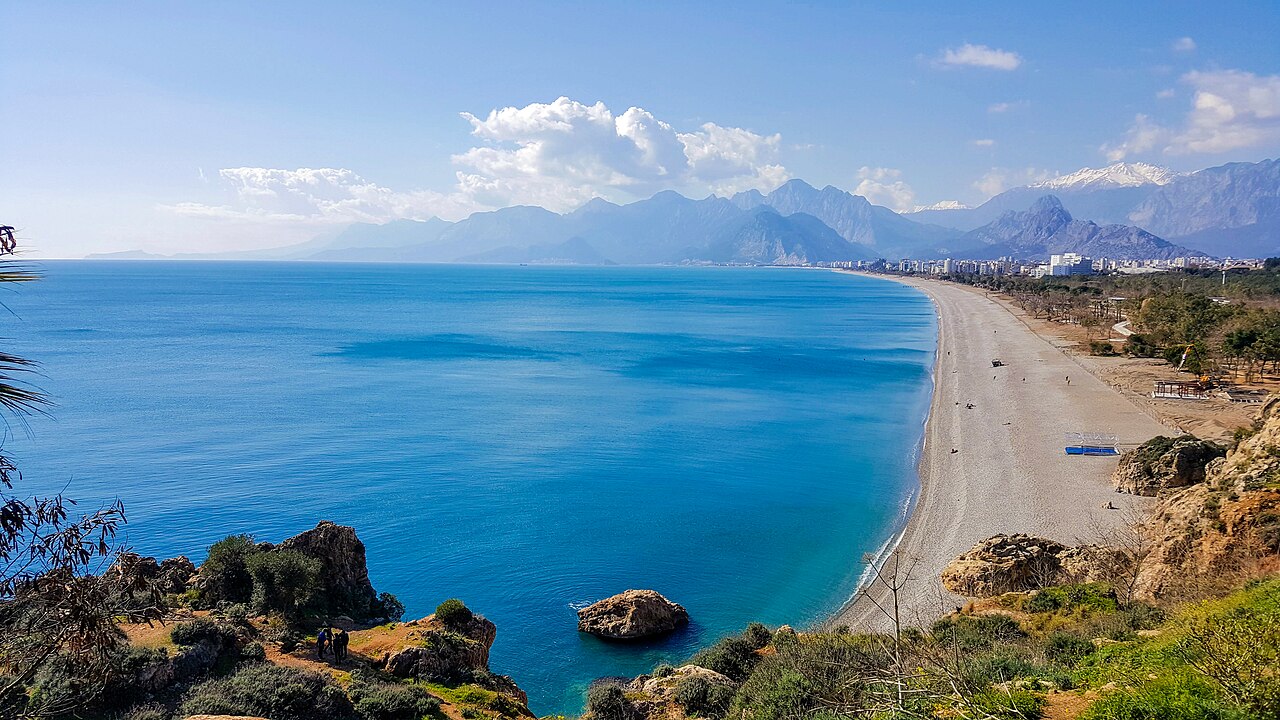
Antalya is the biggest city on the Turkish Mediterranean coast and the gateway to the so-called Turquoise Coast — the long stretch of beach resorts, Roman and Lycian ruins, and limestone mountains that runs from Fethiye in the west to Alanya in the east. It is also the fifth-largest city in Turkey, with a metropolitan population of over 2.5 million, and the arrival point for the vast majority of package holidays in southern Turkey. The modern city is sprawling, sun-bleached and unlovely from the highway, but its compact historical core — Kaleiçi, the walled Ottoman old town — is one of the most atmospheric quarters in Turkey and reason enough to visit.
Kaleiçi sits on a low bluff above the harbour, ringed by partly-surviving Roman and Seljuk walls. Its narrow lanes of restored Ottoman wooden houses are now full of boutique hotels and cafés, but manage (just) to avoid feeling entirely like a theme park. At the land entrance is Hadrian's Gate, a triple-arched triumphal arch built in 130 CE to mark the Roman Emperor's visit, still the main way into the old town. Nearby stands the fluted Yivli Minare (the Grooved Minaret), a 13th-century brick minaret that has become the symbol of the city. At the sea end, the old harbour has been converted into a marina, with boats offering short cruises and fish restaurants spilling onto the quayside. Above it all, the clifftop Karaalioğlu Park has the city's finest view — sheer limestone cliffs dropping straight into the Mediterranean, with the snow-capped Taurus Mountains rising behind.
The Antalya Museum, a short walk west of the old town, is one of the finest archaeological museums in Turkey — particularly strong on the Roman statuary recovered from nearby Perge, which rivals anything in Istanbul. Beyond the city, the coast and the hills hold a remarkable density of ancient sites: Perge, Aspendos (with its Roman theatre, still in use), Termessos (a mountain fortress city the size of Athens that even Alexander the Great failed to take), Side and Phaselis are all within day-trip range. Further west lie the Lycian coast and the classic turquoise beaches. The city itself has Konyaaltı Beach at its western edge and Lara Beach in the east, both lined with resort hotels. Come in May, June or September; July and August are genuinely hot (over 35°C) and the beaches are packed.