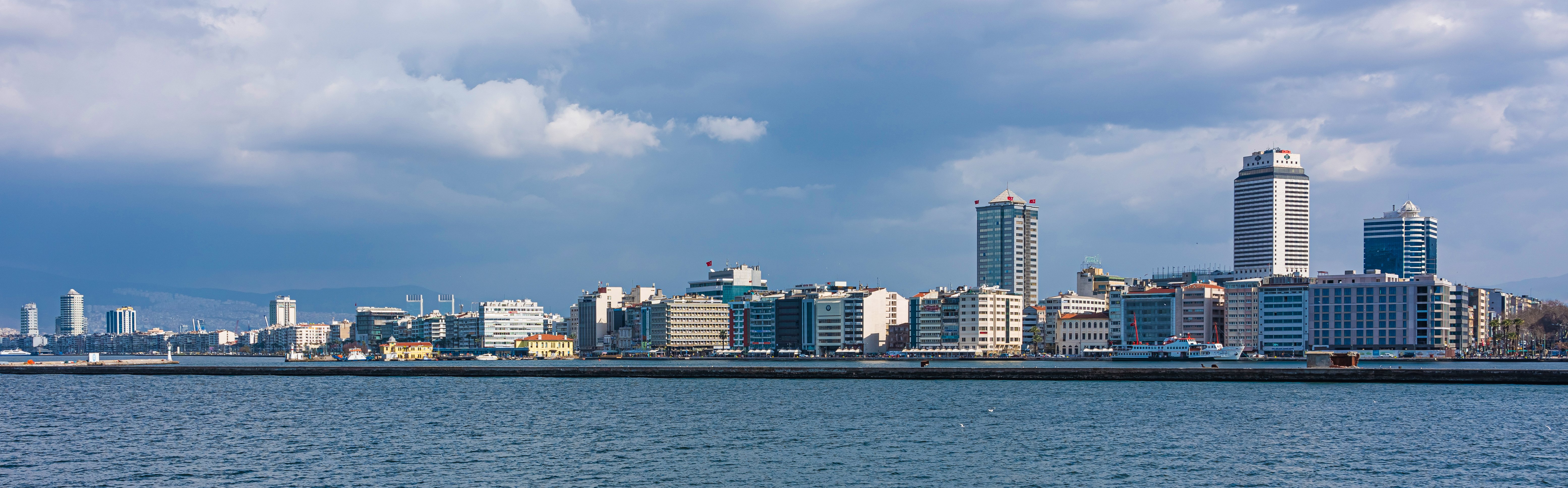
İzmir — "Beautiful Izmir," the Pearl of the Aegean — is Turkey's third largest city and arguably its most liveable. A city of palm-lined promenades, seafront cafés, and centuries of cosmopolitan history, it sits on a circular bay with the blue Aegean visible from the end of almost every street. İzmiris will tell you, with some justification, that their city is simply more pleasant than Istanbul: better weather, shorter distances, a more relaxed pace, and a secular culture that is unusually liberal even by Turkish standards.
The city's ancient identity was as Smyrna, one of the great commercial cities of the ancient world, home to half a million people at its Roman peak. It passed through Greek, Lydian, Persian, Macedonian, Roman, Byzantine, Genoese, and Ottoman hands before becoming one of the most cosmopolitan ports of the nineteenth century — a city where Greeks, Armenians, Jews, and European Levantine merchants traded side by side in a culture of pragmatic tolerance. That world was destroyed in September 1922, when a fire swept through the Greek and Armenian quarters and the population exchange that followed remade the city entirely.
The İzmir that survived and rebuilt itself is proud, forward-looking, and occasionally defensive about its historical complexity. The Kordon promenade along the bay is where the city displays its best self — beautiful at any hour, but exceptional at sunset. The Kemeraltı bazaar preserves the commercial energy of four centuries. And Kadifekale, the ancient Velvet Castle on the hill above, gives you the widest possible view of where you are.