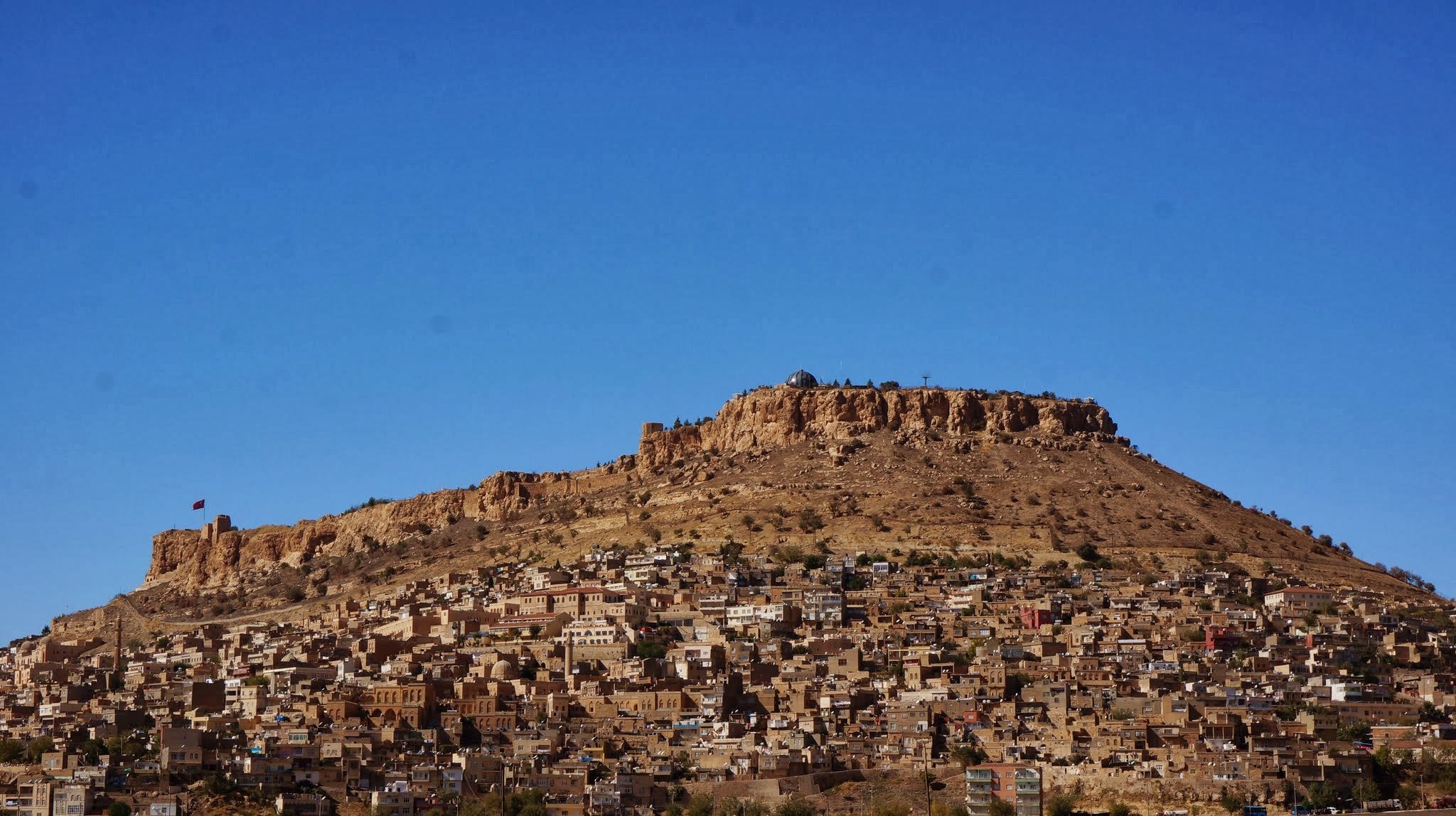
Mardin is one of the most striking cities in the Middle East — a medieval stone city built in tiers on a ridge above the Mesopotamian plain, its flat-roofed honey-coloured limestone houses descending in layers toward the Syrian border visible on the horizon. The city has been continuously inhabited for over five thousand years, sitting astride the ancient route between the Mediterranean and Mesopotamia, and layers of that history show in its monuments: Syrian Orthodox churches, Islamic madrasas, Artukid fortresses, and Armenian inscriptions all share the same narrow streets.
What makes Mardin particularly extraordinary is its cultural layering. Until the 20th century it was home to a rich mix of Kurds, Arabs, Syriac Christians, Armenians, and Jews, and the languages and traditions of all these groups left their marks on the architecture, food, and dialect. The Syriac Christians of Tur Abdin — the region around Mardin — maintain one of the oldest continuously spoken forms of Aramaic, the language Jesus spoke. The Mor Hananyo Monastery (Deyrülzafaran), five kilometres from the city, was the patriarchal seat of the Syrian Orthodox Church for centuries.
The city climbs from the modern lower town to the citadel at the top of the ridge, a gradual ascent through old bazaar streets past the Sultan Isa Medrese, the Kasımiye Medrese, and the Great Mosque to views from the top that — on a clear day — extend 50 kilometres across the Mesopotamian plain into Syria. The food is excellent, the guesthouses are some of the best in eastern Turkey, and the city is far enough off the main tourist circuit that you will often have the medieval lanes to yourself.