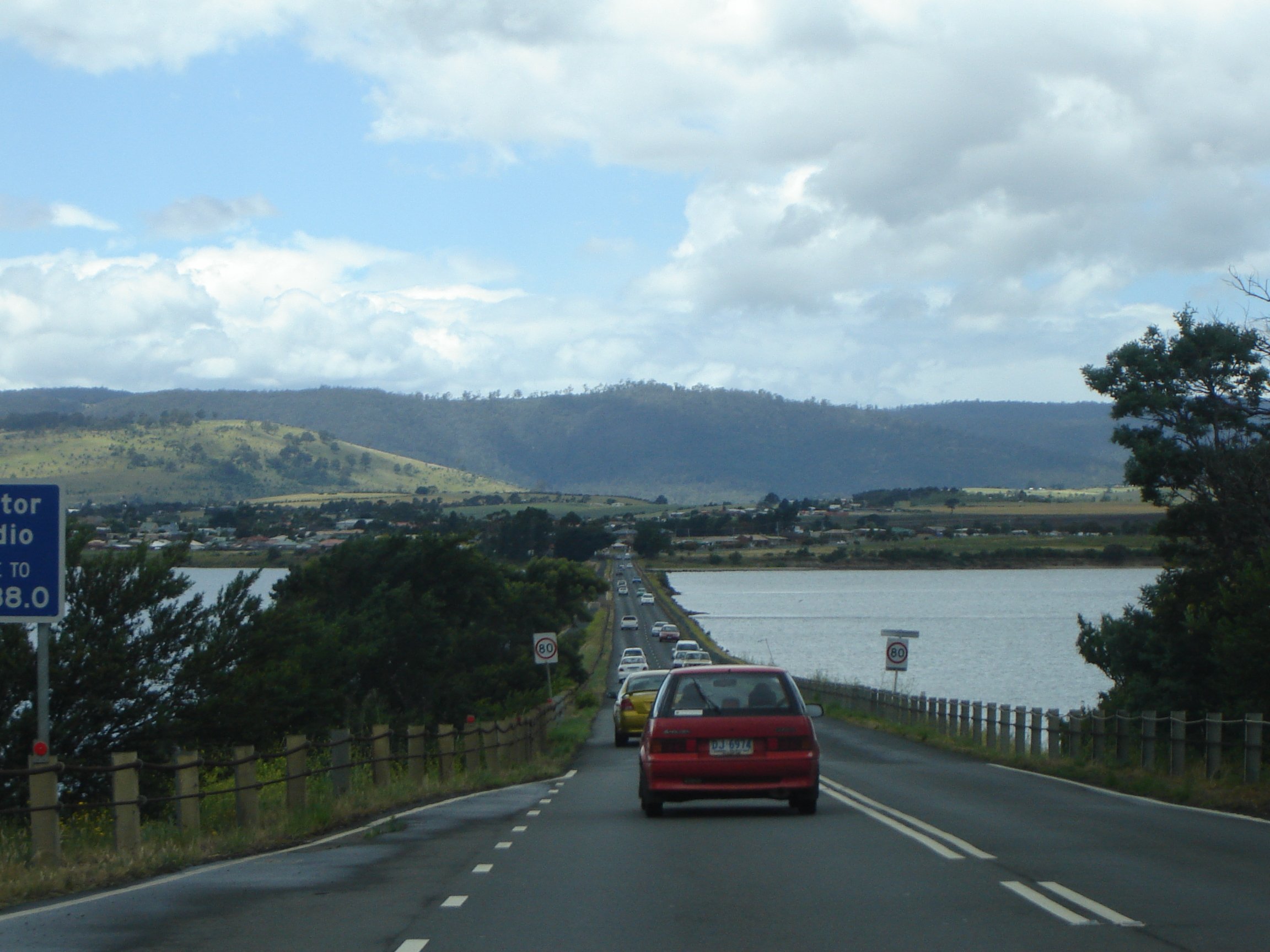
Sorell sits 26 km east of Hobart, straddling the narrow neck of land between Pitt Water and the Tasman Peninsula. It's one of Tasmania's oldest European settlements — laid out as a farming town in 1808 and officially gazetted in 1821 — and for much of the 19th century it was the colony's grain basket, shipping wheat and barley across Bass Strait to New South Wales. Today it functions mainly as a commuter town for Hobart, but there's enough history, good food, and natural interest nearby to make it worth a stop rather than a drive-through.
The town centre has kept its colonial bones: a cluster of Georgian buildings along Gordon Street, an old barracks, and three heritage-listed churches, including St George's Anglican, a stone Gothic Revival building dating to 1826. The school on Somerville Street opened the same year and hasn't closed since, which gives it a reasonable claim to being the oldest continuously operating public school in Australia.
Sorell itself is compact and walkable. The surrounding district — Sorell Council covers a wide swathe of southeastern Tasmania — is where the real variety is. Orielton Lagoon, a Ramsar-listed wetland on the western edge of town, draws serious birdwatchers. The Sorell Fruit Farm lets you pick stone fruits and berries from October through May. And the town is well placed as a staging post for the Tasman Peninsula: Port Arthur is an hour's drive southeast, the Coal River Valley wine region is a short detour northwest, and Seven Mile Beach is barely 20 minutes away.