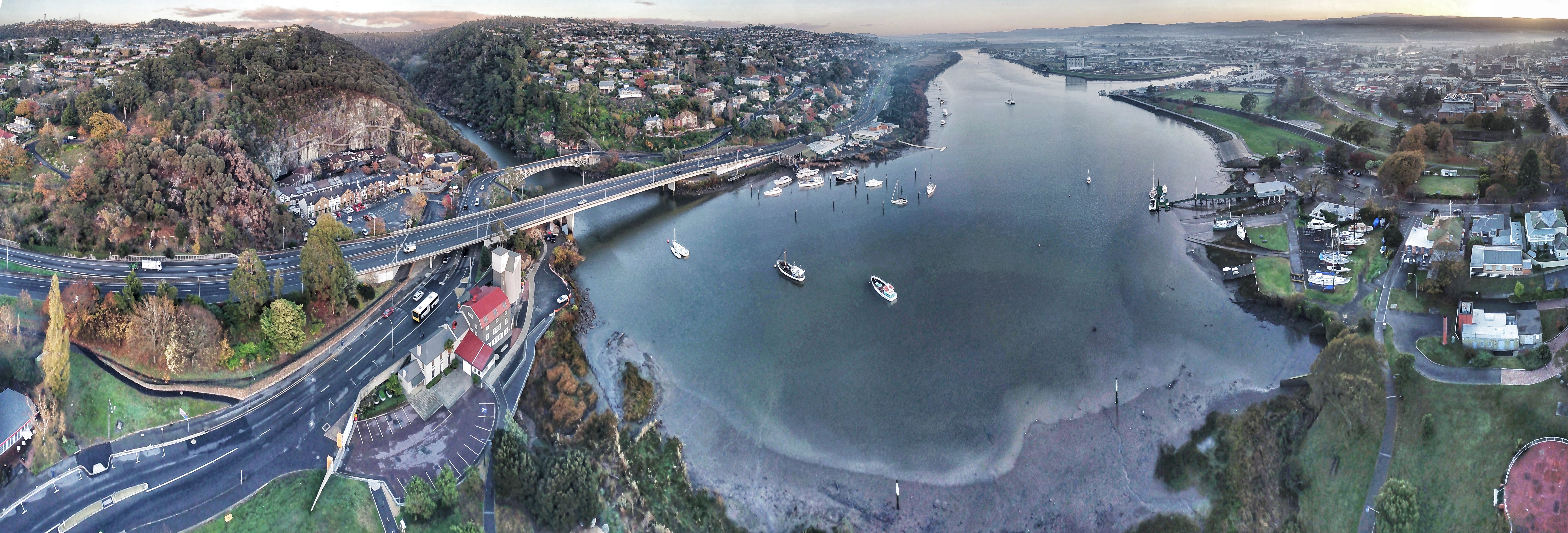
Launceston is Tasmania's second city, founded in 1805 by free settlers from across Bass Strait — a commercial town from the start, without Hobart's convict origins. It sits 70 kilometres inland along the Tamar River, surrounded by hills that give it cold, foggy winter mornings and the nickname "foggy hollow."
The standout attraction is Cataract Gorge, a dramatic natural reserve just a ten-minute walk from the city centre. The South Esk River cuts between almost vertical cliffs before entering the Tamar, and walking tracks follow both sides past a swimming pool, a restaurant, and a chairlift spanning the gorge — one of the longest single-span chairlifts in the world. It is beautiful during the day and atmospheric when lit at night.
The city centre has graceful Victorian architecture, much of it recycled into restaurants and shops around Yorktown Square. City Park hides an unexpected colony of Japanese macaques, a gift from Japan in 1895. The Queen Victoria Museum covers Tasmanian natural history, including the island's marsupials and the extinct thylacine, with a planetarium and a relocated Chinese joss house from the goldfields. Franklin House, a Georgian building from 1838 with fine cedar woodwork, is open for visits and morning tea. The Old Umbrella Shop on George Street is the most perfectly preserved Victorian shopfront in Australia.
Launceston works well as a base for exploring northern Tasmania. The Liffey Valley Forest Reserve to the west offers rainforest walks beneath the Great Western Tiers. Ben Lomond National Park to the east has wildflowers in summer and skiing in winter.