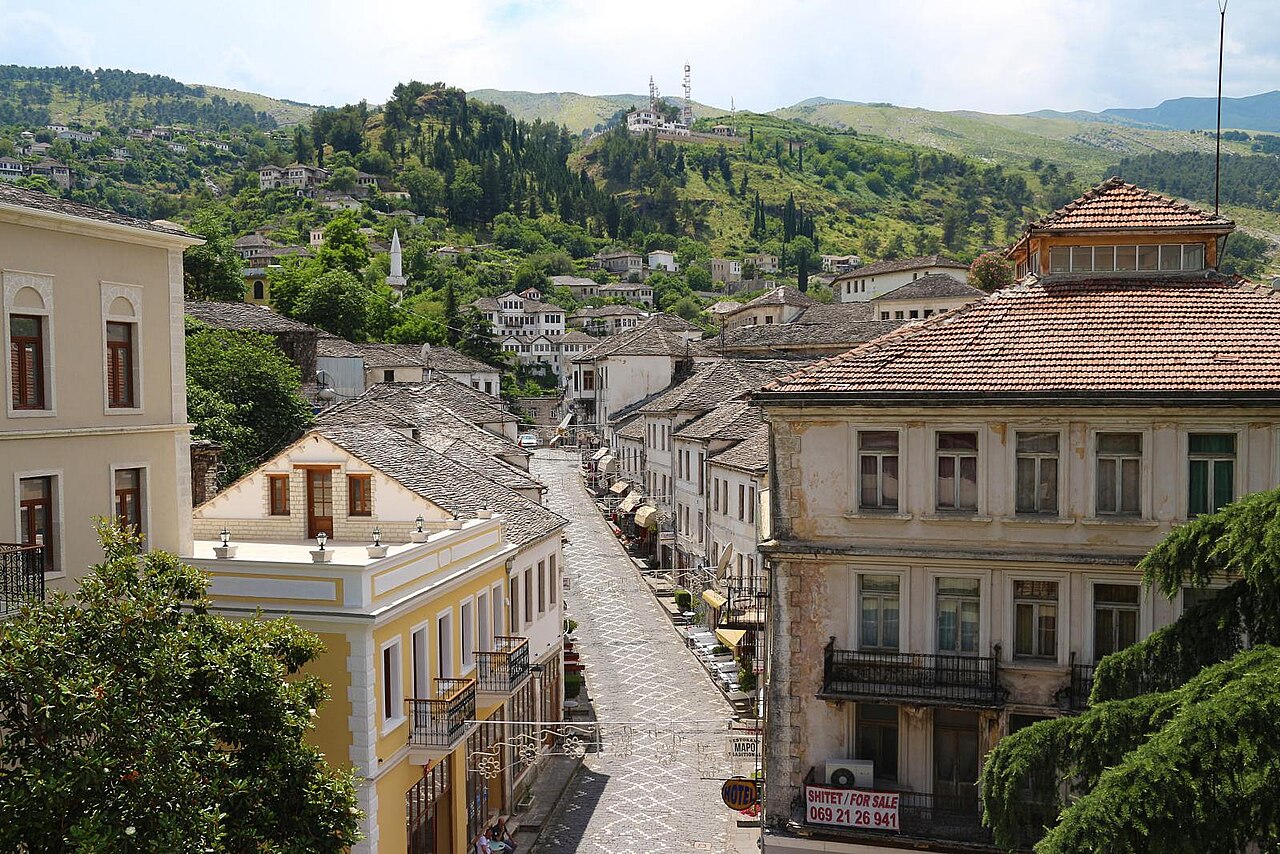
Gjirokastër — the "City of Stone" — is one of the best-preserved Ottoman towns in the Balkans and a UNESCO World Heritage Site jointly listed with Berat. It climbs a steep hillside in southern Albania, all grey-slate rooftops, cobbled alleys, and tower houses with overhanging upper floors. The setting, ringed by mountains, is dramatic in any season.
The fortress at the top of the hill is the obvious starting point. Huge and sprawling, it houses a military museum and, incongruously, a captured US Air Force reconnaissance aircraft from the 1950s — a remnant of Cold War tensions with the communist regime. The views over the old town and surrounding valley justify the climb on their own.
In the old bazaar district below the castle, several well-preserved tower houses (kula) are open as museums, including the house where Enver Hoxha was born, now the Ethnographic Museum. The National Liberation Museum offers a communist-era view of Albanian history that is itself historically interesting.
Gjirokastër is also the birthplace of Ismail Kadare, Albania's most celebrated novelist, who used the city as the setting for his novel Chronicle in Stone. A statue of him stands near the bazaar.
The city is a natural base for visiting Butrint (1.5 hours south by bus) and the Blue Eye spring (Syri i Kaltër), about 20 km away. Permet is worth a stop if you're heading north.