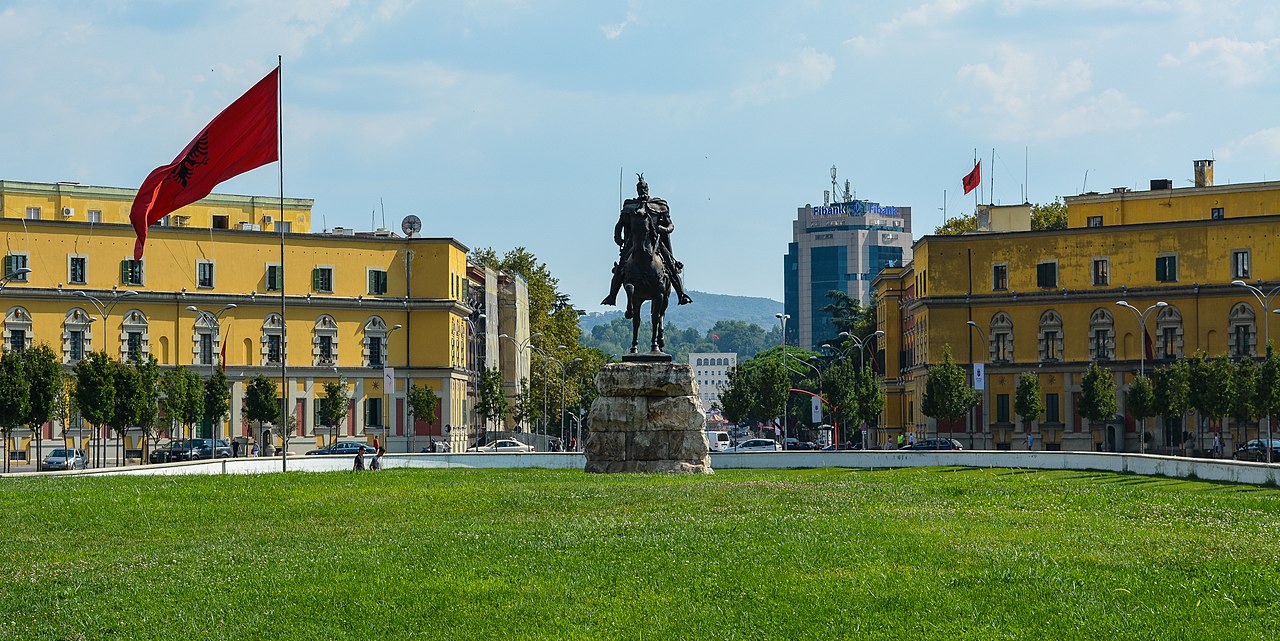
Tirana is the capital and by far the largest city in Albania, home to about a third of the country's population. It is compact enough to explore on foot, and in the last two decades has reinvented itself from a grey post-communist city into one of the more energetic capitals in the Balkans.
The centre is organised around Sheshi Skënderbej (Skanderbeg Square), a large open plaza anchored by an equestrian statue of Albania's national hero. The National History Museum occupies one side of the square; the Et'hem Bey Mosque (one of the few religious buildings to survive communist-era demolitions) is in the corner. The former Enver Hoxha pyramid nearby has been converted into a tech education space but retains its value as a physical reminder of the communist era.
South of the square, the Blloku neighbourhood was once the exclusive enclave of the communist nomenklatura — ordinary Albanians were forbidden to enter until 1991. It is now Tirana's most fashionable area, packed with cafes, restaurants, bars, and boutiques. Evening life here is lively.
Mount Dajti, at 1,613 m, looms over the eastern edge of the city. A gondola cable car runs to the top, from where there are good views over the city and countryside on clear days. Don't miss Bunk'Art 1, the vast nuclear bunker turned museum at the foot of the same mountain.
Tirana makes a good base for day trips: Krujë is 32 km north, and Durrës with its Roman amphitheatre is 38 km west.