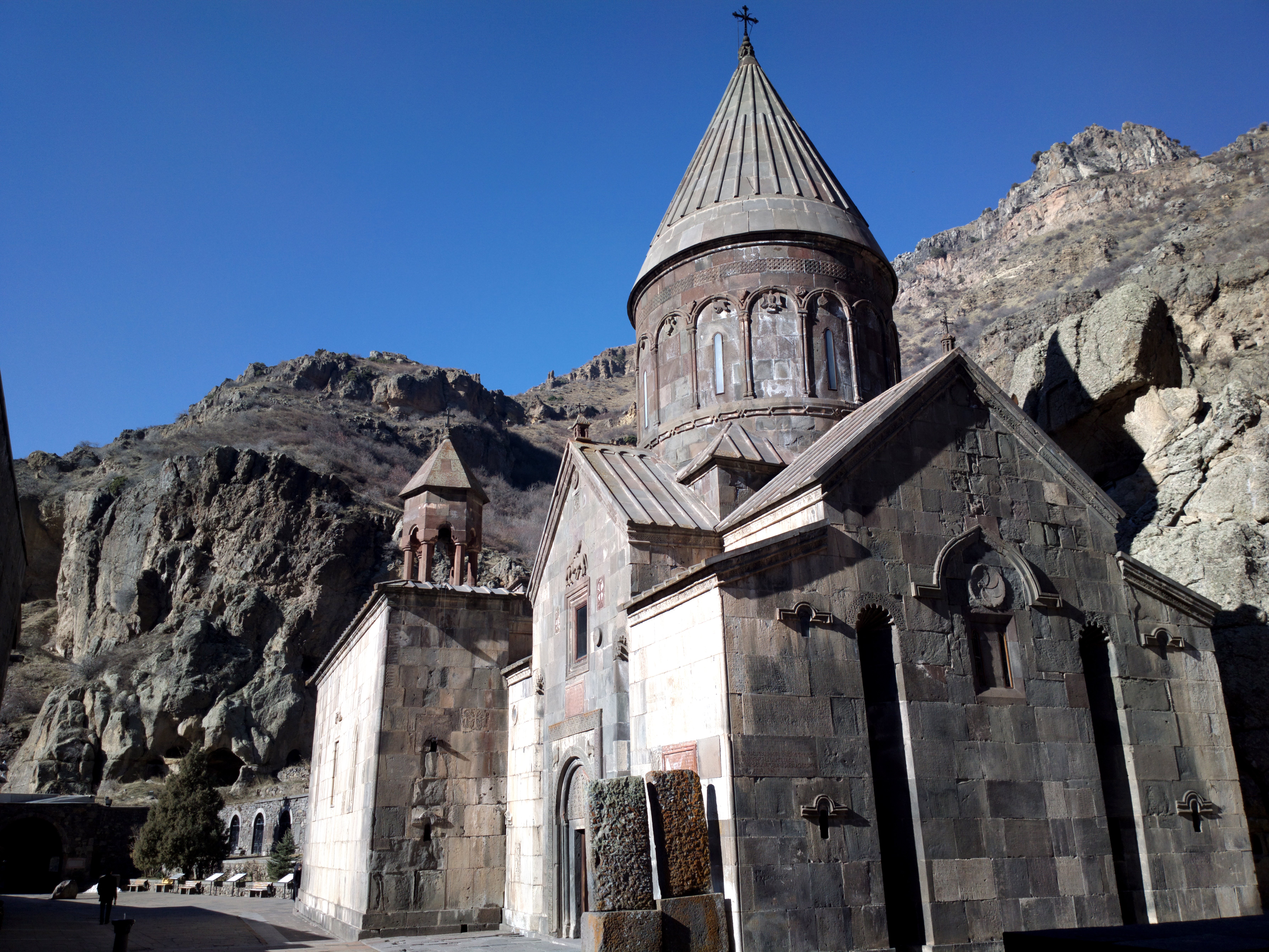
Geghard
©
Geghard

Geghard

Armenian monastery complex carved into the Azat River Gorge, named for the Holy Lance.

Geghard is a medieval monastery complex built into the walls of the Azat River Gorge, about 40 kilometres east of Yerevan. Its name means "spear" in Armenian — a reference to the Holy Lance said to have pierced Christ’s side, which was kept here before being moved to Echmiadzin. The monastery is a UNESCO World Heritage Site and one of the most architecturally remarkable religious buildings in the world.

What makes Geghard exceptional is that much of it is not built but carved. Several of the churches and chapels were hewn directly from the cliff face, their interiors emerging from solid rock. The carved cross-stones, or khachkars, lining the approaches and walls are among the finest in Armenia. On Sundays you may witness the ancient practice of animal sacrifice in the courtyard — a pre-Christian custom that was absorbed into local worship rather than suppressed.

The site pairs naturally with Garni, an ancient Hellenic temple 10 kilometres away. The combination makes an excellent day trip from Yerevan, and most visitors do both in a single outing.

Guide

Getting There

Geghard is about 40 kilometres east of Yerevan, in the Azat River Gorge. The most convenient approach is by taxi from Yerevan, or as part of a shared-taxi or marshrutka run that combines Geghard with Garni — the two sites are 10 kilometres apart and the combination makes a logical day trip.

Public minibuses from Yerevan run as far as Goght village, roughly 3 kilometres from the monastery. From Goght you can walk, hitch a ride with other tourists, or take a local taxi for the remaining stretch. The road winds through the gorge and is straightforward enough; walking it is pleasant in good weather.

Most tour operators in Yerevan offer half-day Geghard and Garni packages — these are worth considering if you want transport sorted without hassle.

Guide

Things to Do

Geghard's attractions are all contained within or immediately around the monastery complex and its dramatic gorge setting. Allow two to three hours to do the site justice — the rock-cut chambers require time for your eyes to adjust to the dim interior, and the carved cross-stones reward close inspection.