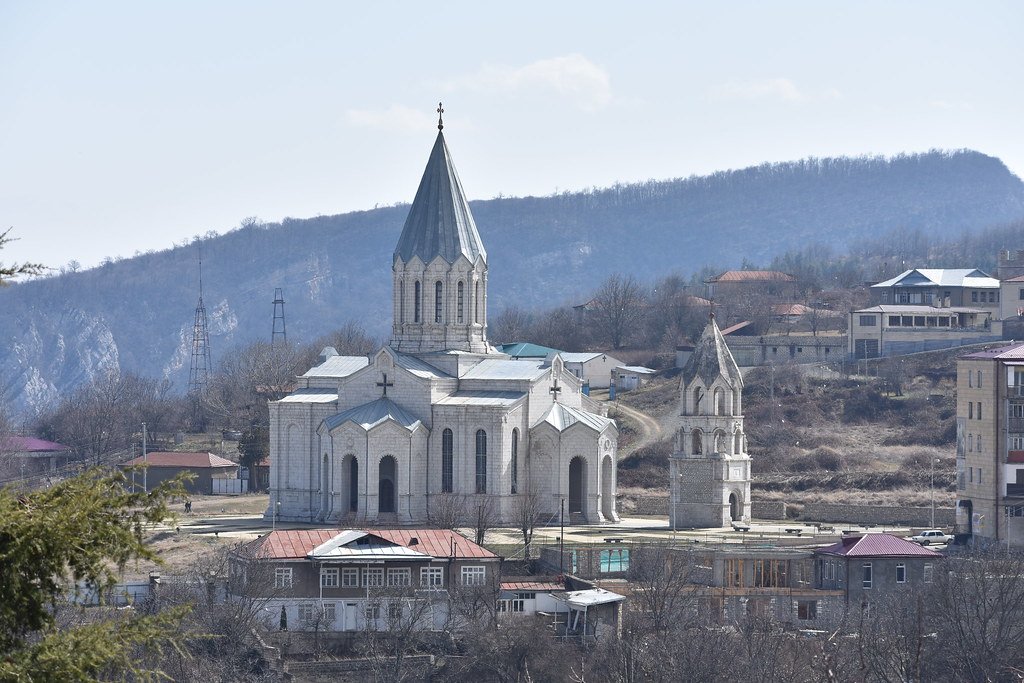
Shusha (Şuşa) sits at 1,400 metres on a rocky ridge in the Lesser Caucasus, 11 kilometres north of Khankendi/Stepanakert. It is the city that both Azerbaijanis and Armenians regard as the symbolic heart of the Karabakh conflict: Azerbaijanis see it as the cultural capital of their nation, the birthplace of their classical music tradition; Armenians called it Shushi and held it as a key stronghold for nearly three decades.
Azerbaijan captured Shusha in May 2020 during the 44-day war, and it has since become the centrepiece of the country's reconstruction effort in Karabakh. Significant parts of the old city, heavily damaged in the conflict, are being rebuilt. The scale of reconstruction is striking — the old bazaar area, mosques, and cultural buildings are being restored under heavy government investment.
The 18th-century Khan's Palace and the Govhar Agha mosque complex give a sense of the city's historical importance. The old fortress walls enclose the old city on three sides, with ravines providing natural defence on the others. Jidyr Düzü — a natural plateau just outside the city — is a beautiful open expanse with panoramic views over the surrounding mountains, used for the annual Khari Bulbul music festival. The Vagif Mausoleum honours the 18th-century poet who is considered a founding figure of Azerbaijani literature.
Access to the Karabakh region requires advance registration with Azerbaijani authorities; check current entry requirements before travelling as procedures continue to evolve. Most visitors come as part of an organised tour from Baku.