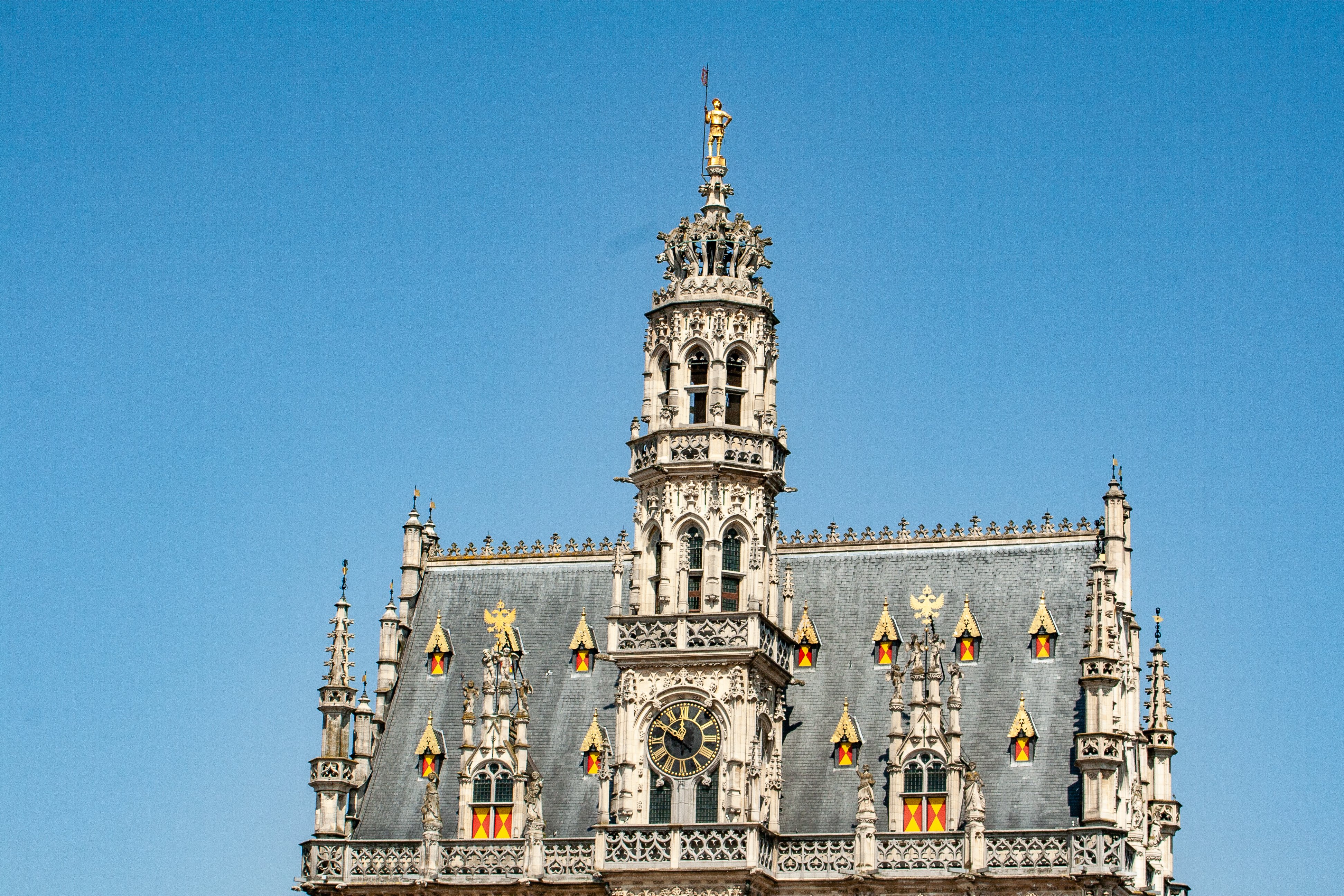
Oudenaarde sits on the Scheldt River in the rolling hills of the Flemish Ardennes, and if you follow professional cycling at all, you already know the name. This is the spiritual home of the Tour of Flanders — the Ronde van Vlaanderen — and the town's cycling museum, the Centrum Ronde van Vlaanderen, occupies the ground floor of the spectacular late-Gothic Stadhuis on the Markt. The surrounding hills, with their short sharp climbs and narrow farm roads, are the battlefield where the race is decided each spring.
The town hall itself is the finest building in town, a sixteenth-century masterpiece of Brabantine Gothic with an ornate belfry that is part of the UNESCO-listed Belfries of Belgium. Inside, the MOU Museum displays Oudenaarde's other claim to fame: tapestries. From the fifteenth to the eighteenth century, the town was one of the great tapestry-weaving centres of Europe, and the collection here includes some remarkable verdure tapestries — richly detailed scenes of forests and wildlife.
Three kilometres north of town, the Ename Abbey archaeological site preserves the foundations of an eleventh-century Benedictine monastery on the Scheldt, with a good heritage museum alongside. The Liefmans Brewery, just east of the centre, produces the town's distinctive oud bruin — a dark, sour regional ale that bears no resemblance to the pale beers of Bruges or the abbey ales of the Trappist tradition.
Oudenaarde is a pleasant, unhurried town that most visitors pass through quickly, but the combination of Gothic architecture, tapestry heritage, and cycling culture gives it more character than its modest size suggests. The surrounding countryside is excellent for cycling, with well-marked routes over the same cobbled climbs — the Koppenberg and the Kwaremont — that the professionals tackle each April.