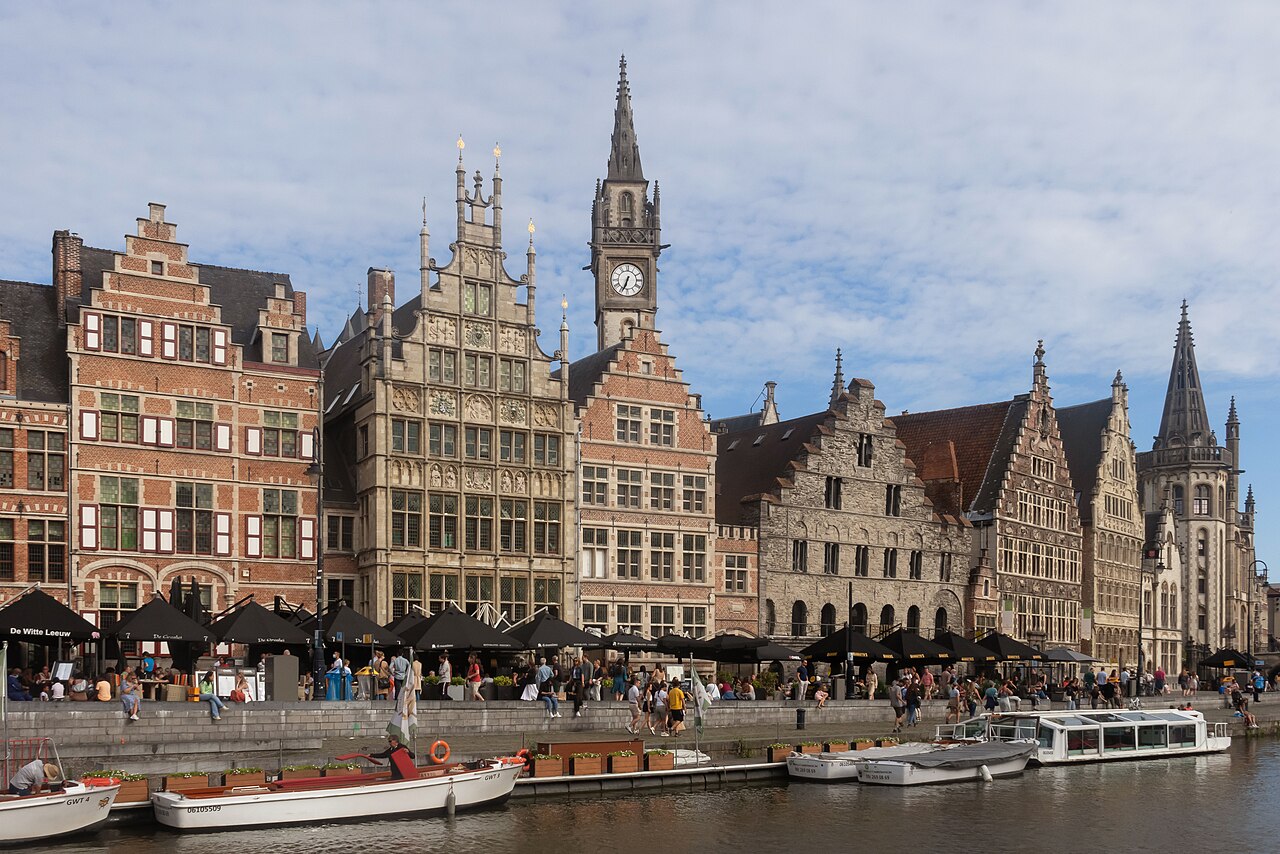
Ghent was one of the biggest cities in Western Europe at the end of the Middle Ages. Today it is the third biggest city of Belgium and one of the most beautiful ones. Nearby Bruges may be cuter, but Ghent is more of a real city, with better museums, better nightlife and restaurants, and far fewer tourist crowds.
The historic core is anchored by three medieval towers visible from all over the city: the Belfry, Saint Bavo's Cathedral — which houses the extraordinary Ghent Altarpiece by van Eyck — and Saint Nicholas' Church. The Graslei and Korenlei, a row of medieval guild houses along the Leie river, form one of the most photographed waterfronts in northern Europe.
Ghent's rebellious character is genuine and historical. The city resisted Spanish rule, French occupation, and the Holy Roman Emperor — Charles V, who was born here, was so infuriated by a tax revolt that he forced the city's leaders to walk through the streets in nooses. Ghentians still call themselves "Stroppendragers" (noose-wearers) with pride. That independent streak gives the city its character today: direct, self-confident, and unimpressed by authority.
The student population — Ghent has one of Belgium's largest universities — keeps the nightlife active, the bars eclectic, and the restaurant scene honest. The Vrijdagmarkt and the lanes around it are a good place to start an evening. The Design Museum and Huis van Alijn are the best museums beyond the cathedral.