Brac
©
Brac

Brac

Central Dalmatian island of pine woods, olive groves, white stone, and the shifting Zlatni Rat beach.

Brač is the third-largest island in the Adriatic and the largest in central Dalmatia, easily reached by ferry from Split. The island is covered in pine woods, vineyards, and olive groves, and its famous white stone has been used in buildings around the world — including, it is claimed, the White House in Washington DC.

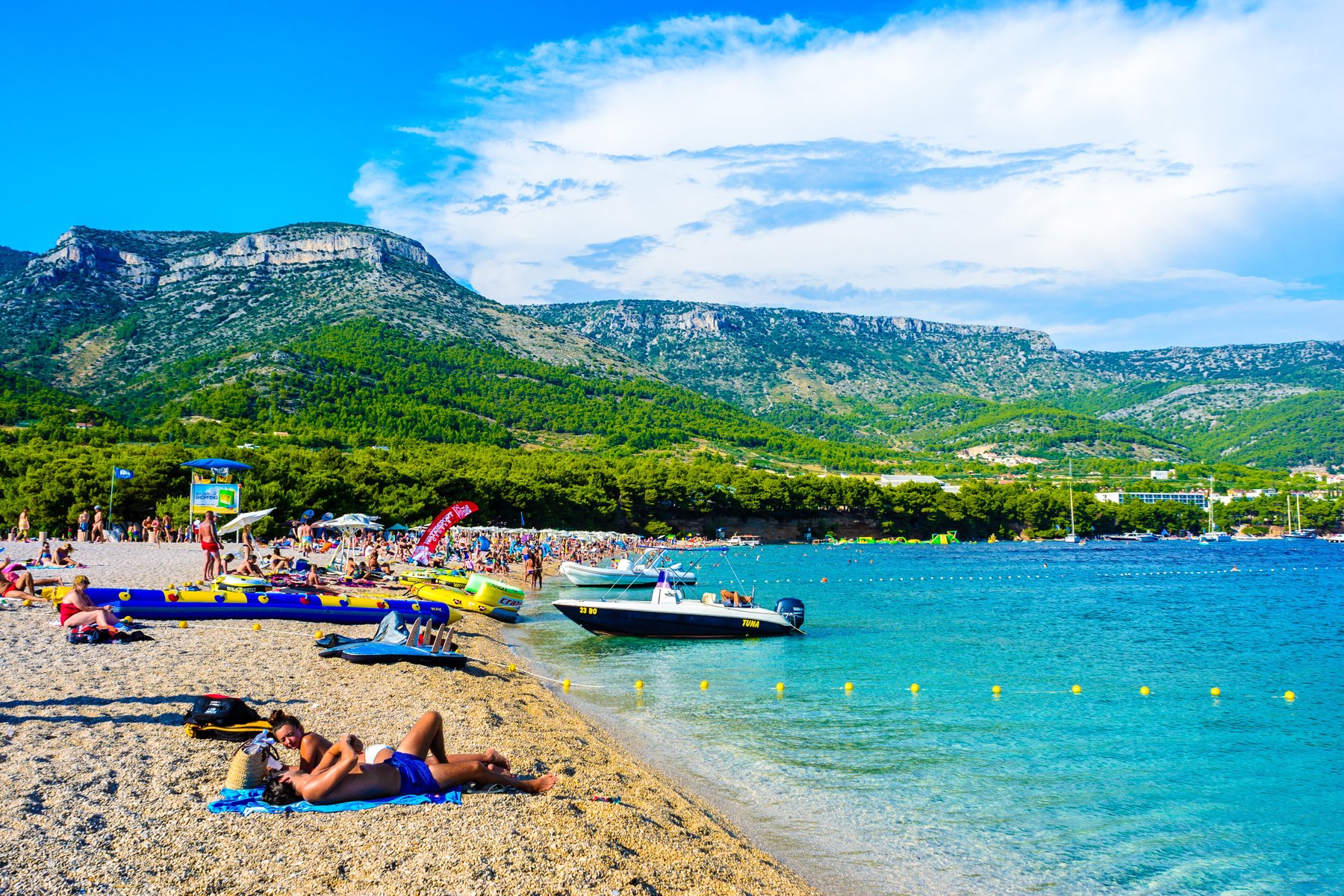
The star attraction is Zlatni Rat (Golden Horn) near the town of Bol on the southern coast, a triangular pebble beach that juts into the sea and shifts shape with the wind and waves. It is one of the most photographed beaches in Croatia and a popular spot for windsurfing. Vidova Gora, the highest point on any Adriatic island at 778 metres, offers a spectacular view down to Zlatni Rat from above.

Beyond Bol, the island is quieter than you might expect. Supetar on the north coast is where the ferry docks. Postire, Milna, and Skrip — the oldest settlement on the island, with a small museum — are all worth exploring by car or bike.
Guide

Bars and Cafes

The nightlife scene on Brač is modest — this is a beach island, not a party island. Bol has the most bars, with a strip running along the waterfront that fills up in July and August. Supetar is quieter. The real pleasure here is a cold beer or a glass of local prošek (sweet dessert wine) on a terrace after dark, with the sea in front of you.

Guide

Beaches

Brač is a pebble-and-rock island for the most part, which keeps the water startlingly clear. Zlatni Rat near Bol is the headline, but the island has other good options — a couple of them genuinely sandy, which is rare in Dalmatia.

Guide

Books

Black Lamb and Grey Falcon by Rebecca West (1941). The definitive literary account of Yugoslavia between the wars. West travelled through Dalmatia in 1937 and her chapters on Split and the Dalmatian coast are some of the most atmospheric writing about this part of the world — the history, the landscape, the people, the complicated sense of identity. Brač itself gets little attention but everything she writes about Dalmatia applies to it.

Croatia: A History by Ivo Goldstein (1999). A clear-headed single-volume history by a Croatian historian, covering everything from the medieval Croatian kingdom through Habsburg rule, Yugoslavia, and independence. Gives context for why the island's stone ended up in so many unexpected places, and for the various waves of refugees and settlers who shaped the population.

The Bridge on the Drina by Ivo Andrić (1945). Andrić won the Nobel Prize for this novel set on the Drina, far from Dalmatia — but it is the best single novel for understanding the long Balkan history of coexistence and conflict that shaped the whole region. Reading it before a trip to Croatia gives everything an additional weight.

Mediterranean: A Cultural Landscape by Predrag Matvejević (1999). Matvejević grew up in Mostar and eventually became a professor in Zagreb. This lyrical essay moves around the Mediterranean, examining harbours, boats, languages, and what it means to be a Mediterranean person. More philosophical than geographic, but it captures something true about Dalmatia's relationship to the sea.

Guide

Day Trips

Brač's position in central Dalmatia makes it a good base for excursions. Split, just 50 minutes away by ferry, is one of the best cities in Croatia — Diocletian's Palace, where the stone for the walls was quarried on this very island, is reason enough. Hvar, Croatia's most glamorous island, is reached by a short summer boat service from Bol or via Split. Trogir, a UNESCO-listed medieval town on a small island connected by bridge to the mainland, is an easy day trip from Split that pairs well with a ferry crossing.

Guide

Eating Out

Brač has good food if you know where to look. The island's olive oil is among the best in Dalmatia — the Strika variety from Brač is prized across Croatia — and fresh seafood is on every menu. Prstaci, tiny shellfish found in rock crevices along the coast, are a local specialty worth trying if you see them. Lamb raised on the island's rocky pasture is also excellent. In Bol, the restaurants near the ferry port are reliable; the ones closer to Zlatni Rat skew more tourist-oriented.

Guide

Getting Around

By car: The only reliable way to see the whole island. A good paved road runs the length of the north coast (Supetar to Pučišća) and another crosses the island from Supetar to Bol. Rental cars are available in Supetar, Bol, and at the airport. Roads in the interior are mostly good but sometimes narrow; the track down to Blaca Hermitage requires a 4WD or you park and walk.

By scooter or motorbike: A popular choice for day-trippers arriving at Supetar. Rentals available near the ferry terminal. Good for reaching beaches and villages without the hassle of a full-sized car.

By bicycle: The island has marked cycling routes. The climb from Bol to Vidova Gora is steep but rewarding. Bikes can be rented in Supetar and Bol.

Local buses: Minibuses connect Supetar to Bol (about an hour, several times daily in summer) and to other north-coast towns. Service is infrequent and schedules change seasonally — fine for a one-way trip to Bol, but don't rely on buses for flexible island exploration.

Water taxis: From Bol harbour to Zlatni Rat (5 minutes, runs all day in summer) and to smaller coves along the south coast.

Guide

Getting There

Ferry from Split: The main route. Jadrolinija runs car ferries from Split harbour to Supetar, the island's main town, roughly every hour in summer (less often in winter). The crossing takes about 50 minutes. Cars must book in advance in July and August — foot passengers can usually walk on. This is the most practical entry point for anyone exploring the whole island.

Catamaran to Bol: A fast passenger catamaran (no cars) connects Split to Bol on the south coast in under an hour. It runs several times daily in summer but service reduces sharply outside high season. Convenient if Bol is your only destination.

Brač Airport: A small airport between Bol and Supetar handles charter flights in summer (mainly from northern Europe). There are few scheduled services.

By car: Once you have crossed on the ferry, a car is strongly recommended. The island is 40 km long and the interior sights — Blaca Hermitage, the Dragon's Cave, Škrip — are not served by reliable public transport.

Guide

Things to Do

Brač rewards those who venture beyond the famous beach. The island's interior hides hermitages carved into cliff faces, medieval villages built from the same white stone that supplied Diocletian's Palace, and a summit that looks down on the whole Dalmatian archipelago. Give it at least two days.

Guide

When to Go

June and September are the best months. The sea is warm, the beaches are less overwhelmed than in July and August, most businesses are open, and ferry connections to Split run frequently. The interior looks its best in early summer when the olive trees and vines are still lush.

July and August are peak season. Zlatni Rat is packed; accommodation prices double or more; and the catamaran from Split to Bol can fill up. The island is still beautiful, but you will share it with everyone else. Book accommodation months ahead.

Spring (April–May) is quiet and very pleasant for walking and cycling. Some restaurants and boat services haven't opened for the season, but the hiking trails are at their best. Vidova Gora offers clear long-range views before summer haze settles in.

Winter (November–March) is deep off-season. Supetar stays open (the ferry keeps running), but Bol is largely closed. A few locals-only konobas remain open. Not recommended unless you want total solitude.

Events: The Bol windsurfing season runs from May to October, with the maestral wind strongest in July and August. There is no major festival on the island, but Split's Diocletian's Palace Summer Festival (nearby on the mainland) draws visitors in July.

dalmatia
Cities

Places in Brac