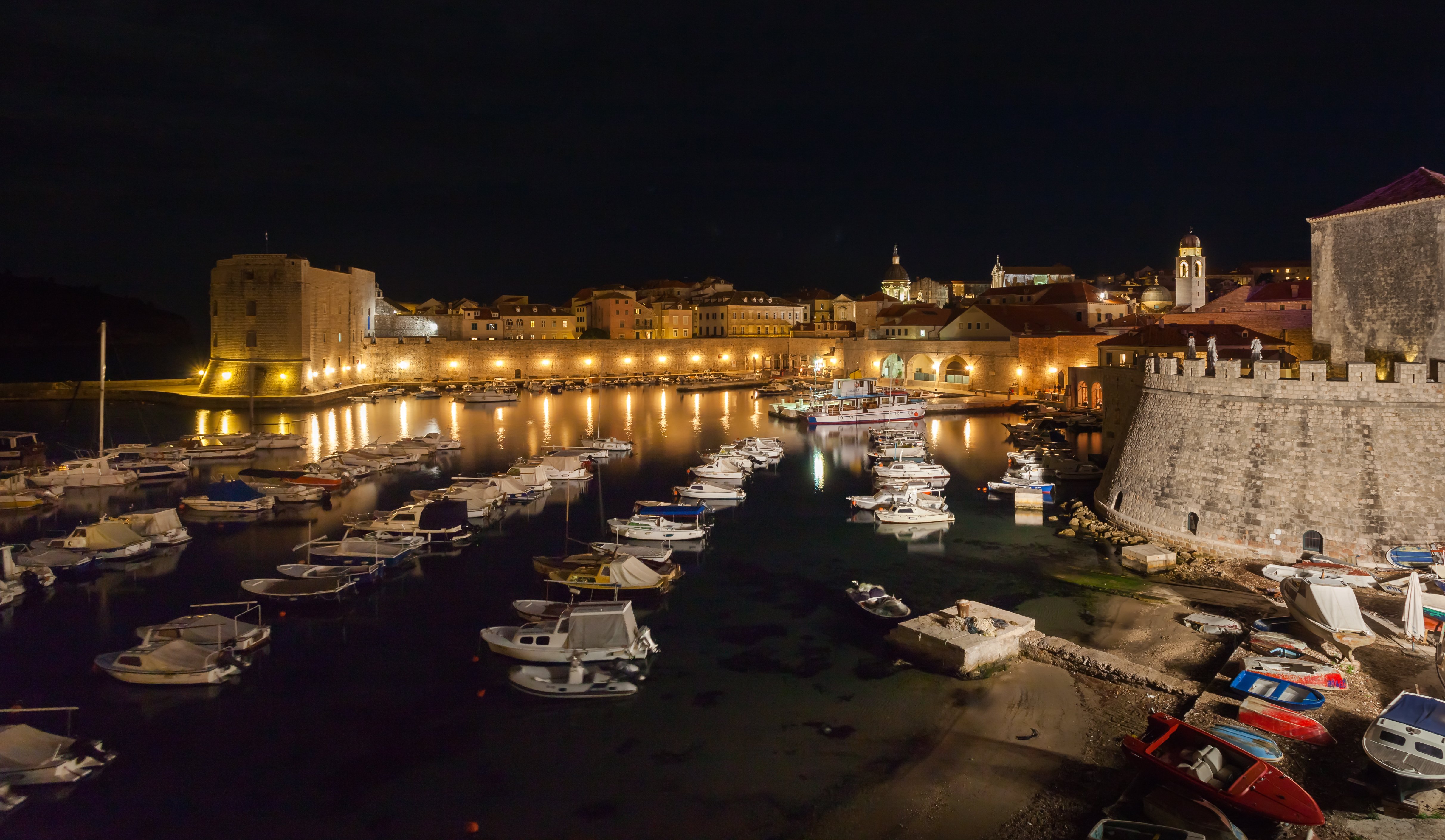
Dubrovnik is one of the most visually striking cities in the Mediterranean. A compact old town wrapped in massive stone walls, perched on cliffs above the Adriatic, it has been drawing visitors for centuries and earned its old nickname "the Pearl of the Adriatic" honestly.
The old town is small enough to walk end to end in fifteen minutes, but dense with history. The Stradun, the polished limestone main street, runs from the Pile Gate to the old port, with churches, monasteries, and palaces tucked into the lanes on either side. The city walls, fully intact and walkable, offer one of the best urban panoramas in Europe. The Rector's Palace, the Franciscan Monastery, and the Dominican Monastery are all within the walls and all worth your time.
Dubrovnik gets crowded in summer, especially when cruise ships dock. The streets can feel overwhelmed between mid-morning and late afternoon in July and August. If you can, visit in May, June, or September when the weather is warm, the sea is swimmable, and the old town is far more pleasant. The Dubrovnik Summer Festival in July and August is worth the crowds if you enjoy open-air theatre and classical concerts in Renaissance courtyards.
Beyond the walls, the coastline rewards exploration. Lokrum island is a ten-minute ferry ride away, the Elafiti Islands make a fine day trip, and Mount Srđ looms above with a cable car, a panorama, and a museum of the 1991 siege. The Peljesac peninsula to the north produces some of Croatia's best red wines. Montenegro is barely an hour south.