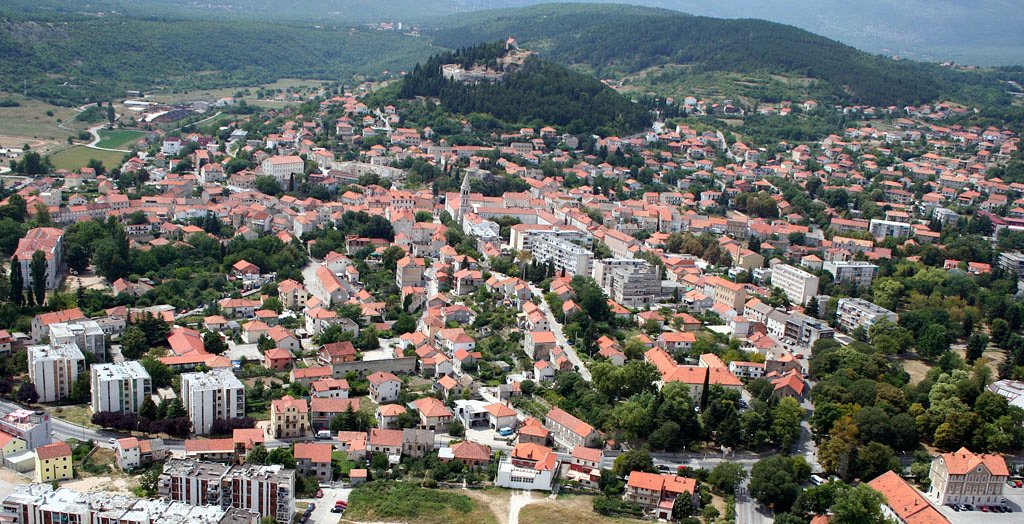
Sinj is a market town in the Dalmatian hinterland, set on a fertile karst plain through which the river Cetina flows, ringed by the mountains Svilaja, Dinara, Kamešnica and Visoka. It sits about 30 km northeast of Split, but feels very different from the coast — the climate is harsher, the landscape more austere, and the mood more emphatically Croatian.
The town grew up around a medieval fortress and a Franciscan monastery housing a revered icon, Our Lady of Sinj (Gospa Sinjska), which draws pilgrims year-round. Its biggest claim to fame is the Sinjska Alka, a jousting tournament held every year on the first Sunday in August to mark the unlikely Ottoman defeat of 1715. Riders in elaborate historical costume gallop the length of the town's main street and attempt to drive a lance through a small iron ring (the alka) suspended on a wire. Precision matters — the central bullseye scores three points, the outer ring just one — and the crowd takes it seriously. The Alka has been on UNESCO's Intangible Cultural Heritage list since 2010, and the week around it is the best time to visit.
Food is taken seriously in Sinj. The town has a reputation for keeping older recipes alive: lamb roasted under a peka, arambaši (stuffed cabbage rolls, a Dalmatian-hinterland specialty), freshwater crayfish and trout from the Cetina, and frogs' legs, once common across this part of Croatia and still on menus here when they're elsewhere forgotten.
Outside of Alka week, Sinj is quiet and unhurried — a good base for the Cetina canyon, the source of the Cetina, the Roman ruins at Aequum, and the villages of Cetinska krajina, and an honest glimpse of inland Dalmatia that most visitors never see.