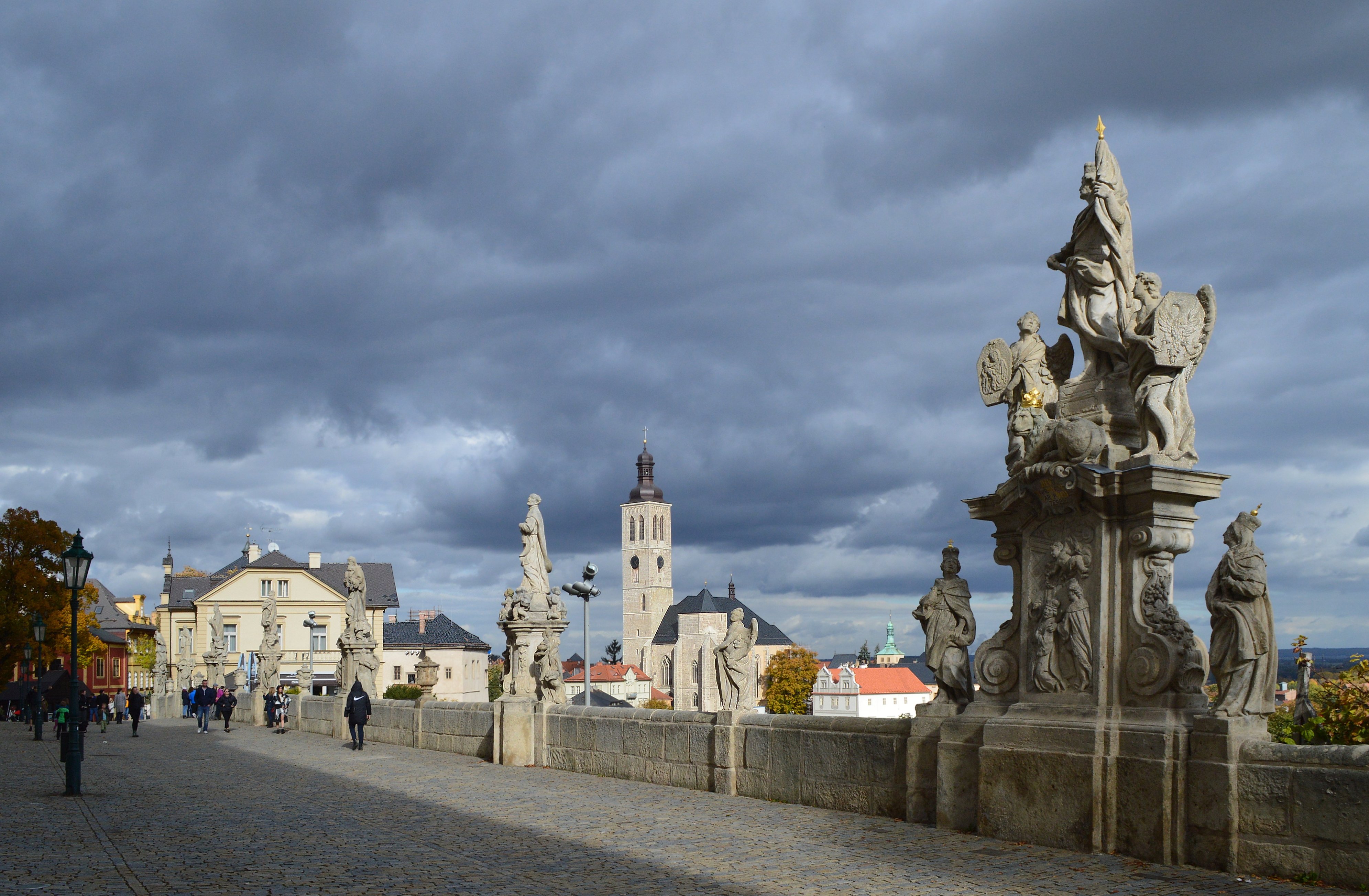
Kutná Hora
©
Kutná Hora

Kutná Hora

Kutná Hora is a Bohemian town whose medieval wealth came from rich silver mines.

Kutná Hora sits about 70 kilometres east of Prague on a ridge above the Vrchlice river, and for about a century in the late medieval period it was the second most important city in the Bohemian Kingdom — wealthy, powerful, and architecturally ambitious in a way that has left a remarkable legacy. The riches came from silver: a rich seam discovered in the 13th century made the town effectively the mint of Central Europe, and kings and princes fought over control of it. The silver ran thin by the 16th century, but the buildings remained.

The historic centre is a UNESCO World Heritage Site. Its architectural crown is St. Barbara's Church, a Gothic cathedral begun in the late 14th century whose three soaring tent-like roofs are visible from a distance across the vineyards. Inside, the nave is extraordinary — it was built by Benedikt Ried and Matyáš Rejsek, the same architects responsible for Prague's finest late Gothic work. The Italian Court, the royal mint, is the other centrepiece — a fortified palace in the centre of town where silver coins were struck and kings occasionally resided.

The most unusual attraction is some distance from the centre, in the suburb of Sedlec: the Sedlec Ossuary, a small chapel whose interior is entirely decorated with the bones of some 40,000 people. The bones were arranged in the 1870s by a local woodcarver into elaborate chandeliers, coats of arms, and garlands that line every wall. It sounds macabre and it is, but it is also genuinely extraordinary and unlike anything else in Europe. The Sedlec Abbey nearby, a UNESCO-listed cathedral of rare Baroque-Gothic refinement, is far less visited despite being one of the finest buildings in Bohemia.

Kutná Hora makes an easy day trip from Prague, but a night's stay allows you to see the cathedral in the evening light and to explore the town after the day-trippers leave. The medieval town centre is compact and walkable, with several good cafés and a few restaurants scattered among the steep lanes.

Guide

Getting There

From Prague, Kutná Hora is about 70 kilometres east. Direct trains run from Prague Hlavní nádraží (main station) roughly every hour or two, taking about 55 minutes to Kutná Hora hlavní nádraží (the main station, a short walk from the town centre). Many trains stop first at Kutná Hora Sedlec, which is convenient for the ossuary and abbey before continuing to the centre.

By car, take the D1 motorway east from Prague and then follow signs for Kutná Hora on the road toward Čáslav. The drive takes about an hour from central Prague. There is a car park near the town centre. Day trips by bus are also possible from Prague, with several companies running services.

Guide

Things to Do

Kutná Hora's sights divide neatly between the historic town centre and the suburb of Sedlec, about two kilometres away. In the centre, St. Barbara's Church is the architectural highlight — one of the finest Gothic buildings in Central Europe. The Italian Court traces the town's silver-minting history, and the Czech Museum of Silver offers underground tours of the actual medieval mine shafts. The Plague Column anchors the central square.

In Sedlec, the Sedlec Ossuary — the famous bone church — draws most visitors, but the Sedlec Abbey next door is a masterpiece of Gothic-Baroque architecture that deserves equal attention. Both are a 20-minute walk or short cab ride from the town centre; the Sedlec train stop is convenient if you are coming from Prague.

Guide

When to Go

Kutná Hora is heavily visited in summer, especially July and August when tour buses from Prague arrive daily and the main sights can feel crowded by mid-morning. Spring and autumn are more pleasant: the ossuary and churches are no less impressive and the town is noticeably quieter. A weekday visit at any time of year is better than a weekend.

Winter is perfectly fine for a visit — the town is quiet and the cathedral looks particularly good under grey skies — but confirm opening hours for the ossuary and museum, which may have reduced hours from November to March. The St. Barbara's Church and Italian Court are open year-round.