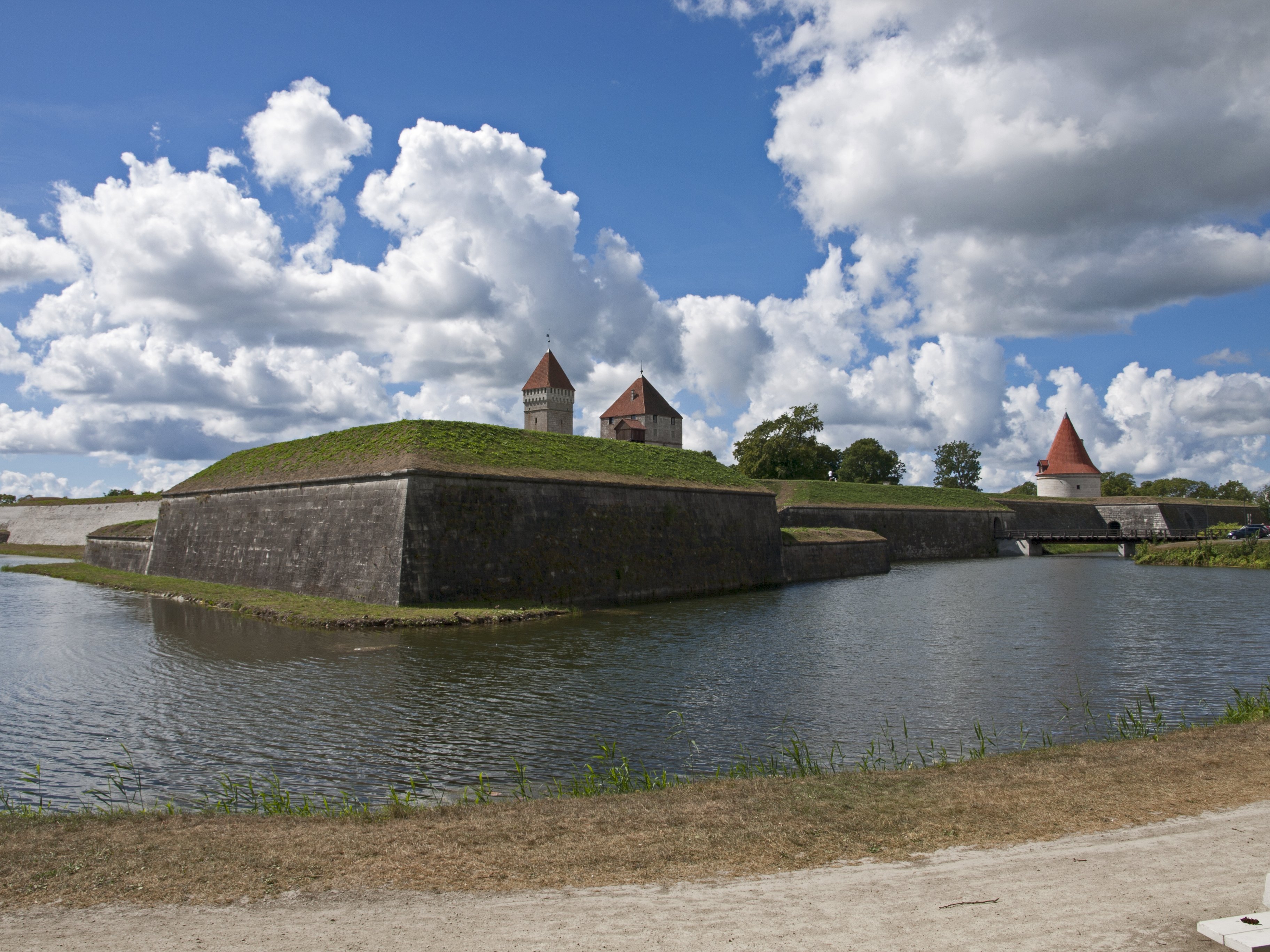
Kuressaare is the capital of Saaremaa, Estonia's largest island, and the kind of small town that rewards slow travel. It sits on the southern coast of the island, facing Livonia Bay, with a population of around 13,000 — quiet, unhurried, and genuinely pretty. Its cobbled streets are lined with low wooden houses painted in faded pastels, the pace is easy, and the medieval castle at the edge of town is one of the best-preserved in the entire Baltic region.
The castle — Kuressaare Episcopal Castle, built for the bishops of Ösel-Wiek beginning in the 14th century — dominates the southern end of town. It is a severe, compact fortress in Late Gothic style, surrounded by a moat, and remarkably intact: you can walk its ramparts, explore the vaulted halls, and visit the Saaremaa Museum inside. Most visitors spend an hour or two there and come away genuinely impressed.
Beyond the castle, the old town is worth wandering on foot. The 1889 Kuursaal — a spa hall built in the resort tradition, its white wooden frame a little faded but still graceful — sits near the castle park. The central square has a handful of cafes and the kind of street life that belongs to a town comfortable in its own skin. Kuressaare has built a reputation as a spa destination: the local dolomite mud has been used in treatments since the 19th century, and there are several spa hotels offering everything from seawater baths to full wellness programmes.
The town has worn several names. Its historic German name was Arensburg; it became Kuressaare in 1917, then Kingissepp during the Soviet period (1952–1988), named after the Bolshevik Viktor Kingissepp who was born here. After independence, it reverted to Kuressaare, and in October 1990 it became the first town in Estonia to restore its own self-governing status. That particular pride is still palpable.
It makes an excellent base for exploring Saaremaa — the Kaali meteorite crater, the windmills of Angla, the western tip of the island at Harilaid are all within easy reach by car or bike.