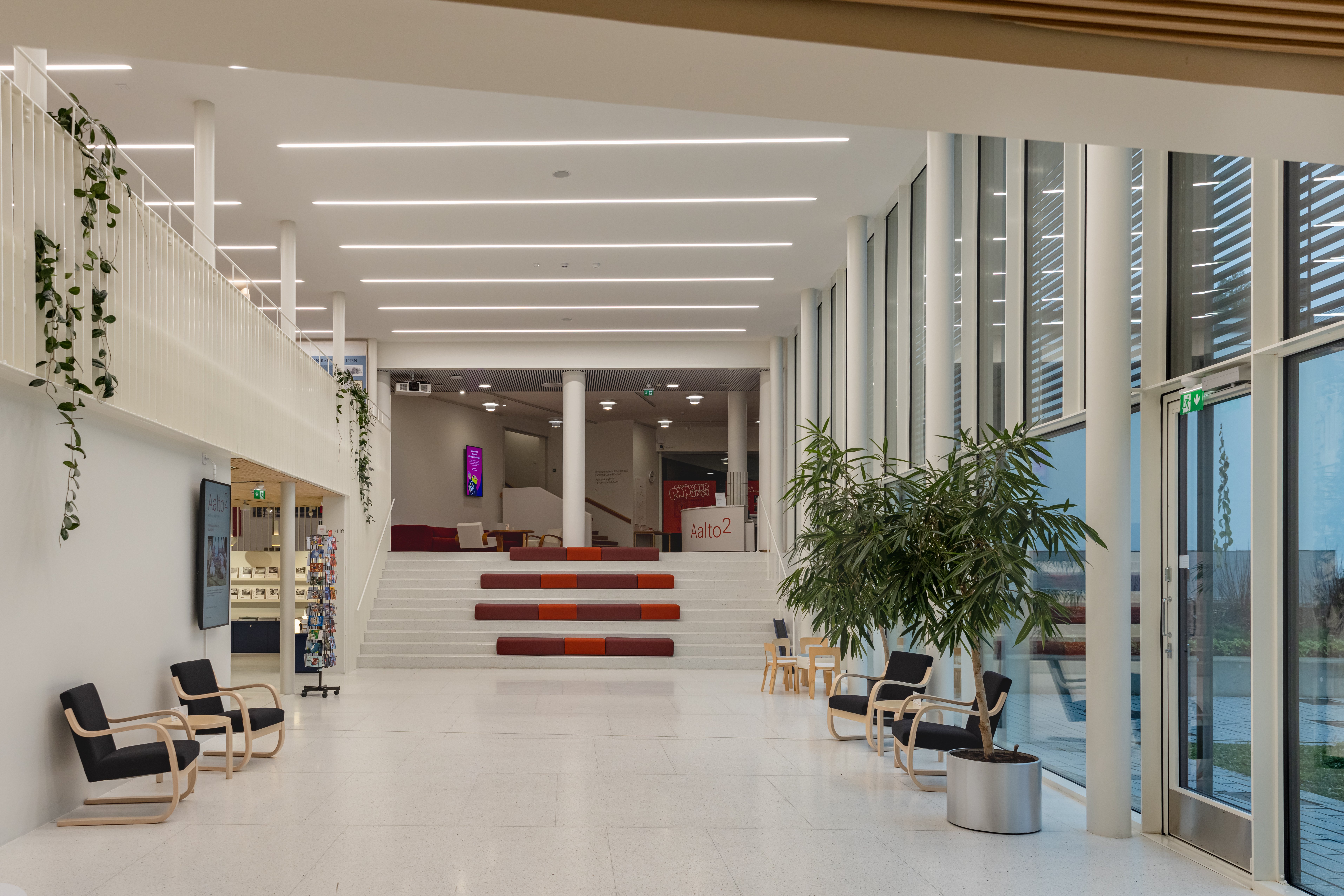
Jyväskylä is the regional capital of Central Finland, a lively university city set among lakes and forested hills roughly 270 kilometres north of Helsinki. It is above all an Alvar Aalto city: the Finnish architect who changed the course of 20th-century design was born nearby, studied here, and returned to design some of his most important early buildings. The Alvar Aalto Museum is the main museum dedicated to his life and work, but the Aalto trail extends much further — the Workers' Club, the Defence Corps Building, and the university campus are all his, and the nearby Säynätsalo Town Hall is one of the great small buildings of the 20th century.
Beyond Aalto, Jyväskylä is a city that lives on its lakes. Jyväsjärvi sits practically in the centre of town, its shores lined with parks, cycling paths, and café terraces. The surrounding landscape of hundreds of lakes and forests is the quintessential Finnish interior, and the city makes a good base for exploring the Päijänne National Park to the south. Students from the University of Jyväskylä and the Jamk University of Applied Sciences fill the bars and restaurants, and the city has a notably good food and nightlife scene for its size.
Jyväskylä is also a city shaped by education in an unusual way — it was home to Finland's first Finnish-language lyceum and teacher training institute, at a time when Swedish was the language of culture and administration. This gives it a particular pride in Finnish language and culture that still flavours the place.