Millau
©
Millau

Millau

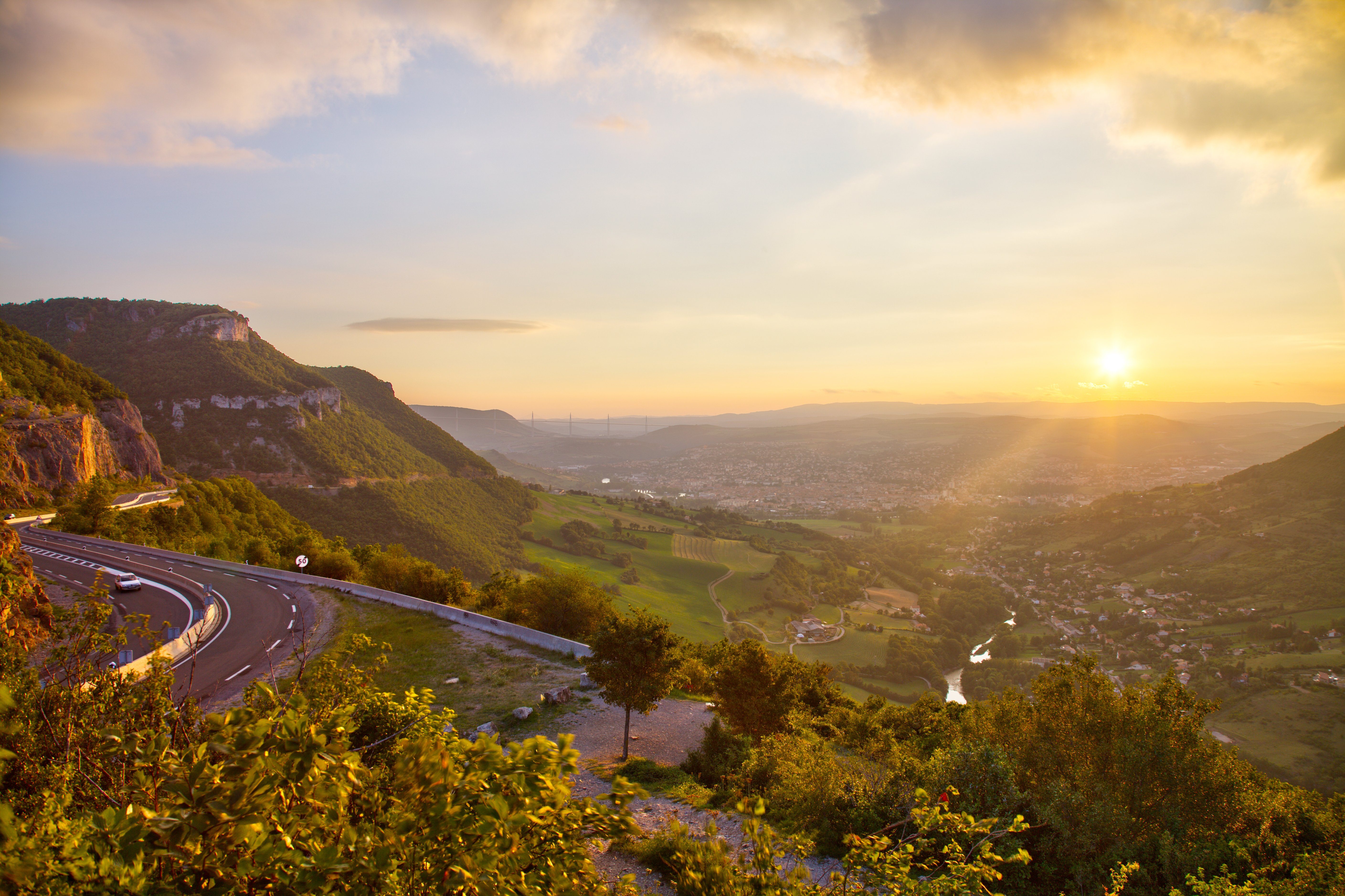
Aveyron valley town beneath the Millau Viaduct, once famous for gloves and road traffic.

Millau sits in the valley of the Tarn, a pleasant town in the Aveyron département that was long known for two things: leather glove production and appalling traffic jams on the route south. The second problem was solved spectacularly in 2004 with the opening of the Millau Viaduct — the world's tallest bridge, designed by Norman Foster, its slender cable-stayed pylons rising over 340 metres above the valley floor. It is as much a work of art as a feat of engineering, and worth seeing from below as well as driving across.

The town itself is agreeable without being a major destination. The old centre has some attractive squares, the weekly market is good, and the Musée de Millau covers the local trades of leather and Roman pottery. The surrounding Grands Causses — vast limestone plateaus cut by deep gorges — offer excellent hiking, climbing, and canoeing on the Tarn. The Gorges du Tarn and nearby gorges of the Dourbie and Jonte are spectacular, and the strange dolomite city of the Chaos de Montpellier-le-Vieux is twenty minutes east. The Roman pottery site of La Graufesenque is a short walk from the centre, and Roquefort-sur-Soulzon, where the famous cheese is aged in natural caves, is just a short drive south.

Guide

Getting There

Millau sits on the A75 motorway, the free north-south route between Clermont-Ferrand and the Mediterranean. The viaduct itself is a toll bridge — currently around ten euros for a car — and is the only paying section of the otherwise free A75.

Trains run from Béziers via Bédarieux on the slow but very scenic Aubrac line (around two and a half hours), and from Paris with a change at Béziers. There are no high-speed connections; the train is for the scenery, not the speed. The nearest large airports are Montpellier (about ninety minutes by car) and Toulouse (around two hours). The local Millau-Larzac airfield handles only small aircraft.

Long-distance buses on the Eurolines and Flixbus networks stop in Millau on the route from Paris and Clermont-Ferrand to Béziers.

Guide

Things to Do

Millau's biggest draw stands a few kilometres downstream from the town centre: the Millau Viaduct, the world's tallest bridge and a Norman Foster design that looks like a row of yacht masts strung across the valley. It is best appreciated from below — there is a dedicated viewing area at Aire du Viaduc on the A75 with information panels and walking paths, and the road bridges in the valley give angles you cannot get from the highway.

The town itself rewards a slow afternoon. The old centre clusters around the Place du Maréchal Foch, with its arcaded square and bell tower, and the medieval bridge over the Tarn. The Musée de Millau, housed in the eighteenth-century Hôtel de Pégayrolles, covers the town's two great trades: leather glove making and the Roman pottery industry at La Graufesenque, whose red-slip Samian ware was exported across the empire.

Outside the town, the limestone causses begin. The Causse Méjean and the Causse Noir are vast empty plateaus cut by deep gorges; the Gorges du Tarn and Gorges de la Jonte are spectacular drives or canoe routes. The Chaos de Montpellier-le-Vieux, a ruined-city landscape of weathered dolomite, lies twenty kilometres east. Roquefort-sur-Soulzon, where the famous blue cheese is aged in natural limestone caves, is half an hour to the south and well worth the detour.

Guide

When to Go

Late spring through early autumn is the time to visit. From May to early October the gorges are open, the canoe rentals are running, and the causses are warm enough for long walks. July and August get genuinely hot — 30°C is normal in the valley — and the popular spots like Sainte-Énimie fill up, so consider June or September if you have the choice.

Spring is good for wildflowers on the causses and for seeing the vultures with chicks on the cliffs of the Jonte. Winter is quiet: the town stays open but most gorge activities and many cave tours close from November to March. The viaduct itself is visible year round and is striking in autumn mist.

The annual Festival des Hivernades brings street music and traditional dancing to Millau in late July, and the Causse de Larzac sheep festival in early October celebrates the cheese trade.