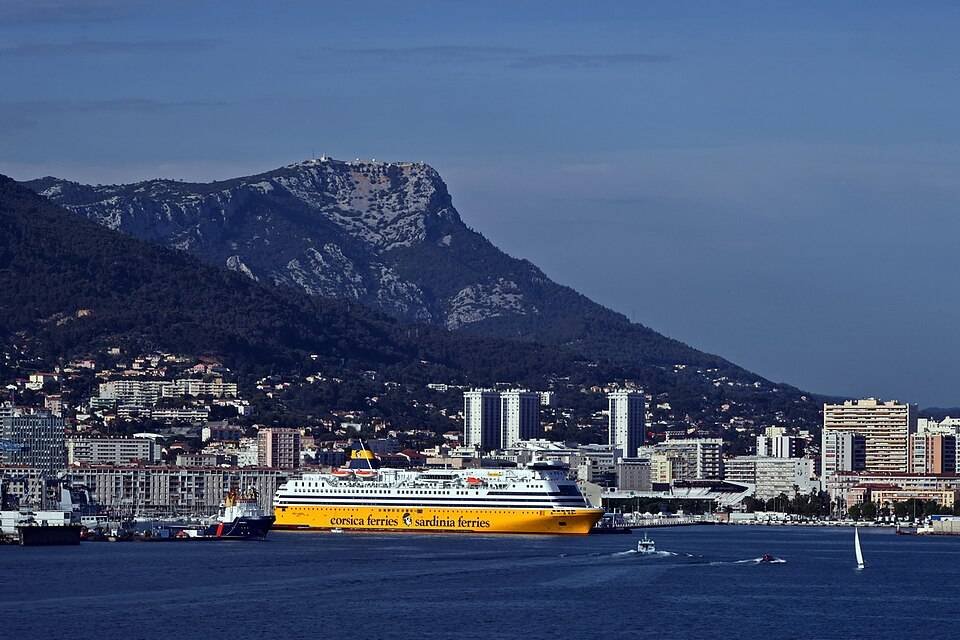
Toulon is a working naval city on the western edge of the Cote d'Azur, home to France's Mediterranean fleet and refreshingly free of the polished tourism that defines Nice and Cannes. The old port is lively and a bit rough around the edges — the morning fish market on the Quai Cronstadt is excellent, and the narrow streets behind it are full of small restaurants and bars that cater to locals rather than visitors.
The cable car up Mont Faron is not to be missed. From the summit at 584 metres you get a panoramic view over the great natural harbour, the fleet at anchor, the offshore islands, and on clear days the coastline stretching east toward Saint-Tropez. There is a small zoo at the top and a memorial to the 1944 liberation of Provence — Operation Dragoon, the Allied landings that Churchill opposed and Roosevelt overruled.
Toulon's naval history runs deep. The city was where Napoleon first made his name in 1793, directing the artillery that recaptured the port from the British. The Musée National de la Marine, housed in a handsome building on the quay, covers the city's maritime story from Louis XIV to the present. The old port and fish market on Quai Cronstadt is one of the best in Provence, most lively before 9am. The Cathédrale Notre-Dame-de-la-Seds is worth entering for its Baroque interior and its extraordinary history — it was briefly converted into a mosque in 1543 for an Ottoman fleet overwintering in the harbour.
The Plages du Mourillon — sandy sheltered beaches two kilometres east of the old port — are where locals actually swim. The city makes a good base for exploring the Var interior and the Iles d'Hyeres, easily reached by bus or boat.