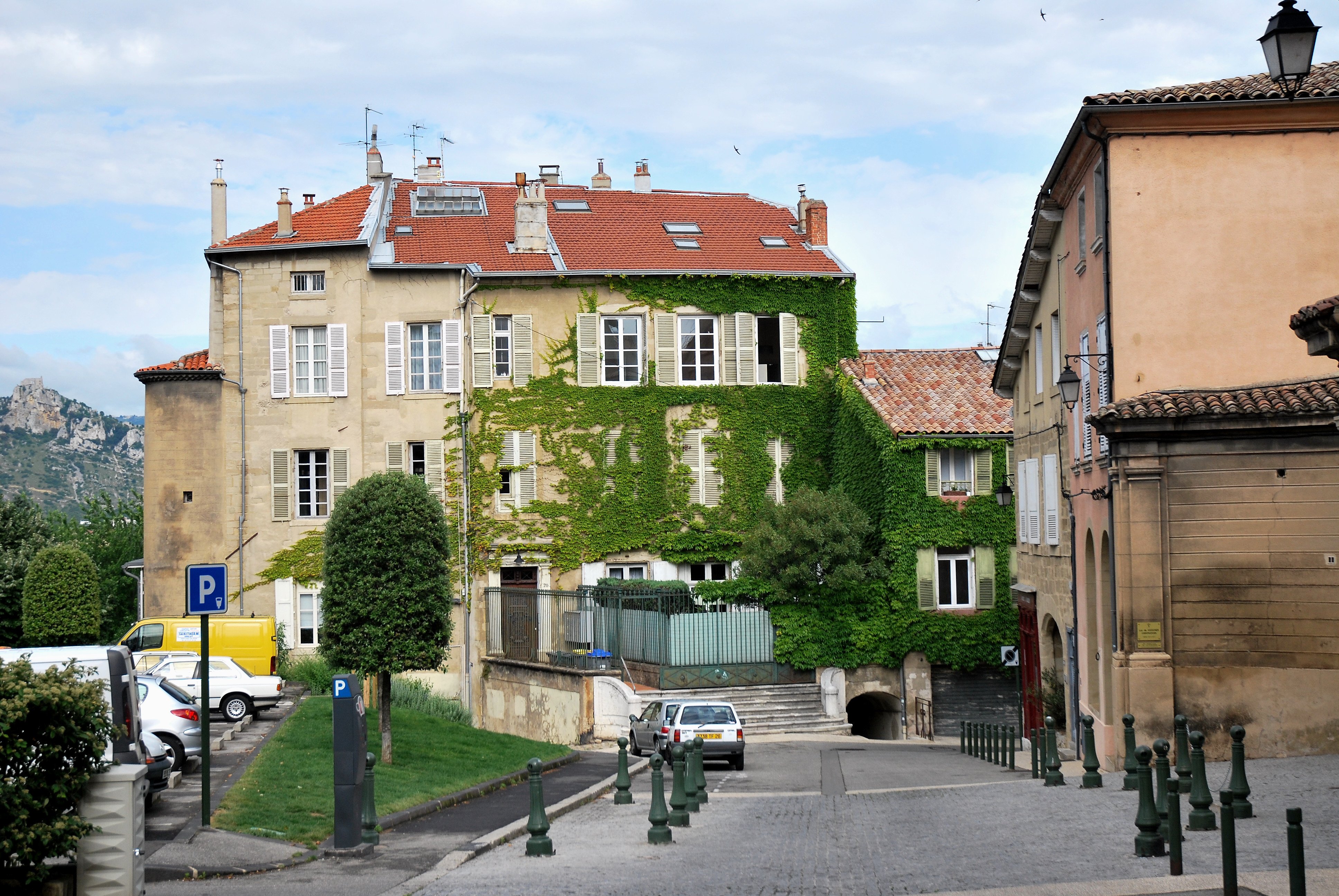
Valence sits on the left bank of the Rhône, roughly halfway between Lyon and Marseille, and most travelers encounter it as a stop on the way south. That's a reasonable way to use it — the TGV pauses here, the autoroute passes just outside, and the old town is compact enough to explore in a few hours. Founded as a Roman colony and later a bishopric of some importance, Valence spent centuries caught between rival powers, which at least left it with decent architecture.
The Cathédrale Saint-Apollinaire is the one sight you should not skip. Built in the 11th century in the Romanesque style of the Auvergne and consecrated in 1095 by Pope Urban II, it has the solid, rooted feel of early medieval church-building at its best. Inside, look for the tomb of Pope Pius VI, who died here in French captivity in 1799 — an oddly affecting monument to the end of an era. Beside the cathedral, the Musée de Valence occupies a handsome bishop's palace and holds an unexpectedly fine collection of drawings by Hubert Robert. The Maison des Têtes on the Grande Rue is a Renaissance townhouse whose facade is covered in 71 carved heads representing the winds.
Valence is also, less obviously, a gastronomic destination. Maison Pic on the Avenue Victor Hugo holds three Michelin stars under Anne-Sophie Pic, one of the great French chefs of her generation.
Across the Rhône, the Château de Crussol sits on a limestone spur above the Ardèche bank and rewards the thirty-minute walk up from Saint-Péray with panoramic views of the valley. What makes Valence worth more than a fleeting glance is its position as a gateway to the Drôme, the département that spreads to the east. Drive an hour into that countryside and you are in lavender fields, small vineyards, and medieval villages that feel entirely removed from the motorway.