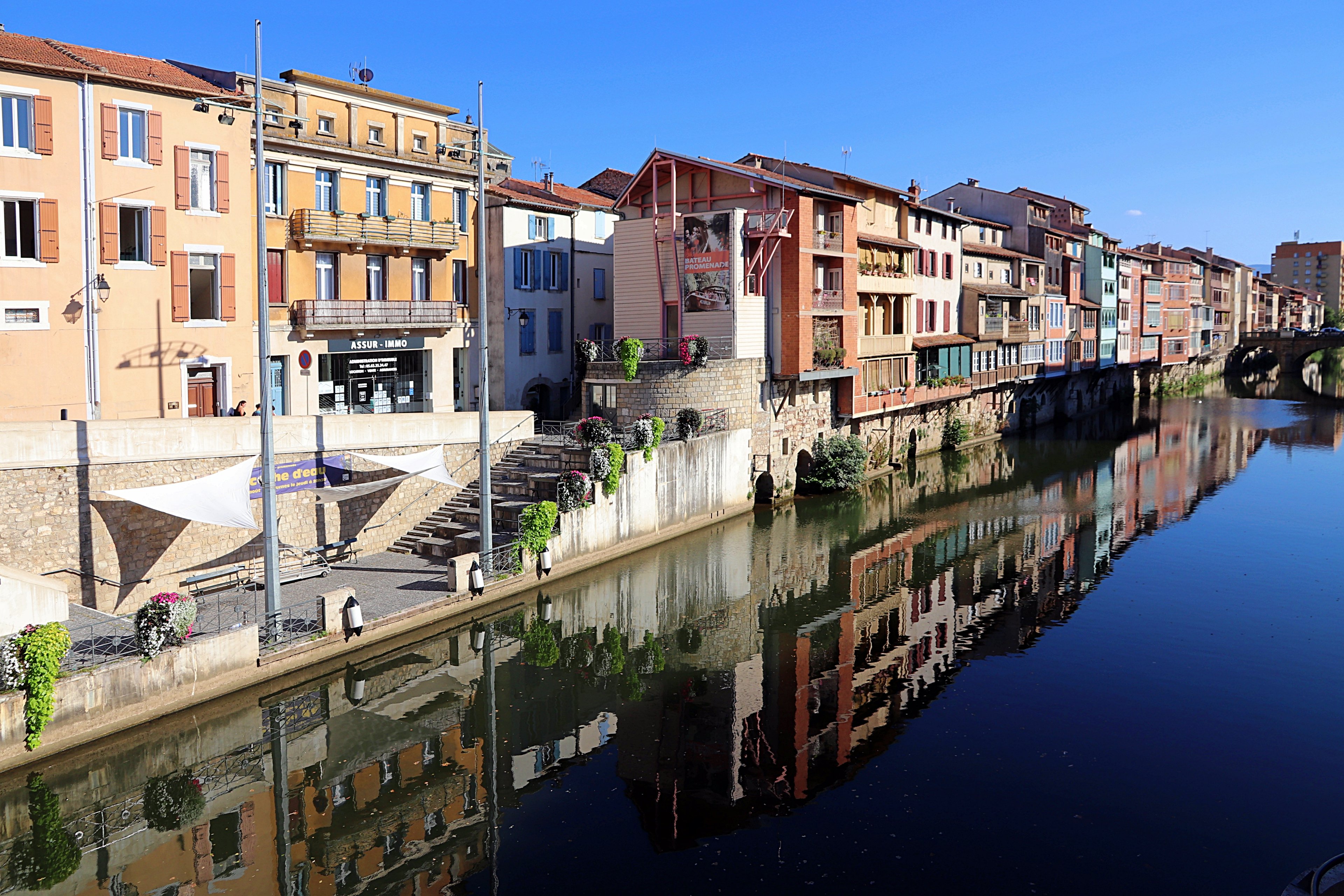
Castres sits in a quiet bend of the Agout river, on the south-western edge of the Tarn department and at the foot of the Sidobre granite plateau. With about 41,000 residents it is the second town of the Tarn after Albi, but it sees a fraction of the visitors — most tourists pass straight through on their way between Toulouse and Carcassonne. They miss something worth half a day at least.
The signature view is the row of crooked, brightly painted Maisons sur l'Agout on the riverbank — the former workshops of dyers, tanners, and weavers from the 13th to the 17th centuries, with their wooden balconies overhanging the water. From the right angle on the opposite bank it looks more like a smaller Bruges or a corner of Venice than anywhere in southern France.
The town has a serious cultural anchor in the Musée Goya, which holds one of the most important collections of Spanish painting outside Spain — three Goyas, including the Philip IV in Hunting Costume, plus Velázquez, Murillo, Ribera, and a wall of moody El Greco-school work. The museum is housed in the former Bishop's Palace, designed by Jules Hardouin-Mansart, with a small formal garden laid out by André Le Nôtre — Versailles in miniature.
Castres is also the birthplace of Jean Jaurès, the socialist leader assassinated on the eve of the First World War, and a small but thoughtful museum tells his story. The market on Tuesday, Thursday, and Saturday mornings spreads through the town centre and is one of the better food markets in the Tarn. Stay long enough for an evening drink on the river — that is when Castres looks the way the postcards promise.