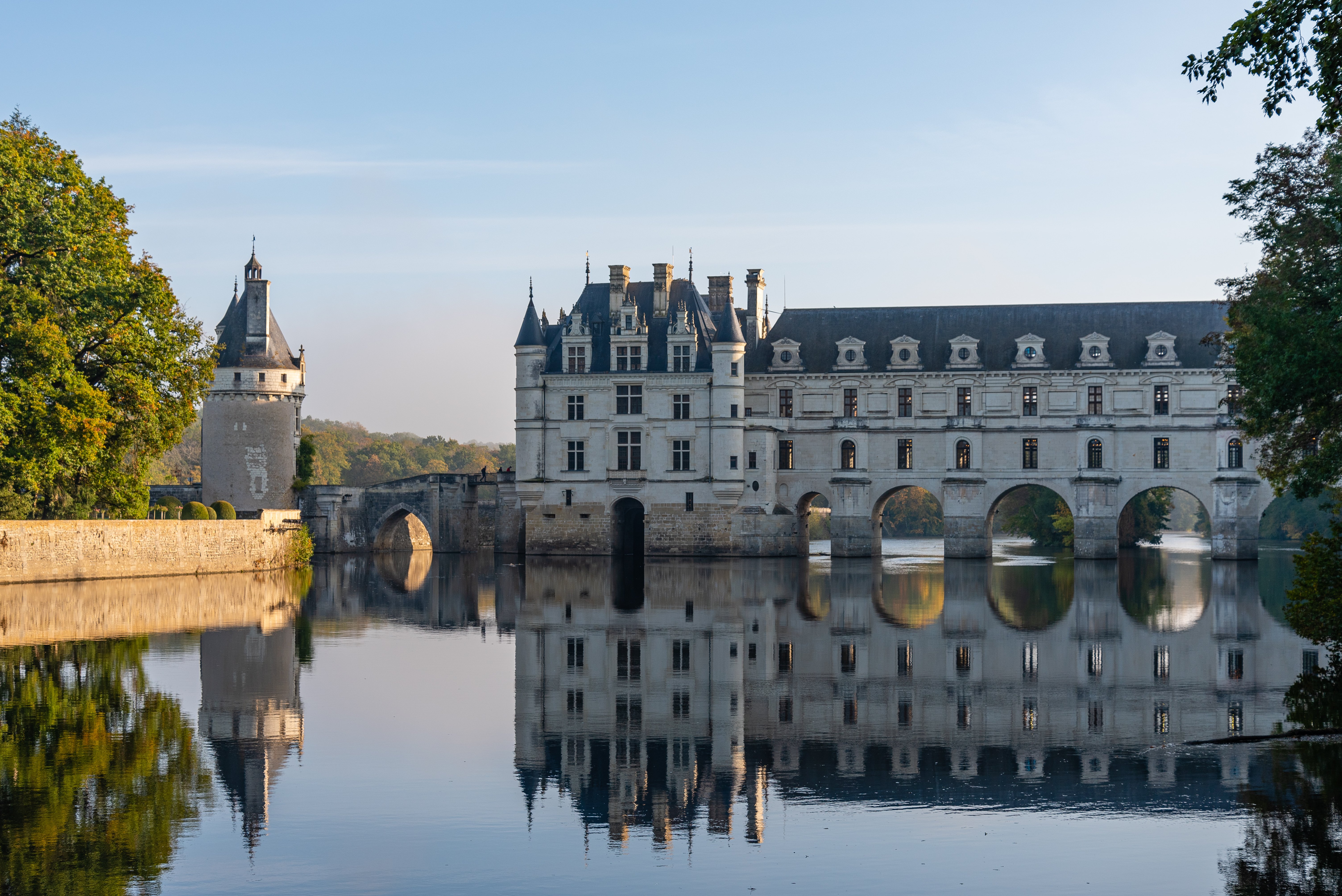
Loire Valley château spanning the River Cher, famous for its arches and history of powerful women.
The Château de Chenonceau is one of the most beautiful and most visited castles in the Loire Valley. Built in the early 16th century by Thomas Bohier, finance minister to François I, it spans the River Cher on a series of graceful arches — the gallery bridge is its most iconic feature and one of the defining images of the French Renaissance.
After Bohier's death, Henri II gave the castle to his mistress Diane de Poitiers. When Henri died, his queen Catherine de' Medici forced Diane out and took it for herself. Since then the château has almost always been owned or managed by women, earning it the nickname "the ladies' castle."
The interior is richly furnished and well-preserved, with fine tapestries and period furniture. The gardens on either bank — Diane's formal garden and Catherine's more expansive one — are worth time on their own. In summer, the château is open for evening visits with illumination.
Guide
Getting There
Chenonceau is 35 km east of Tours and about 12 km from Amboise. By train, the Chenonceaux station (note the different spelling from the château) is on the Tours–Vierzon line with several connections daily from Tours; the walk from the station to the château entrance takes about 10 minutes. If you are making a day trip from Paris, trains from Gare Montparnasse reach Tours in about 55 minutes on the TGV; the Chenonceaux regional train then takes around 45 minutes.
By car, Chenonceau is easily reached from the D976 along the Cher valley. Parking is available at the château. Cycling the Loire Valley cycle route (La Loire à Vélo) passes nearby, and Chenonceau makes a natural stop on a cycling tour between Tours and Amboise.
The château is usually open from around 9am to 7pm (shorter hours in winter). Book tickets online in advance in summer — queues at the gate can be long.