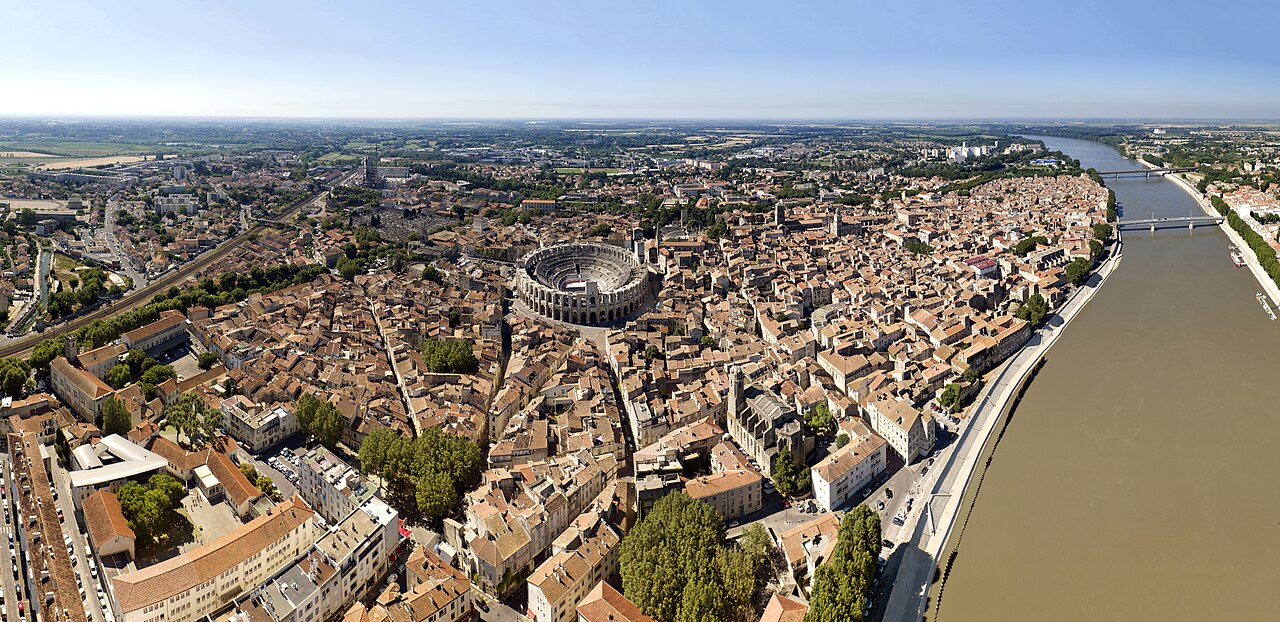
Arles packs a startling amount of history into a small Provencal town. The Romans built an amphitheatre here that still hosts bullfights and summer concerts. Van Gogh arrived in 1888, painted over 200 canvases in fifteen months, and many of the streets and squares he captured — including the famous Café Terrace at Night — can still be recognised today.
The Roman arena dominates the centre, but there is more to find. The Musée de l’Arles antique holds an exceptional collection of sarcophagi, mosaics, sculptures, and a remarkably well-preserved Roman river barge pulled from the Rhône in 2011. The Cryptoporticus beneath the Place du Forum is a vast underground Roman gallery few visitors find. The Église Saint-Trophime and its cloister represent Romanesque carving at its finest. The Alyscamps — a tree-lined avenue of Roman and early Christian sarcophagi — was painted by Van Gogh and Gauguin together in 1888.
Modern Arles has added to its cultural stock considerably. The LUMA Tower, a Frank Gehry building sheathed in 11,000 stainless steel panels, anchors an ambitious new arts campus south of the centre. The Fondation Vincent van Gogh keeps his legacy alive with contemporary art responding to his influence. The Rencontres d’Arles photography festival fills the city every July with some of the best photography exhibitions anywhere in the world.
Beyond the old town, the Camargue stretches south: a vast wetland of flamingos, wild horses, and black bulls. It is superb for cycling, hiking, and horseback riding. The combination of Roman ruins, Van Gogh connections, excellent restaurants, the Saturday market, and the Camargue on the doorstep makes Arles one of the most rewarding stops in Provence.