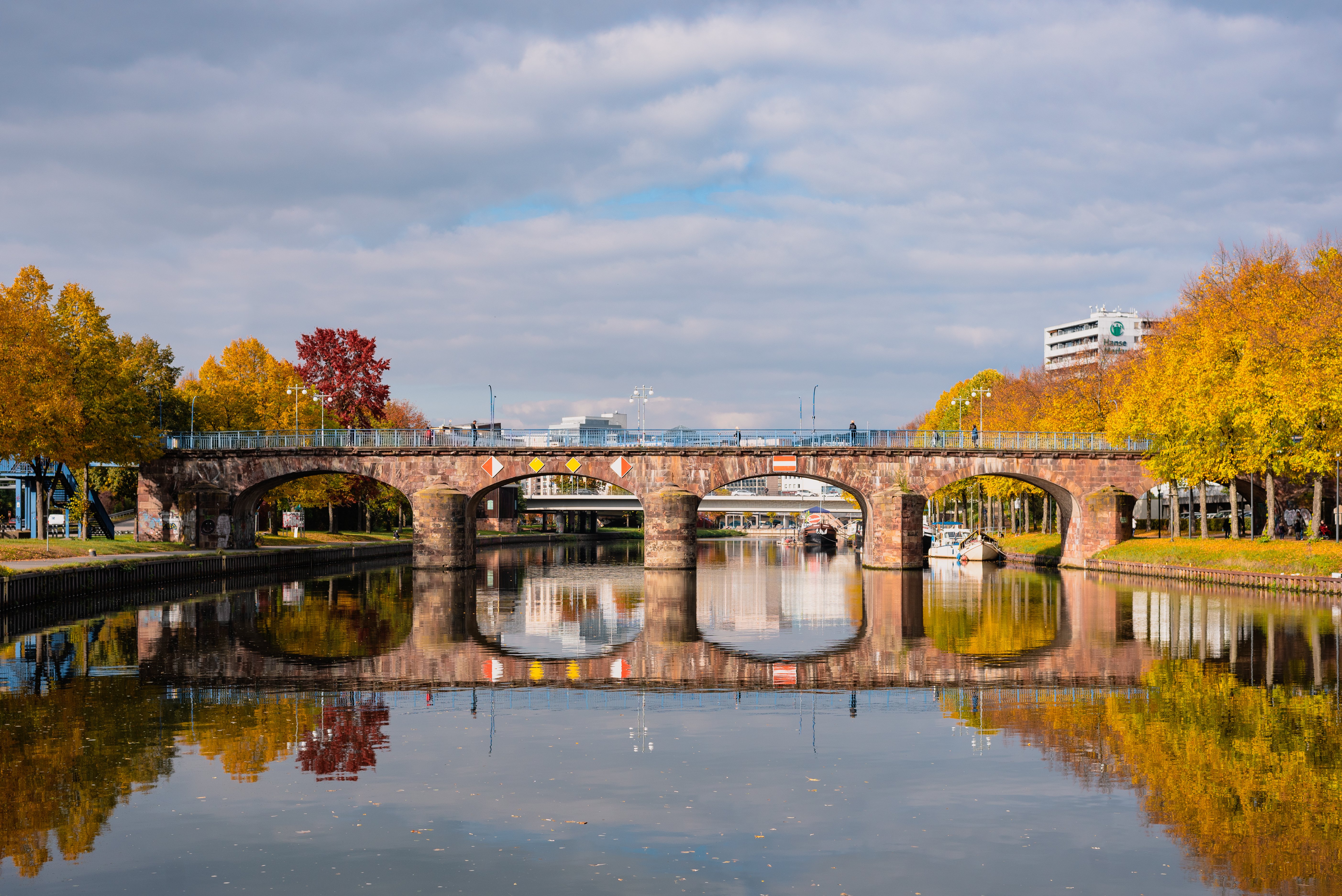
Saarbrücken is the capital of the Saarland, Germany's smallest and most French-leaning state, tucked into the country's western corner against the French border. It is a city of around 180,000 people on the River Saar, prosperous, walkable and surprisingly cosmopolitan given its size — the proximity of France means everyone here speaks at least some French, the bakeries sell as many croissants as they do Brötchen, and the food and wine are noticeably more Gallic than in the rest of Germany.
For centuries Saarbrücken was the seat of the princely house of Nassau-Saarbrücken; the baroque architect Friedrich Joachim Stengel left them one of the finest small court centres in southern Germany, including the elegant Ludwigskirche, one of the great German Protestant churches of the 18th century, and Saarbrücken Castle above the river. The Saar itself was an industrial artery in the coal-and-steel years and the city still bears the marks of that era — the Völklinger Hütte (UNESCO-listed), an enormous preserved 19th-century ironworks 10 km downstream, is the best industrial-heritage site in the country. The St Johanner Markt, a cobbled square lined with cafés and bistros, is the most pleasant place to sit and watch the city go by.
France is only a few kilometres away, which is the real appeal for anyone based here. Metz, 70 km south on the French side, has one of the finest Gothic cathedrals in France and the Centre Pompidou-Metz contemporary art museum. Luxembourg City, about 90 km west, is an easy day out. For Germans, Saarbrücken is the gateway to France; for visitors from further afield it is an unexpectedly pleasant small city and a good base for exploring all three countries.