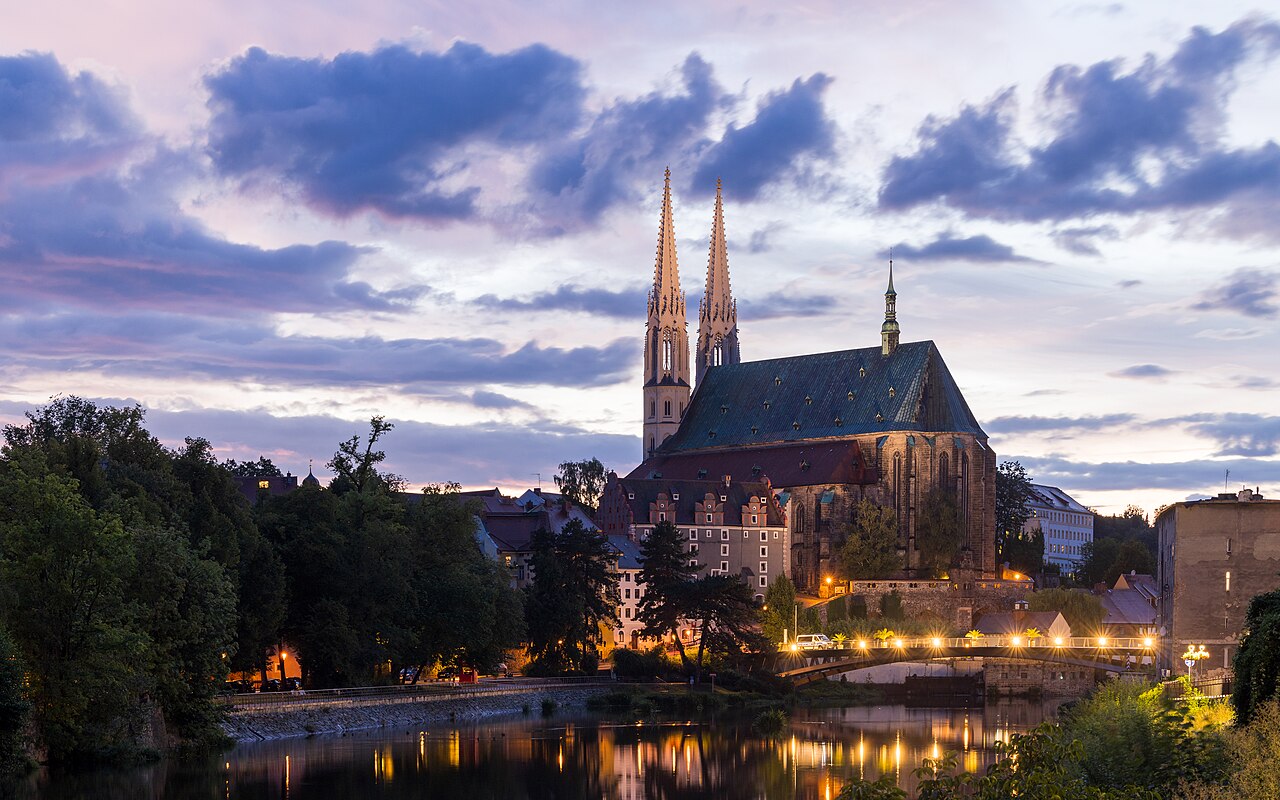
Görlitz is Germany's easternmost city, sitting right on the Polish border — the Neisse River separates it from its Polish twin, Zgorzelec. What makes Görlitz extraordinary is that it survived the Second World War almost entirely intact. The result is a town with over 4,000 listed monuments spanning Gothic, Renaissance, Baroque, and Art Nouveau, all in remarkable condition.
Hollywood has noticed: the Art Nouveau department store doubled as the lobby of Wes Anderson's Grand Budapest Hotel, and the town has served as a backdrop for various other productions. But Görlitz is worth visiting on its own merits. The Untermarkt and Obermarkt squares are beautiful, the Heiliges Grab is a unique medieval replica of the Jerusalem Church of the Holy Sepulchre, and the Görlitz Synagogue — one of the few in Germany to survive Kristallnacht — has been beautifully restored.
The Church of Saints Peter and Paul contains one of Germany's finest Baroque organs, the Senckenberg Museum of Natural History occupies a handsome Old Town building, and the walk down to the Neisse and across into Poland is a pleasure. The Görlitz Zoo specialises in European wildlife including wisent (European bison). The general atmosphere is of a place that time forgot in the best possible way.