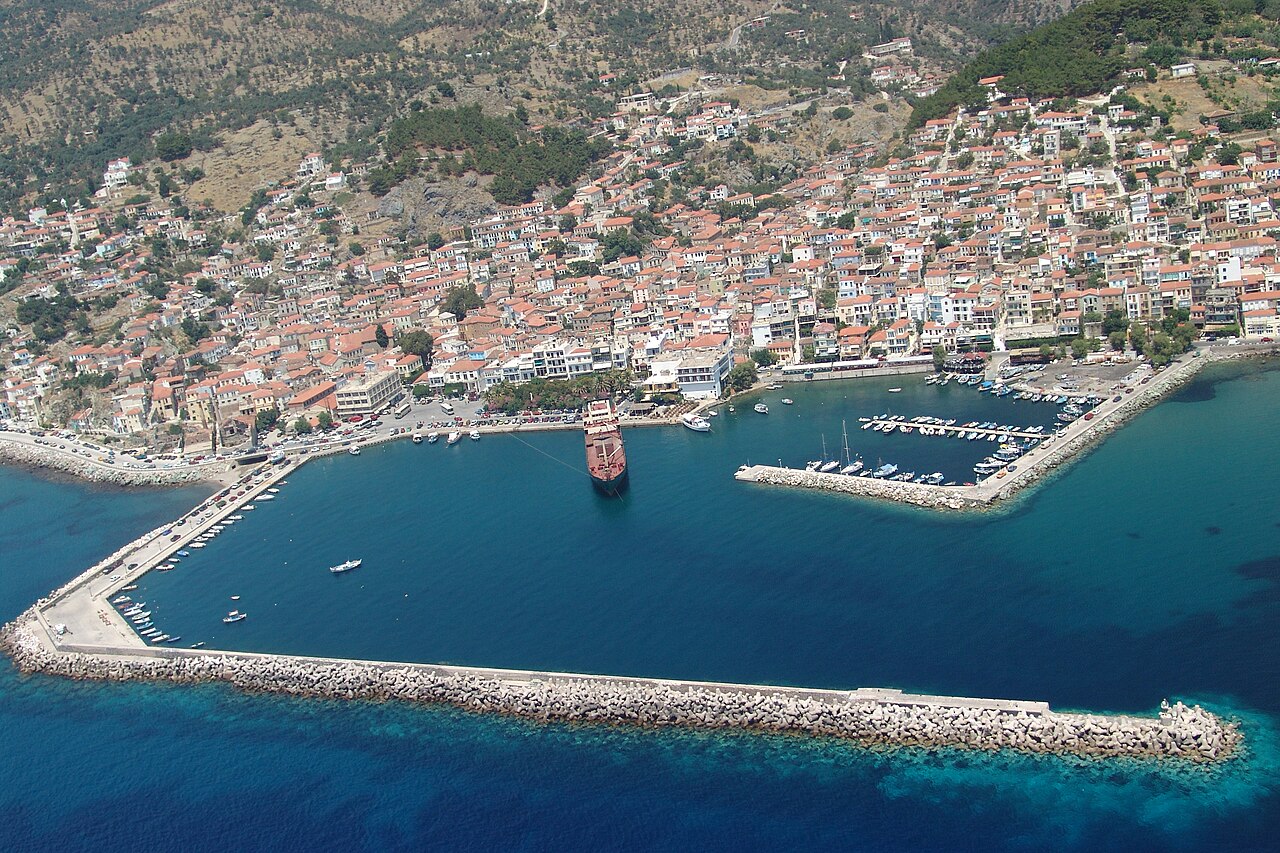
Lesbos hillside town known as Greece’s ouzo capital, with distilleries, neoclassical mansions, and a small harbour.
Plomari is the ouzo capital of Greece, and it wears that title proudly. Several distilleries operate here, including the well-known Barbayiannis, which has been producing ouzo since the 1860s using copper pot stills. You can visit the distillery and the attached Ouzo Museum, sample the goods, and learn why Plomari's anise spirit tastes different from the mass-produced stuff.
Beyond ouzo, Plomari is a handsome town built on a hillside above the sea. The old quarter has crumbling neoclassical mansions and former tanneries — reminders of the town's 19th-century prosperity from the leather trade. Wander the narrow lanes downhill to the small harbour for fresh fish and views across the water. The beach at Agios Isidoros, a few kilometres east, is the best swimming spot nearby — a long stretch of sand and pebble backed by tavernas.
Guide
Eating Out
Plomari's eating is simple and good: grilled fish, seafood meze, and ouzo. The tavernas around the harbour and on the Agios Isidoros beach road are the best options. The ouzeri format — small plates designed for slow consumption alongside a glass of the local spirit — suits the town's pace perfectly. Look for places displaying the day's catch rather than a laminated menu.
Fresh fish and octopus are the reliable choices. The local olive oil, produced from Lesbos's ancient olive groves, is excellent and appears on every table.
Guide
When to Go
May, June, and September are the best months: warm enough for the beach at Agios Isidoros, but without the full heat and crowds of July and August. The town is quiet in winter — many tavernas and tourist facilities close — though the distilleries operate year-round and the old town can be explored at any time.
The Greek Orthodox Easter period (March or April) brings the local community together for celebrations that have a particular warmth in small towns like Plomari; if your timing allows, it is worth experiencing.