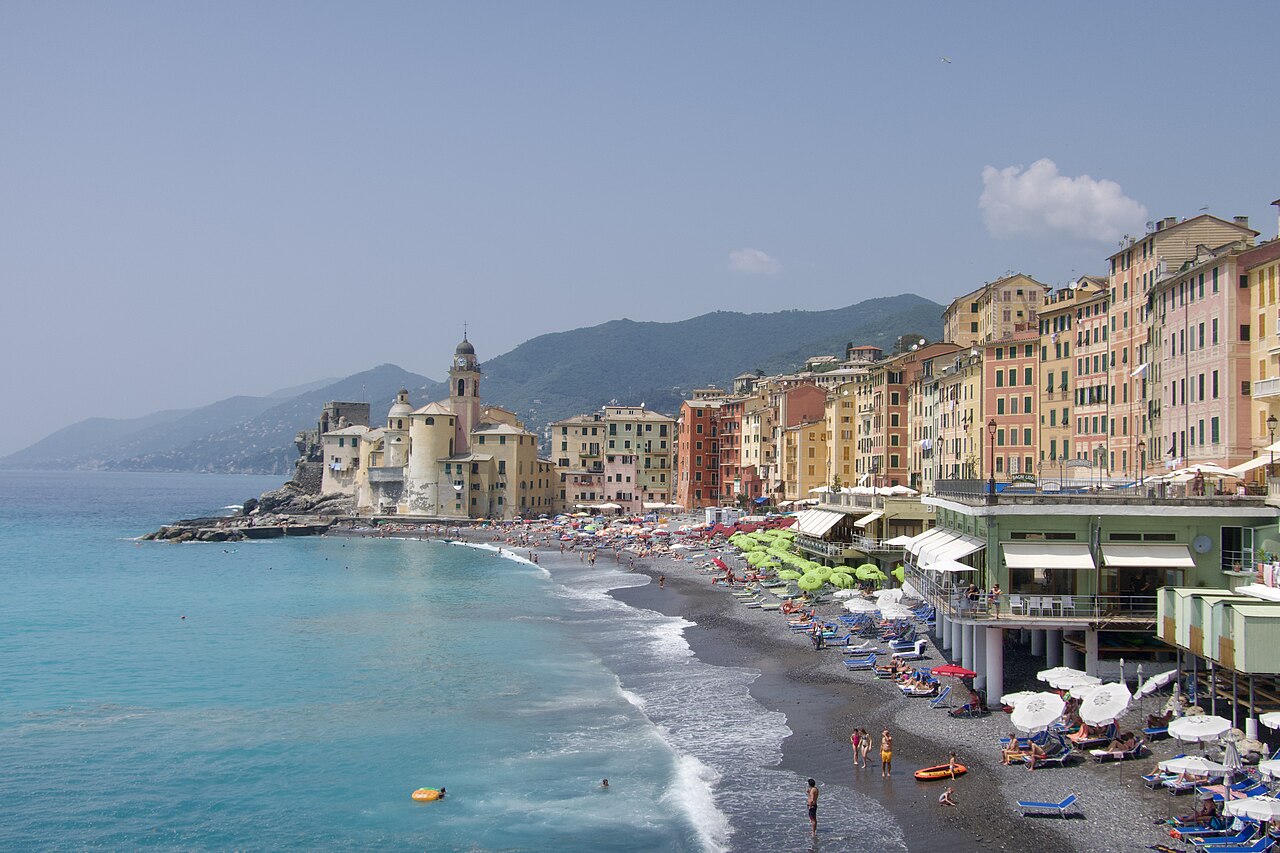
Camogli is one of the most pleasant surprises on the Italian Riviera — a compact fishing village of tall, painted houses crammed together above a small harbour, tucked between the Portofino headland and the open Ligurian Sea. The houses are famously colourful, their trompe-l'oeil facades a tradition dating back centuries, and the whole town feels like it has been gently compressed into its narrow strip of coast. The Castello della Dragonara anchors the scene from its rocky promontory above.
The biggest event of the year is the Sagra del Pesce on the second weekend of May. On Saturday evening the harbour fills with bonfires and fireworks for the "blessing of the fish." On Sunday the town hauls out what it claims is the world's largest frying pan — about four metres in diameter — and fries an enormous batch of fish donated by the local cooperative. It is as extravagant and generous as it sounds.
Beyond the village itself, Camogli is the gateway to the San Fruttuoso Abbey, one of the most atmospheric medieval buildings on the Italian coast, accessible only by boat or on foot over the Monte di Portofino headland. In the bay below the abbey, the Christ of the Abyss — a bronze statue of Christ with arms raised, resting 17 metres down on the seabed — is one of the most famous dive sites in the Mediterranean.
The best way to arrive is by train from Genoa, a twenty-minute ride along the coast. Driving is not recommended — parking is scarce, especially in summer. Once you are here everything is on foot, though "on foot" in Camogli means stairs. Lots of stairs.