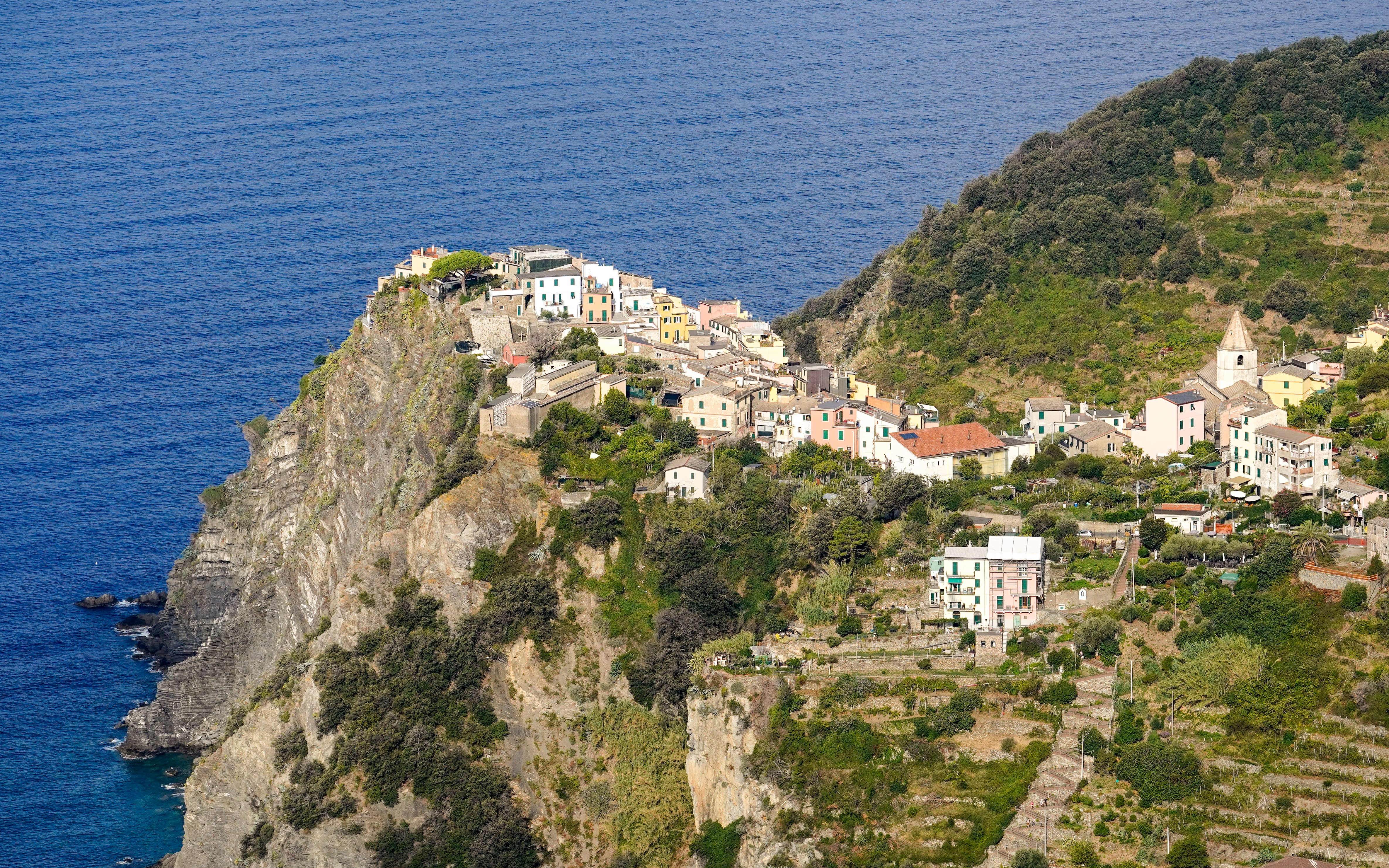
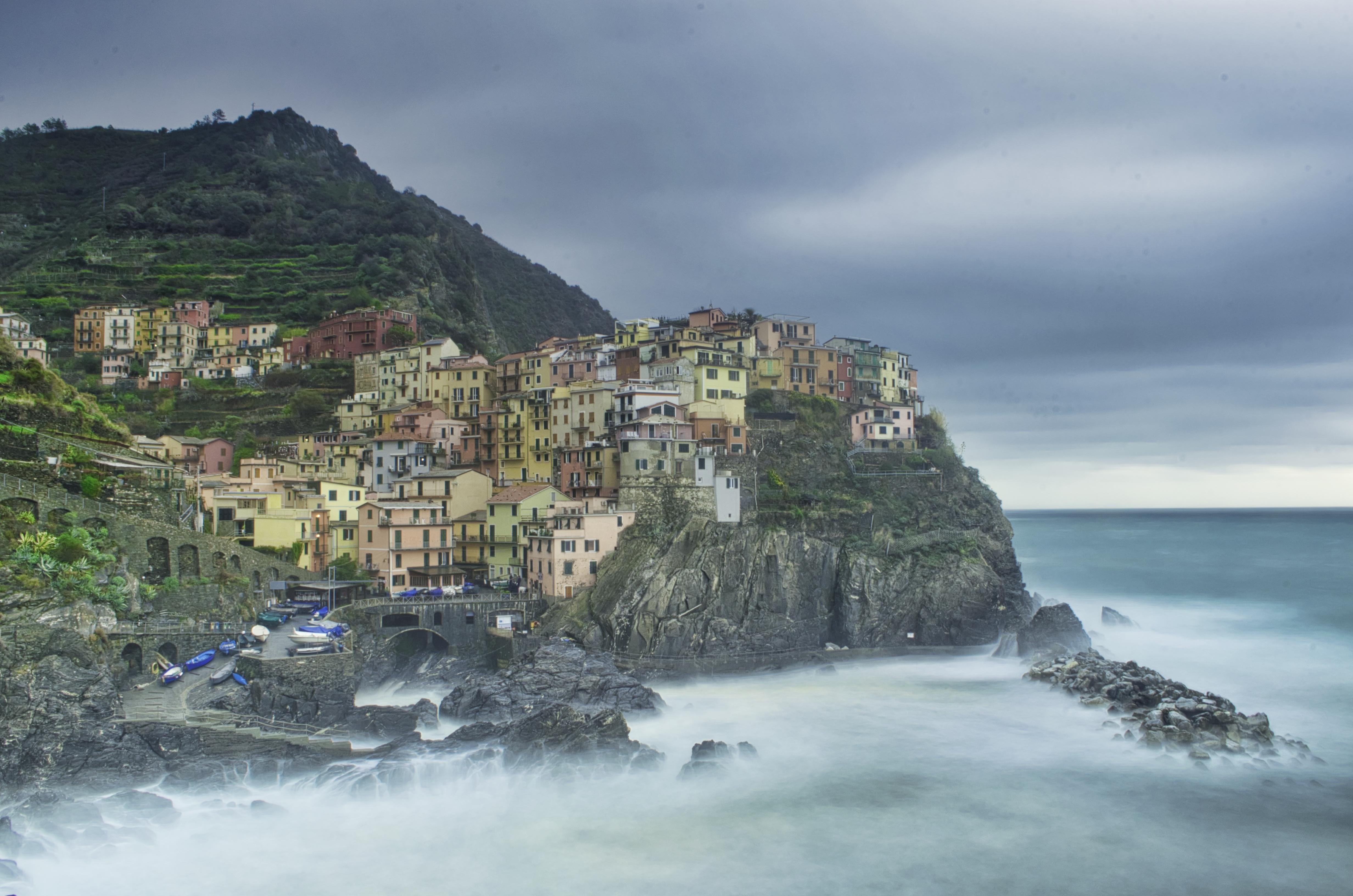
Rugged Ligurian coastal region where five fishing villages cling to terraced cliffs.
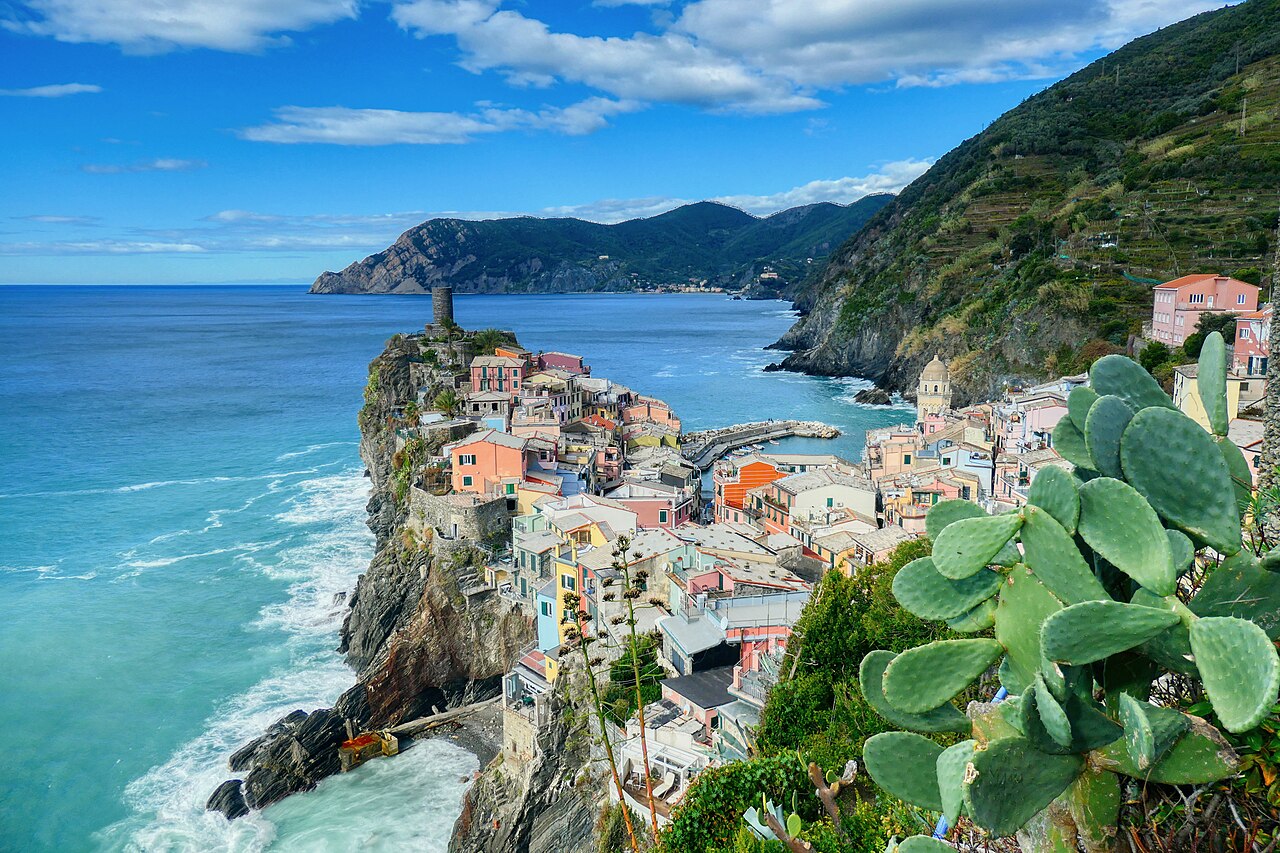
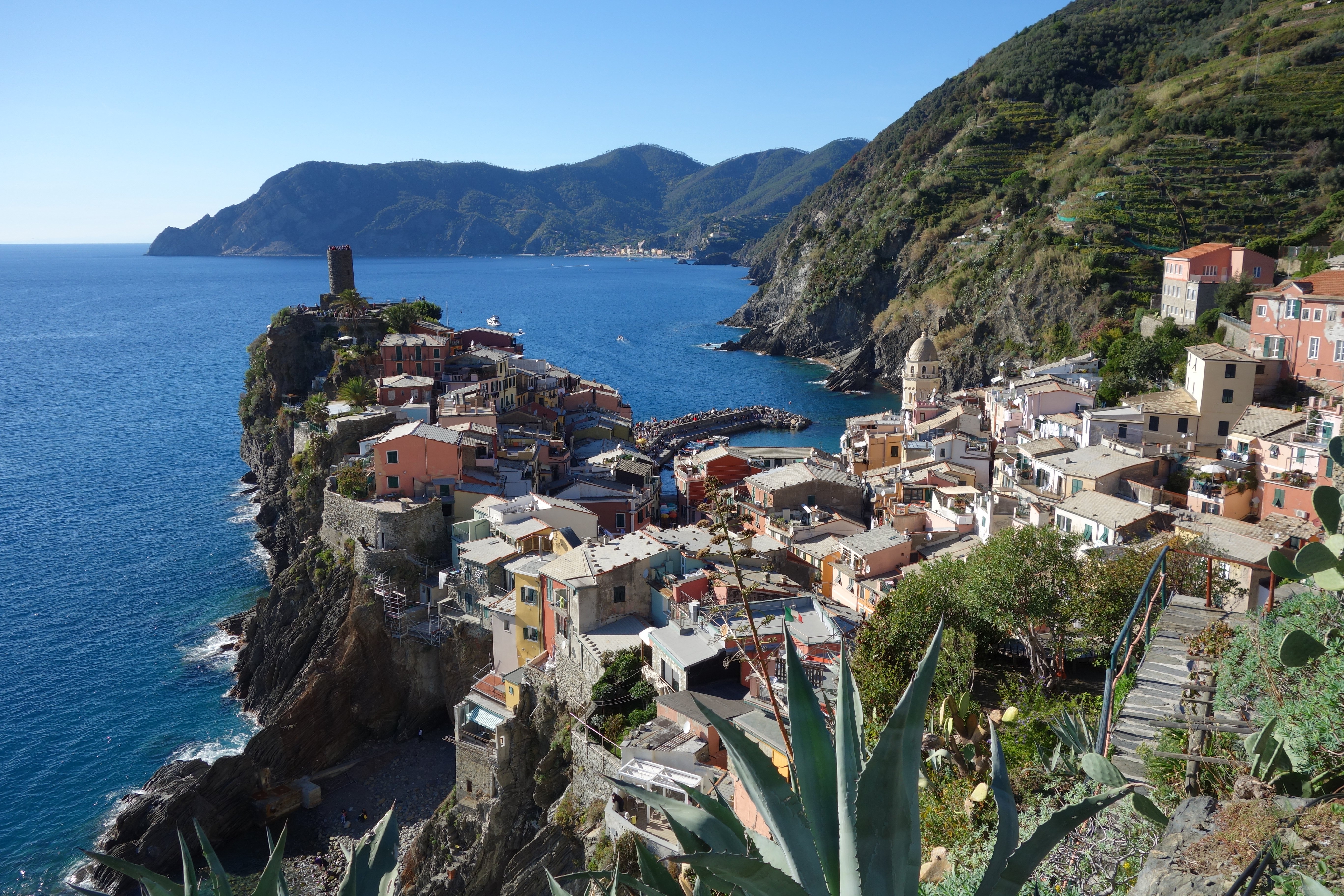
The Cinque Terre — "the five lands" — is a stretch of rugged Ligurian coastline between Levanto and La Spezia, where five tiny fishing villages cling impossibly to cliffs above the sea. Monterosso, Vernazza, Corniglia, Manarola, and Riomaggiore were isolated by geography for most of their history: no roads reached them until the last century, and even today the easiest way between them is still the train, the ferry, or the walking paths cut into the terraces. The whole coast is a national park and a UNESCO World Heritage site, and it has become one of the most photographed places in Italy — pastel houses stacked on the rock above turquoise coves, olive trees, and the terraced vineyards that have produced the local white wine for a thousand years.
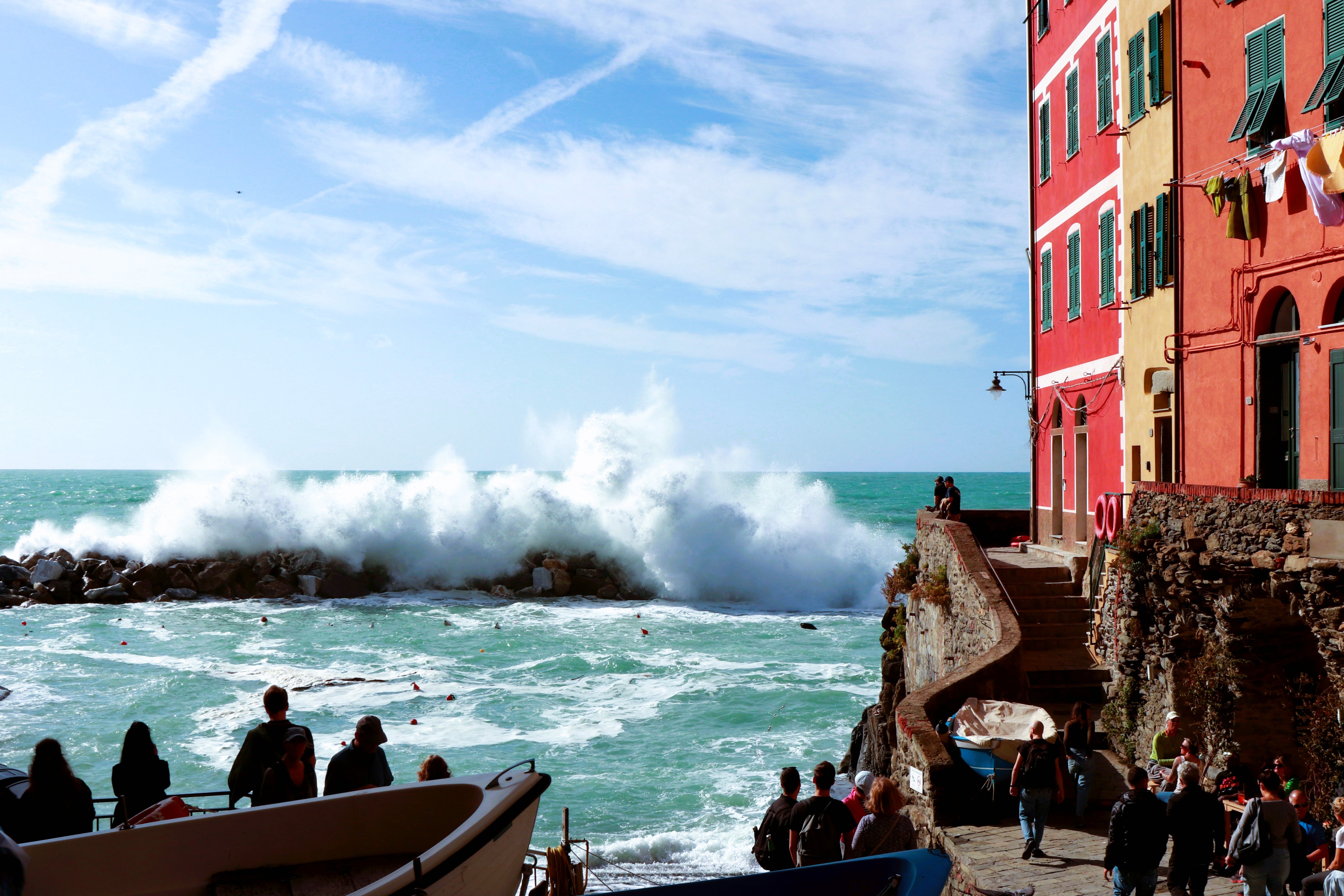
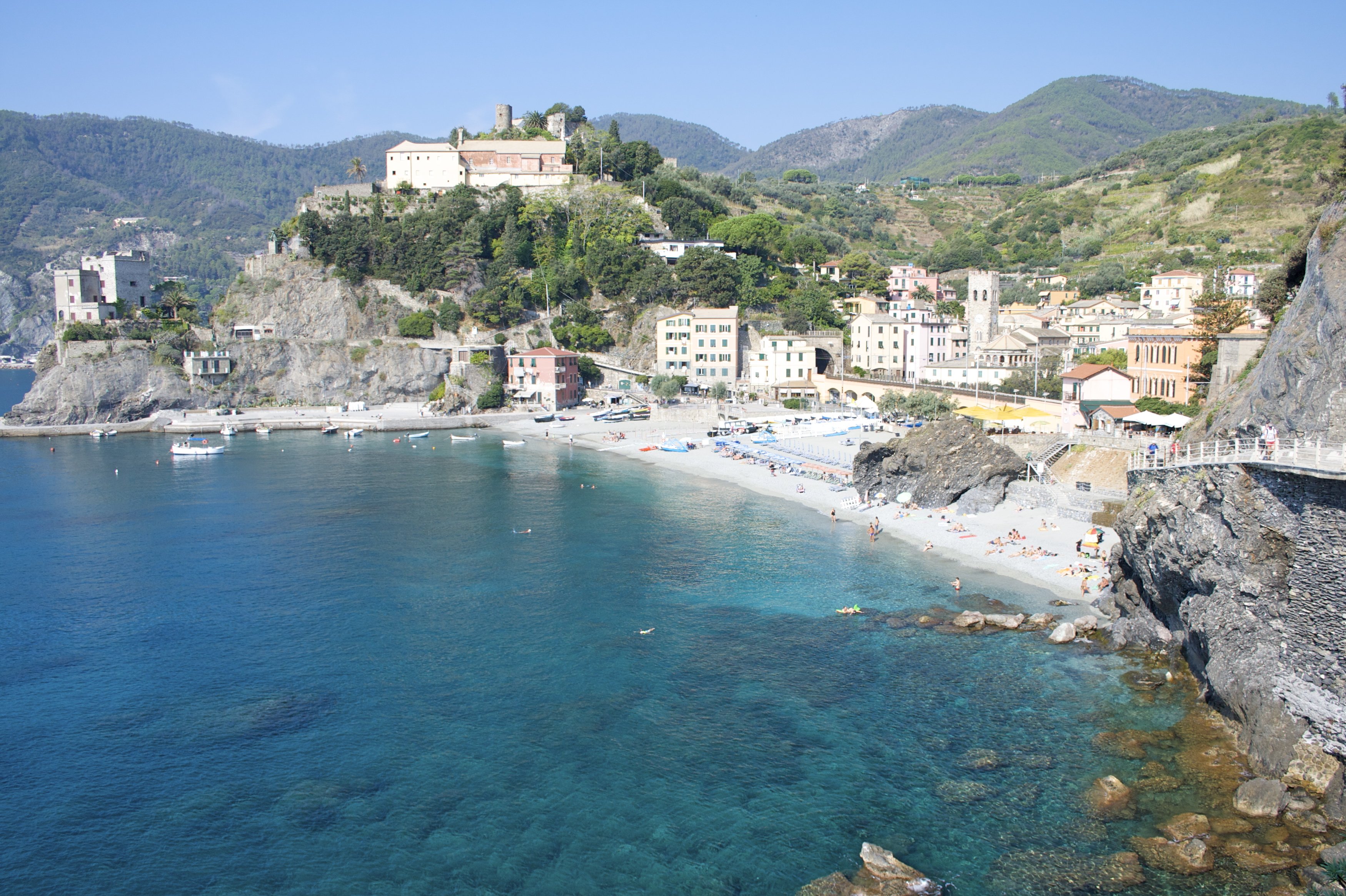
Monterosso is the largest and the only one with a real sandy beach — the most resort-like of the five. Vernazza, with its small harbour, castle, and pastel waterfront, is generally considered the prettiest, and it is the one that ends up on most of the postcards. Corniglia is the odd one out: it sits high on a cliff rather than at sea level, and the only way up is 377 steps from the train station (or a shuttle bus). Manarola has the photogenic cliffside church of San Lorenzo and some of the best swimming. Riomaggiore, the southernmost, is the classic working village — houses tumbling down a ravine, colourful boats pulled up on the waterfront, and a maze of narrow alleys behind.
The walking trail that once linked all five villages, the Sentiero Azzurro, is the classic way to see the Cinque Terre, though landslides mean parts of it close regularly — check the current status before you set out. The most popular section, the Via dell'Amore between Manarola and Riomaggiore, is short and mostly level. The climb from Vernazza to Monterosso is steeper and gives the best views. A Cinque Terre Card (buy it at any train station) covers unlimited regional trains and trail access.
The villages are unbelievably crowded in July and August — cruise-ship day-trippers from La Spezia pour in and the lanes fill with people. Come in April, May, September, or October if you can, stay at least one night in one of the villages rather than day-tripping from La Spezia, and eat the local anchovies fresh, fried, or pickled with lemon. The sweet Sciacchetrà wine, produced in tiny quantities from the terraced vineyards, is a rare regional speciality worth trying before you leave.
Villages
- Monterosso al Mare — the largest village, with a real sandy beach
- Vernazza — the prettiest, with a harbour and Doria Castle
- Corniglia — the clifftop village, quietest of the five
- Manarola — dramatic harbour, northern end of the Via dell'Amore
- Riomaggiore — the southernmost village, working-village character
Guide
Eating Out
Local fresh fish is generally small in size and is served either fried, charcoal grilled, with potatoes or as a ciuppin soup. Ligurian anchovies are a highly prized dish, especially those coming from the Cinque Terre and Monterosso areas. They are easily recognized by their small size, hardly ever exceeding ten centimeters in length, and their color, the head and belly a silvery light gray with a dark blue-black back. These anchovies may be served in a variety of ways: raw with an olive oil and lemon dressing; with garlic and parsley; pan-cooked with potatoes; fried or better still, pickled. The bianchetti, anchovy and sardine fry fished in January and February, are a rare morsel indeed. They may be served either raw or dunked in boiling water and then dressed with just a few drops of olive oil and lemon or, as is more customary, mixed with flour and egg and fashioned into small fritters.
Last but by no means least, the wines: wine production on Liguria's typical terraced hill sides has a well established and long standing tradition. Sciacchetrà, a very particular sweet wine produced in the Cinque Terre district, is one of the best known Italian wines.
Guide
Getting Around
By train: The regional train between La Spezia and Levanto stops at all five villages (though at Corniglia the station is at the base of the cliff — a 377-step climb or a shuttle bus away from the village). Trains run every 20–30 minutes. The Cinque Terre Card covers unlimited train travel plus access to the hiking trails.
On foot: The Sentiero Azzurro connects all five villages. The full route (about 12 km) takes 5–6 hours with stops. Individual sections can be walked and then a train taken back. Check the national park website or the Cinque Terre Card offices for current trail closures — landslides periodically close sections, sometimes for months.
By ferry: Seasonal ferries (April–October) run between the villages and to Portovenere, La Spezia, and Lerici. The ferry is an excellent way to see the coast from the water. Boats stop at Monterosso, Vernazza, Manarola, and Riomaggiore (not Corniglia, which has no harbour).
By car: Driving between the villages is essentially impossible — the road that connects them is narrow, often closed to through traffic, and parking is extremely limited. Leave your car at La Spezia or Levanto and take the train.
Guide
When to Go
The Cinque Terre is a year-round destination, but the timing makes an enormous difference to the experience. July and August are by far the worst months to visit: trains are packed, the villages are overwhelmed with day-trippers, and the narrow lanes become unpleasant at midday. Prices are highest and accommodation books out months in advance.
April, May, and September through October are the best times. The weather is warm, the sea swimmable from May onwards, the trails are generally open, and the villages have something like their normal character in the mornings and evenings. Spring brings wildflowers on the terraces; autumn brings the grape harvest in the terraced vineyards.
November through March is quiet and often beautiful. Some restaurants and hotels close, the trails may be wet and slippery, and occasional storms hit the coast. But the light is excellent for photography and you will largely have the villages to yourself. The Christmas nativity scene in Manarola makes December worth considering.
The lemon season runs from May to October; the anchovy season peaks in late summer; the grape harvest in the terraced vineyards happens in September–October. All are good reasons to visit at those times.