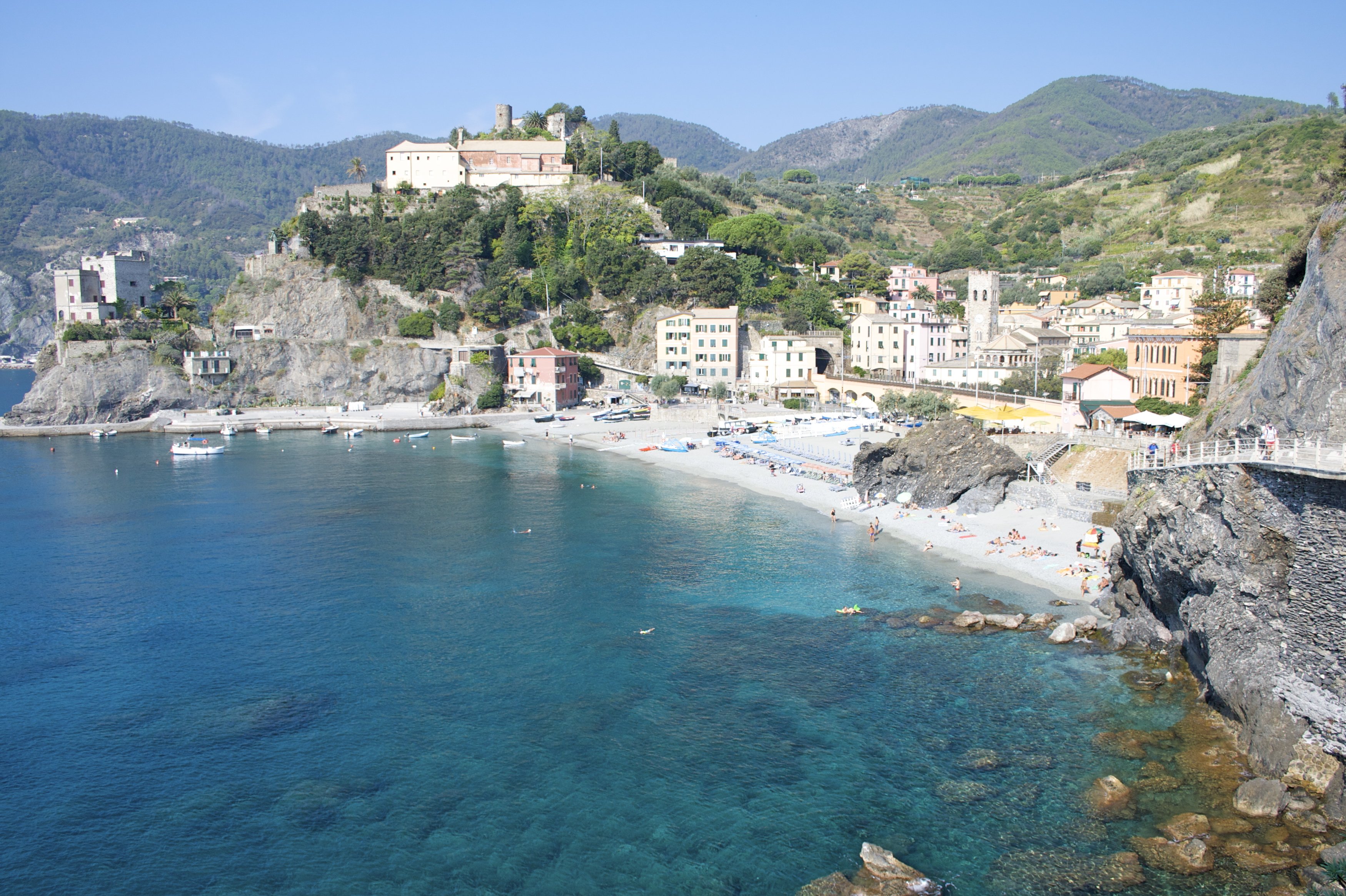
Largest Cinque Terre village, with sandy beaches, a fishing old town, and local anchovies and Sciacchetrà wine.
Monterosso al Mare is the largest and most westerly of the five Cinque Terre villages, and the one most geared to visitors. Unlike its more vertical neighbours, it spreads out along a proper sandy beach — two beaches, in fact, separated by a rocky headland — which makes it a genuine resort as well as a historic fishing village. The old town, huddled behind the headland, has narrow caruggi lanes, a medieval tower, and a handful of good restaurants serving anchovies caught right off the coast.
Monterosso grows the lemons and grapes that define Cinque Terre cooking. The local anchovies (acciughe) are cured with sea salt and eaten as a starter or tossed through pasta; the white wine Sciacchetrà, made from partially dried grapes, is sweet and powerful. Both are worth seeking out before you leave.
The village draws more day-trippers than the others precisely because of its beach and relative accessibility, so early morning and late afternoon are the best times to wander the old town. Stay overnight and you get the place to yourself once the ferries have gone.
Local tip
Monterosso is the largest and only real beach town of the Cinque Terre — the one with actual sand and sunbeds, split into an old and new town by a tunnel. It's the easiest of the five for families and the trailhead for the scenic walk to Vernazza. Try the local anchovies and pesto, both regional specialities. Come by train, not car.
Guide
Getting There
Monterosso has its own railway station on the Genoa–La Spezia line, and this is far and away the easiest way to arrive. Trains from La Spezia run frequently (about 20 minutes); from Genoa the journey takes around an hour and a half. The station sits in the Fegina district, a short walk from the beach and a tunnel away from the old town.
Ferries run seasonally from Genoa, Lerici, and La Spezia, docking in the small harbour at the old town. This is a fine way to arrive if the weather is calm — the view of the village from the water is as good as advertised.
Driving is not recommended. The road into the village is narrow and congested in season, and there is essentially no parking in either the old town or Fegina. Cars must be left in the hilltop car parks above the village and a shuttle or steep walk taken down. Unless you are arriving from somewhere inaccessible by train, leave the car elsewhere.