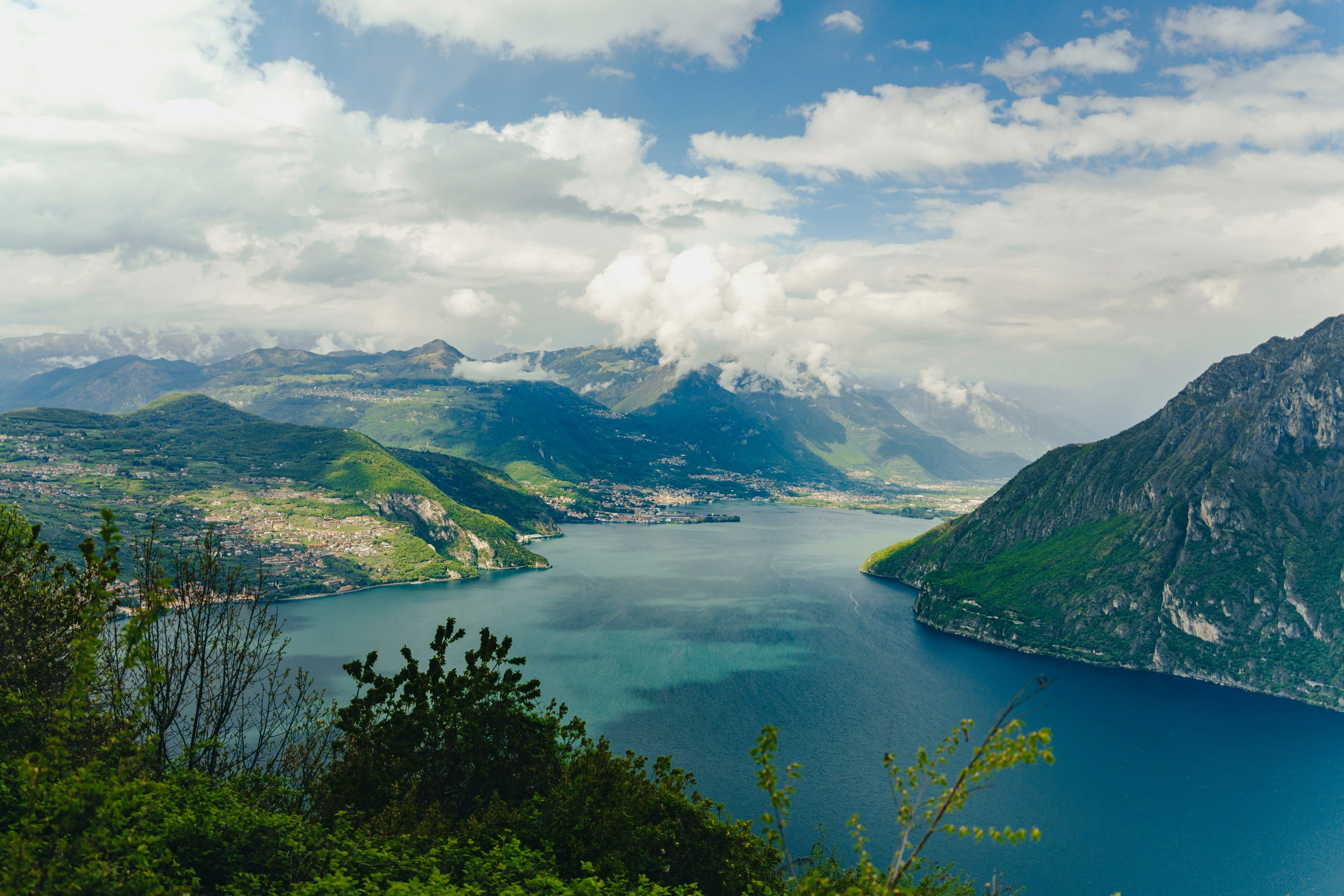
Lake Iseo, also known as Lake Sebino, is the fourth-largest lake in Lombardy and the one Italians keep mostly to themselves. Formed by the Valcamonica Glacier, it stretches 24 kilometres north to south and up to 5 kilometres wide — though you rarely see the full width, because Monte Isola, the largest inhabited lake island in Europe, sits squarely in the middle. No cars are allowed on the island, which makes it an ideal place to walk or cycle; ferries cross regularly from Iseo and the other lakeside towns.
The lake is fed from the north by the River Oglio, flowing down from the Val Camonica. At the southern end lies the Torbiere, a peat bog and nature reserve worth a slow morning with binoculars. Further south is the Franciacorta valley, which produces some of Italy's best sparkling wine. On the eastern shore, a few kilometres up from the water, the Natural Reserve of the Pyramids of Zone shows off a strange landscape of earth pinnacles up to ten metres high, left behind by uneven glacial erosion.
The perimeter road links the main lakeside towns — Iseo, Sarnico, Lovere, Pisogne and Marone — each with a promenade, cafés and a handful of churches worth a look. Iseo town is the main hub: relaxed in pace, with a wide main square dominated by a statue of Garibaldi and a view across to Monte Isola. The lake draws Italian families rather than foreign tour groups, which keeps the atmosphere local and the prices honest.
Water sports are well established here, and fishing is a genuine local obsession — tench is the prized catch. Walking and cycling trails follow both shores, and in winter the Presolana area north of the lake offers skiing. From Bergamo it is about an hour by car, making it one of the easiest lake escapes in the region.