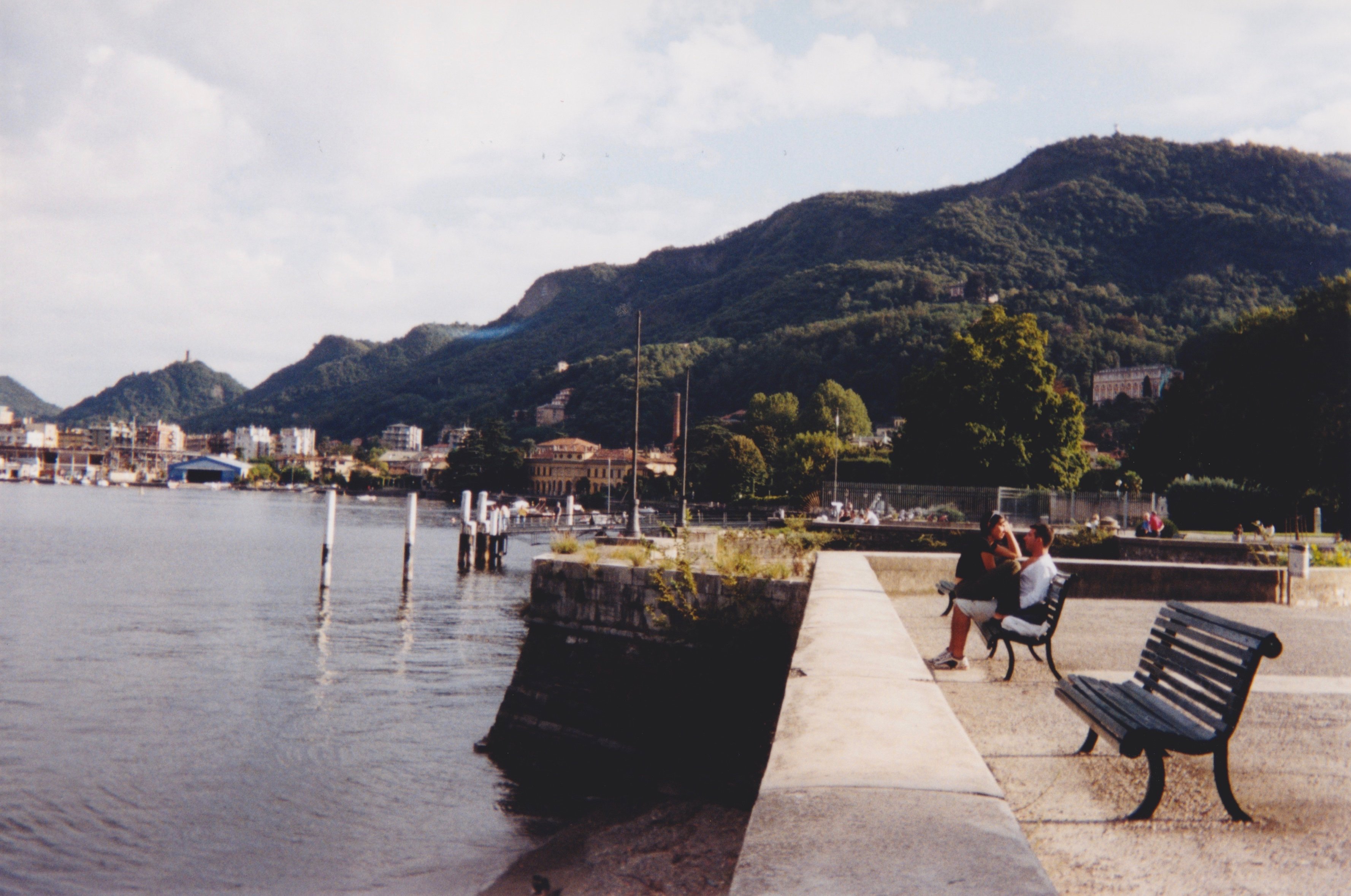
Como occupies the southern tip of the lake that bears its name, a compact city wedged between water and steep wooded hills. Most visitors treat it as a launching pad for the lake — an understandable mistake. The city itself has a rich historic centre that rewards a day's exploration: narrow medieval streets, a cathedral four centuries in the making, two magnificent Romanesque basilicas, and a lakefront promenade lined with neoclassical villas.
The old town is enclosed by stretches of its medieval walls and anchored by the Piazza del Duomo, where the Cathedral's Gothic facade faces a line of arcaded buildings. A few streets away, the Romanesque churches of San Fedele and — a short walk outside the walls — Sant'Abbondio show why the Maestri Comacini, Como's medieval master builders, were in demand across all of Europe.
Alessandro Volta was born here in 1745, and the city has never stopped celebrating it. The Tempio Voltiano on the lakefront holds his original instruments; the main piazza bears his name; the liceo where he taught is named after him. It is perhaps the most thorough civic commemoration of a scientist anywhere in Italy.
Como is also the world capital of silk. The mills in the surrounding valleys have been printing and dyeing silk since the fifteenth century, and the city's shops still sell ties, scarves, and furnishings that supply fashion houses across Europe. If you are going to buy silk anywhere, buy it here.
After a day of all that, the lake is waiting. The evening ferry across to Cernobbio or Bellagio is one of the great small pleasures of northern Italy.