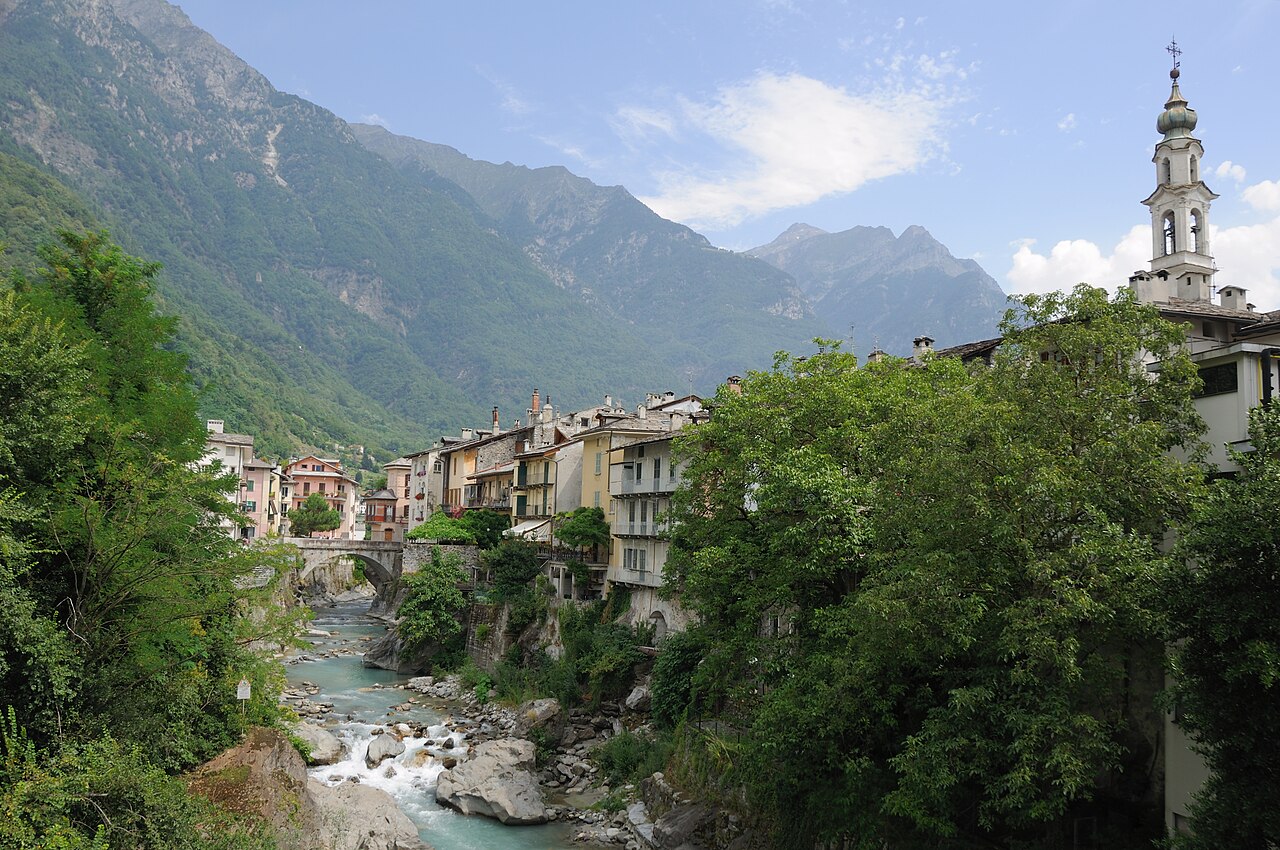
Chiavenna is a small alpine town in the Valchiavenna, at the junction of the Mera and Liro rivers in northernmost Lombardy, close to the Swiss border. It sits at the foot of the Maloja and Splügen passes, which means it has been a transit point between northern Italy and Switzerland for thousands of years — long enough for the Romans to establish a station here, and long enough for the medieval trading economy to leave its mark in the form of handsome stone palazzi lining the old town streets.
The town's most distinctive feature is its crotti — natural rock cellars formed where cold air flows from fissures in the glacial rock above town. For centuries these were used to store food and wine, and today many have been converted into restaurants and osterie with terraces built against the rock face. Eating in a crotto in Chiavenna is one of those genuinely local experiences that hasn't been manufactured for tourists.
The Collegiata di San Lorenzo church has a fine Romanesque baptistery with an extraordinary carved font, and its treasury contains the Pace di Chiavenna — a jewelled medieval Gospel cover considered one of the masterpieces of early medieval goldsmithing. Above town, the Paradiso Botanical Archaeological Park combines Roman ruins, a medieval castle, and views over both valleys. Up the valley at Piuro, the Acquafraggia waterfall drops dramatically down the hillside; Leonardo da Vinci reportedly sketched it during one of his alpine journeys. Chiavenna is also the start of cycling routes up both valleys, and on weekends in summer the town fills with Swiss cyclists who have come down from the Maloja Pass for lunch.