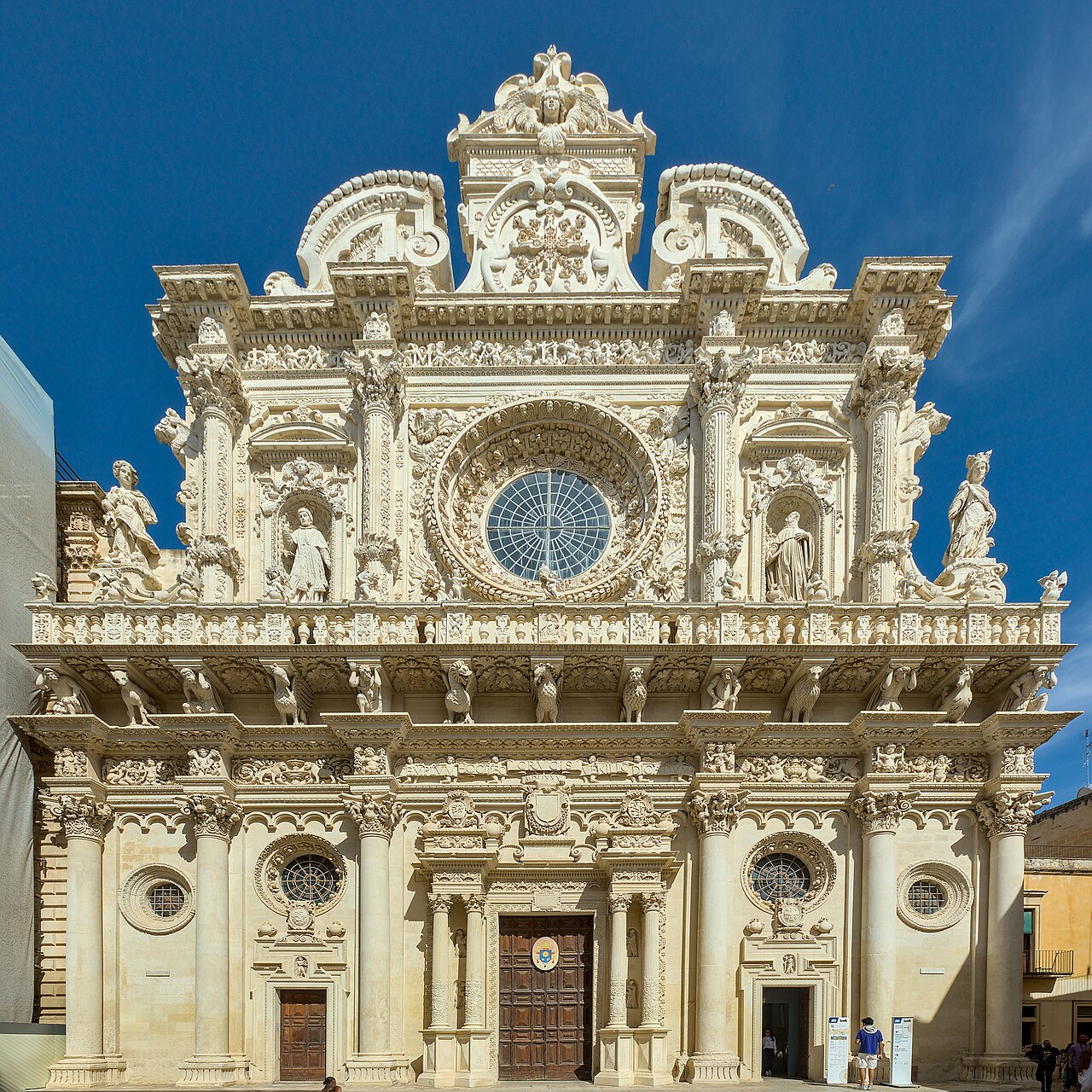
Lecce is the Florence of the South — a designation it's earned. Located at the heel of Italy's boot, roughly midway between Brindisi and the Adriatic coast, the city had its heyday under Spanish rule in the 17th century when local noblemen, merchants, and religious orders competed to build ever more extravagant palaces and churches. The material was a golden local limestone that proved extraordinarily soft to carve, which led to an architecture of dizzying elaboration: curling volutes, grinning monsters, caryatids, and festoons piled onto every available surface.
Piazza Sant'Oronzo is the heart of the old town — anchored by a Roman column that once marked the end of the Appian Way and the partly excavated remains of a Roman amphitheatre. From there the tangle of streets holds some 100 churches and palaces worth a look. The undisputed highlight is Santa Croce, whose façade is the most exuberant expression of Leccese Baroque anywhere.
The surrounding city is quietly pleasurable — good pasticcierie, a relaxed piazza culture, and far fewer foreign tourists than similar Italian cities. The essential breakfast ritual is a pasticciotto — a warm custard pastry — at a bar counter. The Museo Faggiano, where a plumbing repair turned into a 2,500-year excavation, is one of the most personal and surprising museums in Italy.