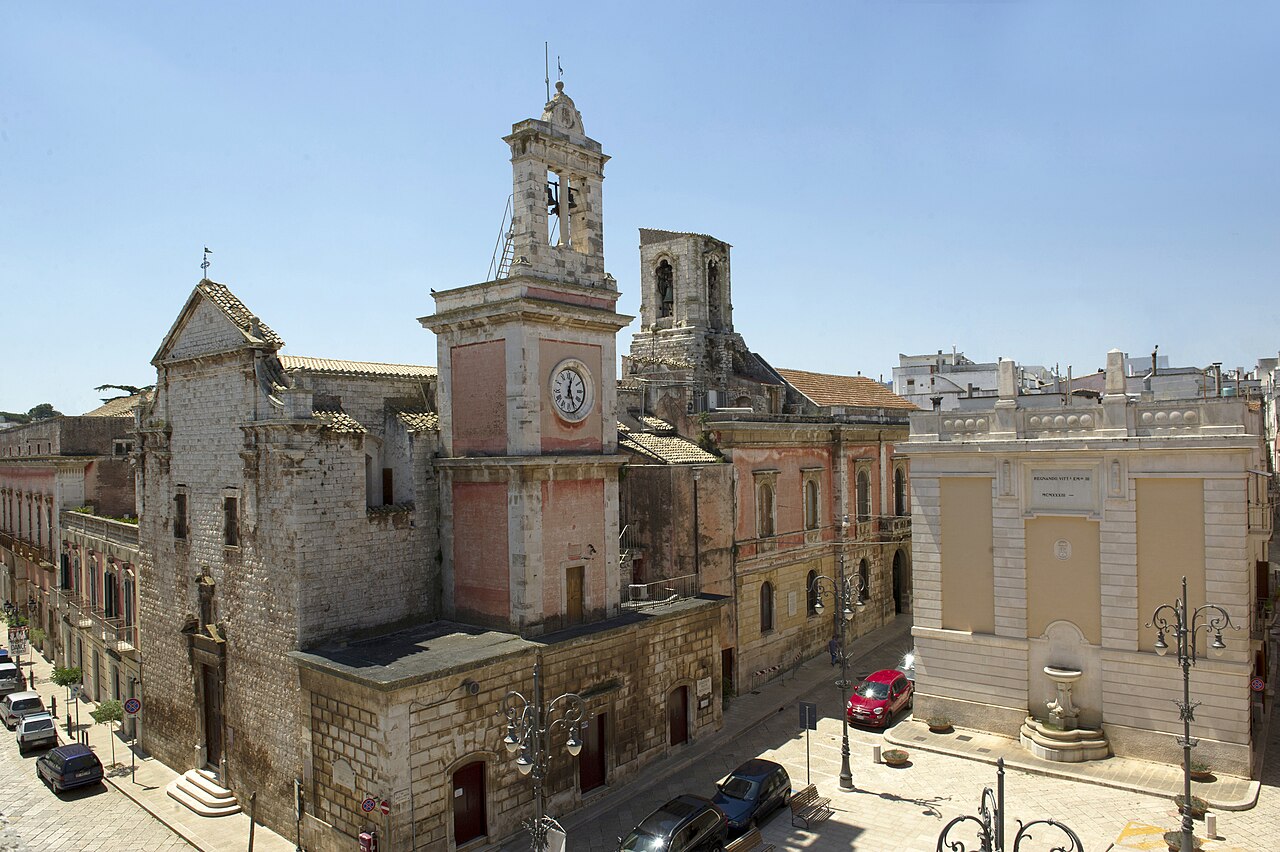
Castellana Grotte is a small agricultural town in the Murge plateau of central Puglia, unremarkable on the surface but sitting atop one of the most extraordinary cave systems in Europe. The Grotte di Castellana — a series of limestone caverns stretching nearly four kilometres underground — draw visitors from across Italy who would otherwise have little reason to stop here.
The town itself is pleasant enough: a compact Centro Storico around the church of San Leone Magno, a few decent restaurants, and the unhurried pace of the Pugliese interior. But the caves are the reason to come. Discovered in 1938 by speleologist Franco Anelli — to whom the Museo Speleologico Franco Anelli at the cave entrance is dedicated — they descend to 70 metres below ground and contain formations that took millennia to build: towering stalagmites, delicate aragonite crystals, and the famous Caverna Bianca, whose white calcite walls glow like a cathedral lit from within.
Castellana makes a practical base for exploring the Valle d'Itria — Alberobello is 15 kilometres away and Locorotondo not much farther. The train line connecting Bari to Taranto stops here, making it easy to visit as a half-day excursion from the coast.