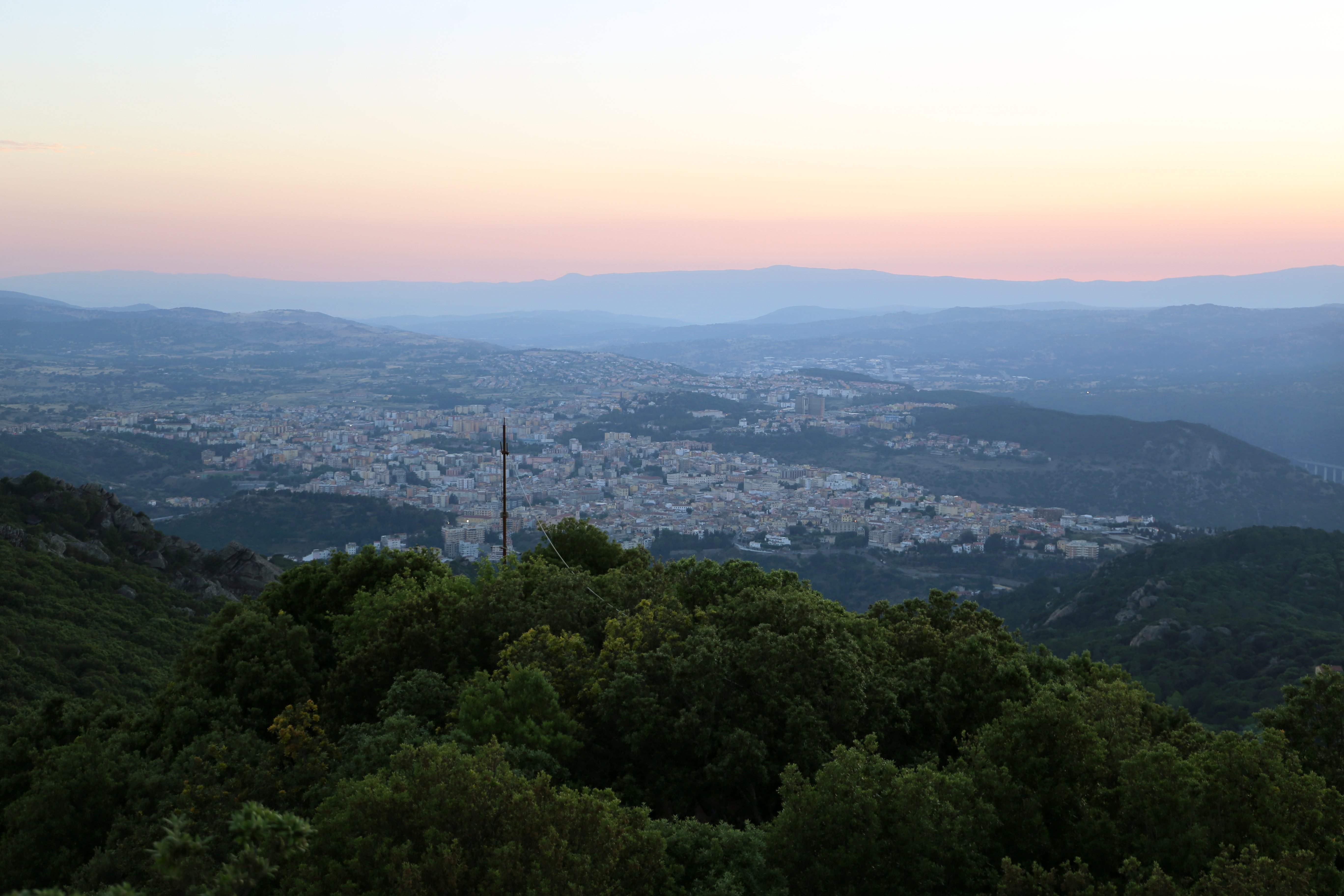
Nuoro is the real Sardinia. Tucked into the mountainous heartland of the island, far from the coastal resorts, it is the capital of the Barbagia — a rugged interior region where Sardo is still spoken, traditional festivals survive intact, and the landscape has a spare, almost austere beauty.
The old quarter spreads around the Corso Garibaldi, a broad pedestrian street lined with old palazzi and small bars. This is where Nuoro's literary legacy lives: Grazia Deledda, the only Italian woman to win the Nobel Prize in Literature, was born here in 1871, and her birthplace is preserved as a small house museum. Her novel Canne al Vento captures the mountain villages of Barbagia with unsparing honesty.
The Ethnographic Museum on Via Antonio Mereu is outstanding — one of the best in Sardinia, with an extraordinary collection of traditional jewellery, carnival masks, embroidered costumes, and handwoven carpets. For modern and contemporary art, the MAN museum near the Corso is considerably stronger than you might expect. The National Archaeological Museum beside the cathedral covers the Nuragic civilisation with a fine collection of bronze figurines.
Above the town, Monte Ortobene rises to almost 1,000 metres. A winding road or a good hour's walk on foot takes you to the summit, where a large bronze statue of the Redeemer looks out over the town and the surrounding valleys. The views are sweeping on a clear day.
Nuoro is an excellent base for the villages of the Barbagia. Orgosolo is famous for its political murals, painted across the walls of the village since the 1960s. Fonni, the highest village in Sardinia, and Mamoiada — home of the Mamuthones carnival masks — are both within easy reach.