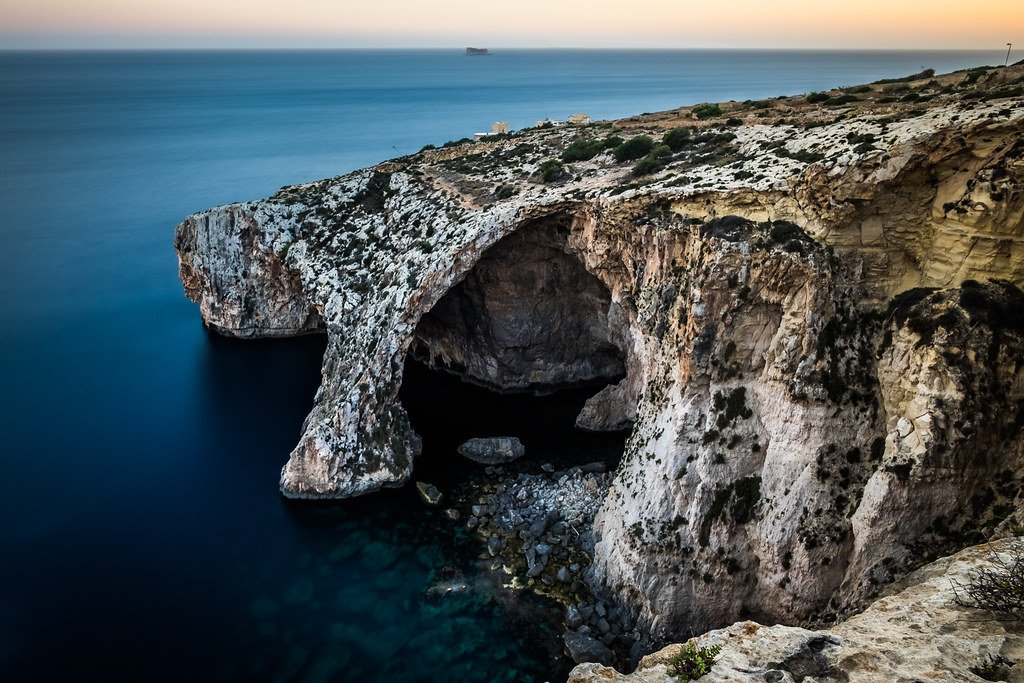
Qrendi is a small village on Malta's south coast, but it punches well above its weight for travellers interested in prehistory. Just outside the village, within easy walking distance of each other, stand two of the world's oldest freestanding structures: the Ħaġar Qim and Mnajdra temple complexes. Both date to roughly 3600–3200 BC — older than Stonehenge, older than the Pyramids — and sit on a limestone ridge above the Mediterranean with a view out to the tiny island of Filfla.
Ħaġar Qim (the name means "standing stones") is the larger of the two, perched right on the ridge top. Mnajdra, 500 metres away down a footpath, is arguably the more impressive: three interconnected temples aligned with astronomical precision, so that the rising sun on the solstices and equinoxes illuminates specific doorways and altars. Both sites are managed by Heritage Malta and protected by tensioned fabric canopies that preserve the soft limestone while still allowing you to walk among the megaliths. Nearby, the unmarked Misqa Tanks are bell-shaped cisterns cut into the rock that likely belonged to the same temple culture.
The village of Qrendi itself is quiet and traditional, anchored by its honey-coloured parish church. On the southern edge of the village, a strange round sinkhole — Il-Maqluba — drops 50 metres below the surface, full of fig and pomegranate trees and a folk tale about a village swallowed for its wickedness. Combined with a stop at the cliffs of nearby Dingli, a visit here makes for one of Malta's most rewarding half-days.