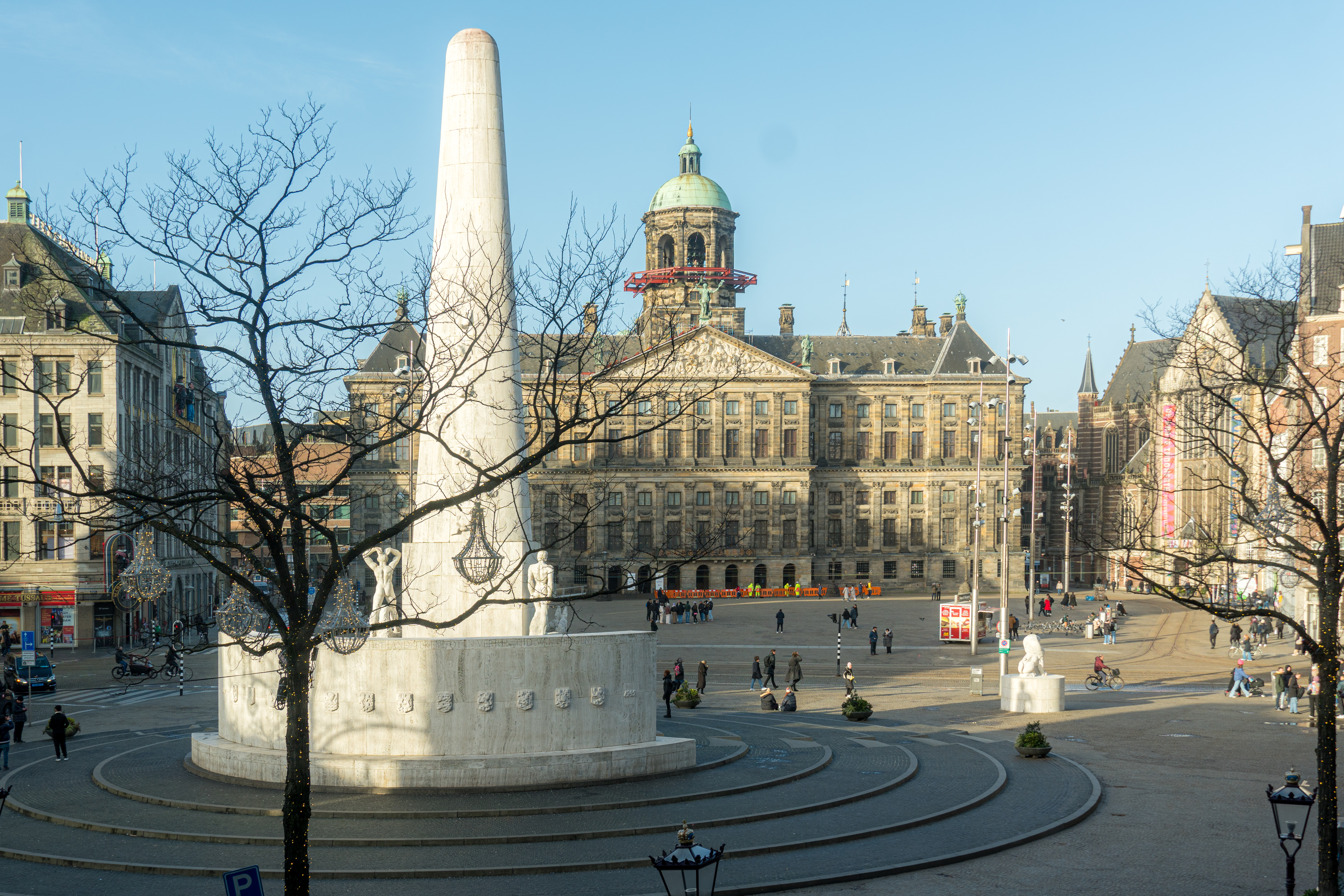
Centrum is the historic heart of Amsterdam — the Dam, the Royal Palace, the Beurs van Berlage, and the dense shopping streets between Central Station and the canal ring. It is the most visited part of the city and, at peak times, the most crowded. It is worth understanding what it contains rather than avoiding it entirely.
The Dam is Amsterdam's central square, named for the original dam across the Amstel river that gave the city its name. The Royal Palace on its western flank was built as a city hall in 1655 — when Amsterdam was the wealthiest city in the world — and is the finest secular building from the Dutch Golden Age. It is open to visitors and the interior is significantly better than the plain stone exterior suggests: the Citizen's Hall maps the world on its marble floor with Amsterdam at the centre of the universe. The Nieuwe Kerk next door is no longer used as a church but hosts major exhibitions.
The Beurs van Berlage, built in 1903 by H.P. Berlage, was Amsterdam's commodities exchange and is one of the key buildings in Dutch architectural history — the point at which Dutch architecture broke from historicism and began moving toward modernism. The brick facades and the interior with their exposed iron are well worth the brief walk from the Dam.
Kalverstraat and Nieuwendijk, the main pedestrian shopping streets running south from the Dam, are unremarkable. Walk parallel instead on the smaller Nes, Rokin, or Spui for bookshops, cafes, and the city's publishing trade. Spui square, at the southern end, has a Friday book market and is surrounded by some of Amsterdam's best literary cafes.
East of the Dam, entirely enclosed within Centrum, De Wallen — the Red Light District — is Amsterdam's oldest quarter, with a medieval street pattern that predates the canal ring by centuries.