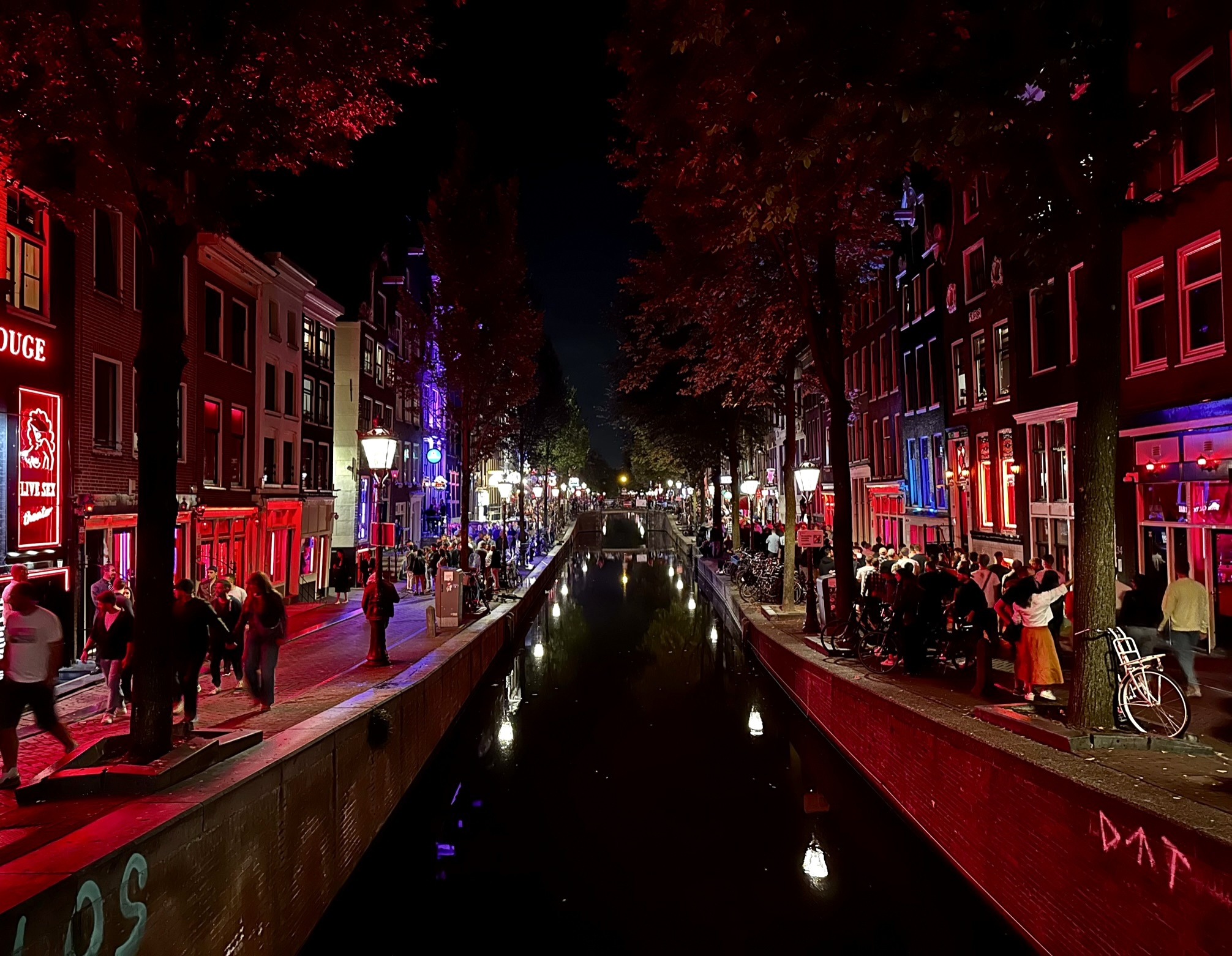
De Wallen — the Red Light District — is Amsterdam's oldest neighbourhood and simultaneously its most notorious and most historically significant. The name comes from the wallen (walls or embankments) of the original medieval settlement; the district predates the canal ring by centuries and retains a medieval street pattern quite unlike the orderly grids of the later city. The canals here are among Amsterdam's oldest.
The Oude Kerk (Old Church) is the neighbourhood's dominant building and one of Amsterdam's most important monuments. Founded around 1213, it is the oldest building in the city, sitting incongruously at the centre of the red-light area with its Gothic nave and medieval choir stalls intact. The floor is paved with grave slabs — Rembrandt's wife Saskia is buried here. Our Lord in the Attic, two streets away, hides a complete clandestine Catholic church in the attic of a 17th-century canal house — a remarkable survival from the period when Catholic worship was officially banned.
The sex work district is real and functioning: the window brothels along Oudezijds Voorburgwal and Achterburgwal have operated since the 15th century. The city has long since decided that tolerance and regulation produce better outcomes than prohibition. The area is chaotic on weekend evenings; it is considerably more interesting on a quiet weekday morning, when the medieval architecture is visible without the crowds.
Beyond the sex work, De Wallen has a neighbourhood life: independent bookshops, cannabis cafes, Indonesian restaurants on Zeedijk, and the Chinatown that begins where Zeedijk meets Nieuwmarkt. The Nieuwmarkt square itself, anchored by the 15th-century Waag building, hosts an organic food market on Saturdays and an antiques market in summer.