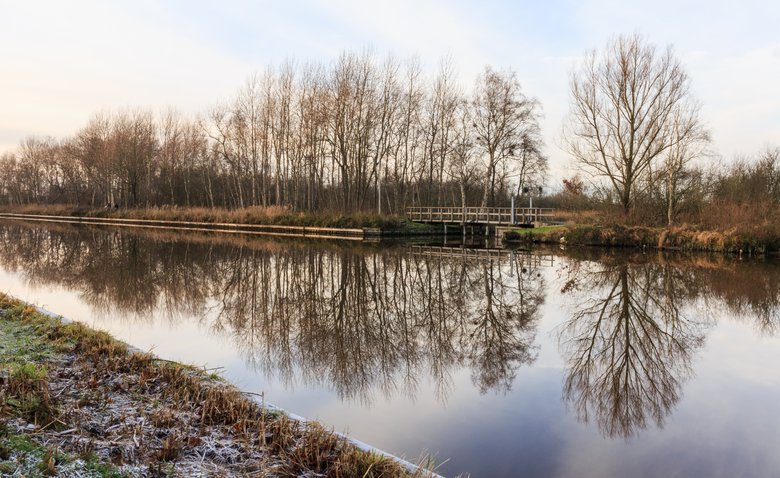
In the northwest corner of the province of Overijssel lies the Weerribben, a 3,500-hectare national park where water and reed dominate the landscape. Together with the neighbouring De Wieden nature reserve, it forms the most important marshland in northwest Europe.
The landscape was shaped by centuries of peat extraction. The "ribben" (levees) are narrow strips of land where peat was laid out to dry; the "weer" (turf ponds) are the flooded excavations left behind. When peat cutting ended, reed took over, and today the park is a mosaic of open water, reed beds, hay meadows, and carr woodland. Each habitat supports its own community of plants and wildlife — otters were reintroduced here and are thriving, and the park is home to breeding bitterns, marsh harriers, and a rich population of dragonflies and butterflies.
The best way to explore is by canoe — several operators rent them near the park entrances. There are also wildlife watching hides, walking trails and cycle paths along the levees, and drainage windmills that give character to the flat horizon. The visitor centre at Ossenzijl is a good starting point. The park lies between the villages of Ossenzijl, Kalenberg, and Oldemarkt, and is easily reached from Giethoorn or Steenwijk.