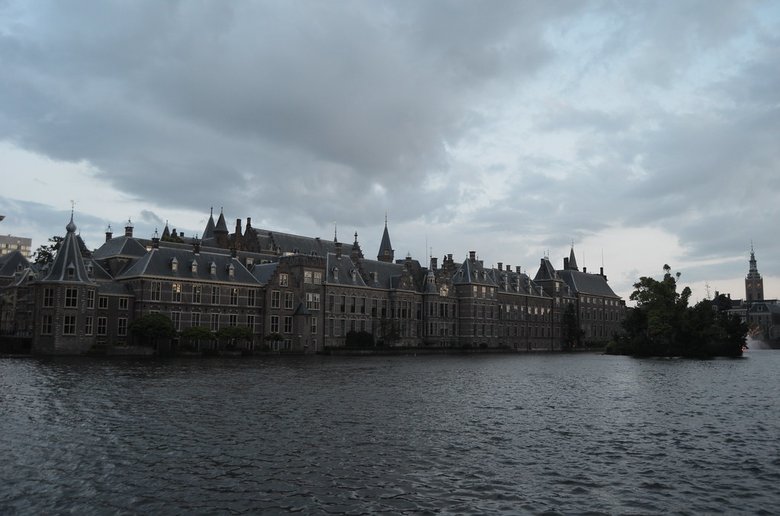
The Hague is not the capital of the Netherlands — that honour goes to Amsterdam — but it is the seat of government, the home of the royal family, and the city where international justice is administered. The Binnenhof, a medieval complex of parliament buildings around a central courtyard, sits at the heart of it all, and the Mauritshuis — one of the great small museums of Europe — stands just across the Hofvijver pond. The city also hosts the International Court of Justice at the Peace Palace, making The Hague the closest thing the world has to an international capital.
The city's character is different from Amsterdam's. It is quieter, more formal, more diplomatic — the streets around the Binnenhof are lined with embassies and ministerial buildings, and the pace of life is several notches below the tourist frenzy of the capital. But this is not a dull city. The museums are excellent: beyond the Mauritshuis, the Kunstmuseum Den Haag holds the world's largest Mondrian collection, and the Escher in the Palace occupies a former royal palace on the elegant Lange Voorhout boulevard. The Panorama Mesdag is one of the strangest and most affecting 19th-century experiences in the country.
On a fine day, Scheveningen — the beach resort that is officially part of the city — is where Hague residents go. The North Sea beach is long and wide, the pier extends into the water, and the seafront promenade and the Kurhaus hotel give the resort a faded grandeur that is part of its appeal. Madurodam, the miniature park nearby, is a perennial favourite with children and more impressive than it sounds. The Zeeheldenkwartier neighbourhood, ten minutes from the Binnenhof, is where the best independent restaurants and bars have gathered, and is where locals eat in the evenings. For something harder to find, Van Kleef distillery has been making jenever since 1842 and still lets visitors in for tastings.