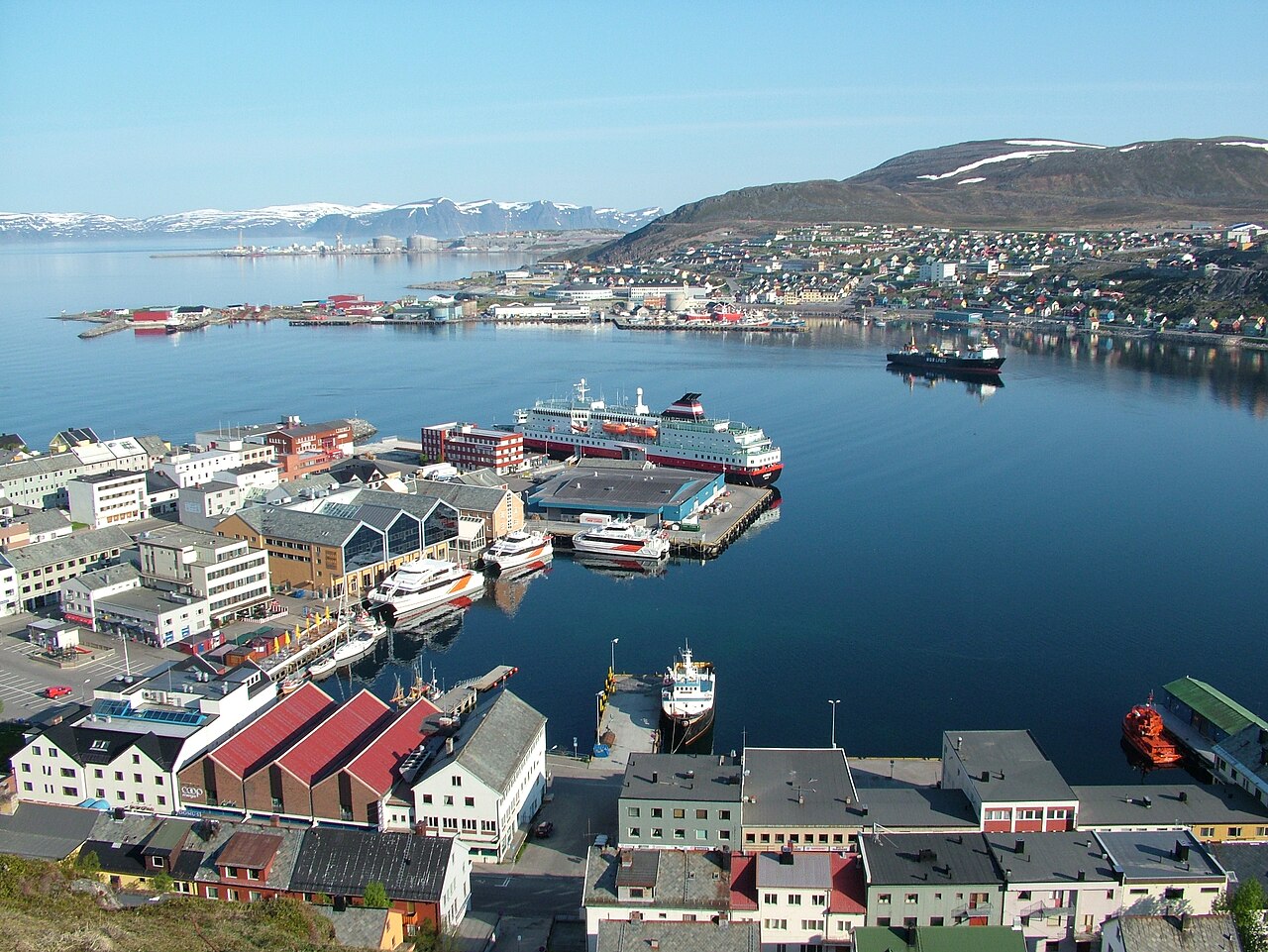
Finnmark island city at 70 degrees north, rebuilt after fires and wartime destruction.
Hammerfest claims the title of the world's northernmost city, perched on the island of Kvaloya in Norway's Finnmark region at 70 degrees north. It is a small, windswept place — about 10,000 people — but it has a resilience that belies its size. The town was burned to the ground twice, once in 1890 and again by retreating German forces in 1944, and rebuilt from scratch both times.
In winter, the sun disappears entirely from mid-November to late January, and temperatures drop well below freezing with fierce Arctic winds. The polar night is an experience in itself — a twilight world of blue-grey light and orange glows on the southern horizon. In summer the midnight sun shines from mid-May to late July, and the town comes alive.
Hammerfest is a stop on the Hurtigruten coastal voyage and makes a good base for exploring Finnmark. The harbour is the heart of town, and you can walk most of the centre in half an hour. The main draws are the Museum of Reconstruction, king crab safaris on the fjord, the Meridian Column UNESCO site, and the sheer novelty of standing in one of the most northerly settlements on earth.
Guide
Getting There
Hammerfest is served by Hammerfest Airport, a short drive from the town centre, with regular flights to Tromsø and Oslo via Widerøe. The journey from Oslo takes about 2.5 hours with a connection. Widerøe operates the regional network across northern Norway and Hammerfest is a standard stop.
The Hurtigruten coastal ferry stops at Hammerfest on its route between Bergen and Kirkenes, making this one of the more scenic ways to arrive — the ship spends about an hour in port, which is enough for a quick walk but not a proper visit. By road, Hammerfest is on the E69 and connected to Alta (150 kilometres south), which is the regional transport hub for Finnmark.
Guide
When to Go
Hammerfest divides dramatically into two seasons. In winter (mid-November to late January), the sun does not rise at all — the polar night. This is one of the best places in Norway to see the northern lights, which are most active from October to March. The lights are not guaranteed, but Hammerfest's latitude and relatively low light pollution make it a serious contender. Temperatures typically fall to -10°C to -20°C and the wind can be biting.
In summer (mid-May to late July), the midnight sun means continuous daylight. This transforms the town: boat trips run at all hours, the harbour is active late into the night, and the surrounding hills are lush and walkable. Summer temperatures are mild, typically 10–15°C. King crab safaris run year-round. If you want the full Arctic drama of polar night or midnight sun, plan your visit at the extremes rather than the transitional spring and autumn.