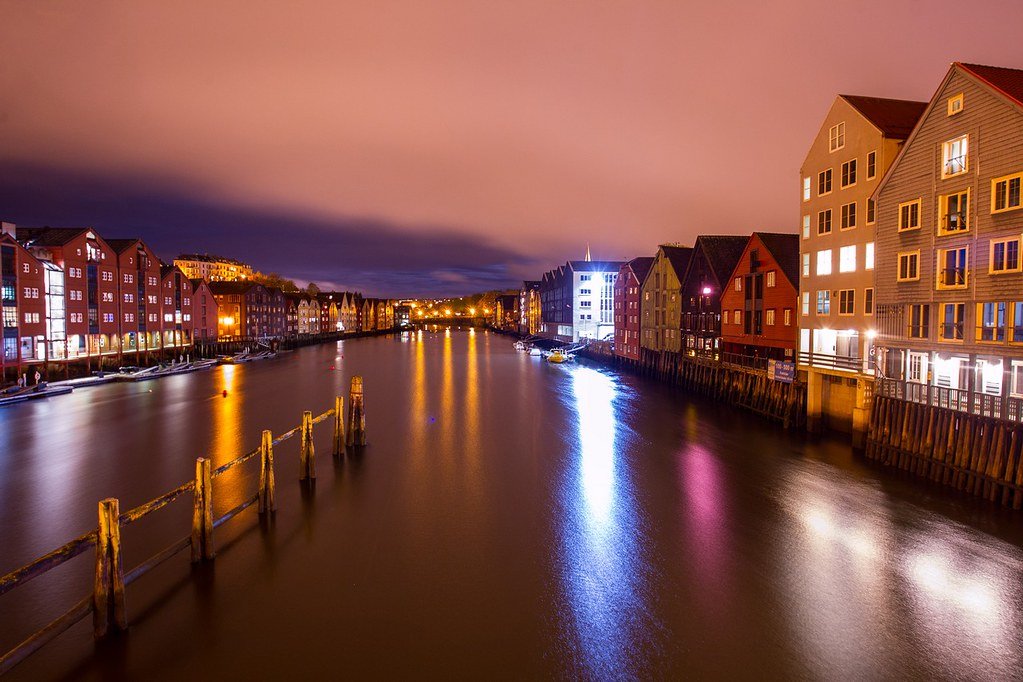
Trondheim is Norway's third city and its historical soul. Founded around 997 AD by the Viking king Olav Tryggvason, it served as the country's capital through the Middle Ages and remained the spiritual heart of Norway long after political power moved south. The Gothic Nidaros Cathedral, built over the grave of Saint Olav, drew pilgrims from across northern Europe for centuries and still consecrates Norwegian monarchs today. Arriving in Trondheim and not visiting the cathedral is like going to Paris without seeing Notre-Dame — possible, but you've missed the point.
The city sits at the mouth of the Nidelva river where it flows into the Trondheim Fjord, and water shapes the feel of the place. The old warehouses of Bryggen, painted in rich colours, line the riverbanks in the centre. The medieval Bakklandet neighbourhood spills down the hill on the opposite bank, its wooden houses and cobbled lanes largely unchanged since the eighteenth century. On a clear day, Munkholmen island sits in the middle of the fjord, its monastery ruins visible from the harbour — ferries run out there in summer and it makes a fine afternoon.
The city rebuilt itself in a hurry after a catastrophic fire in 1682, and the wide grid of streets that replaced the medieval lanes gives central Trondheim an unusually open, airy quality for a northern European city. The result is a handsome place that's easy to navigate on foot. The yellow wooden royal palace, Stiftsgården, sits right in the middle of town, one of the largest wooden buildings in Scandinavia.
Trondheim is also a university city — NTNU, Norway's main technical university, is based here — and that brings energy, good cafés, and a younger population than the city's age might suggest. The mix of medieval history, intact wooden neighbourhoods, and a lively student scene makes it one of Norway's more rewarding stops.