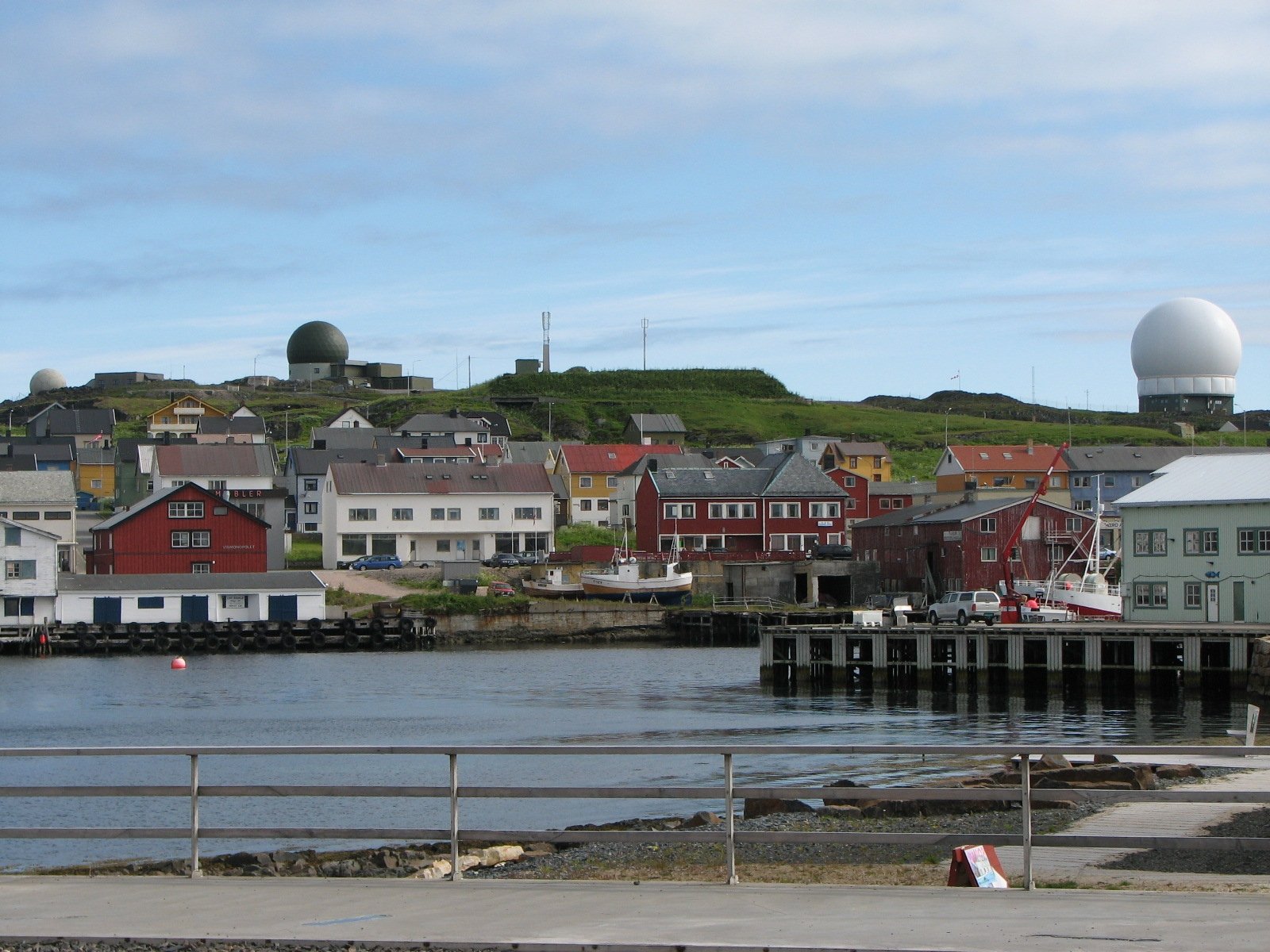
Vardø
©
Vardø

Vardø

Remote Barents Sea town on an island, home to Vardøhus Fortress, the northernmost star fort.

Vardø is the easternmost town in Norway — further east than Istanbul and Cairo — perched on an island in the Barents Sea at the far end of the Varangerfjord. It is connected to the mainland by a subsea tunnel. The town is small, windswept, and remote, with a population of around 2,000.

The main landmark is Vardøhus Fortress, the world's northernmost star fort, built in 1738. A cannon is fired every time the king visits — a tradition that dates back centuries. The fortress is open to visitors and offers views across the harbour and out to the open sea.

Vardø also has a striking modern monument: the Steilneset Memorial, designed by Peter Zumthor and Louise Bourgeois, commemorating the 91 people burned as witches in Finnmark during the 17th century. It is one of the most powerful pieces of public art in Scandinavia.

The surrounding coastline is excellent for birdwatching, particularly around Hornøya island, which hosts one of Norway's largest seabird colonies — puffins, guillemots, and kittiwakes nest in vast numbers from April to August. Boat trips to Hornøya depart from the harbour.

Guide

Getting There

Vardø Airport (VAW) has daily connections to Kirkenes and Tromsø via Widerøe. The airport is on the mainland at Svartnes; from there it is a short drive through the Vardø Tunnel, a 2.9-kilometre subsea road tunnel that burrows under the Bussesundet strait to reach Vardøya island. The tunnel replaced the old ferry crossing and opened in 1982.

By road from Kirkenes it is about two hours on the E75 through open tundra and along the Varangerfjord. Bus connections exist but are infrequent. There is no ferry service. The Hurtigruten coastal cruise calls at Vardø as part of its round trip between Bergen and Kirkenes, making it possible to arrive or depart by sea.

Guide

Things to Do

Vardø has two unmissable sights and one remarkable natural spectacle. The Vardøhus Fortress, the world's northernmost star fort, anchors the western tip of the island. The Steilneset Memorial, a stark collaboration between architect Peter Zumthor and artist Louise Bourgeois, commemorates the 91 people burned as witches in Finnmark in the 17th century — one of the most powerful pieces of public art in Norway. The third reason to come is Hornøya island, a short boat ride away, where one of the country's largest seabird colonies nests from April through August.

Beyond these, the town itself is worth a slow walk: the colourful wooden houses, the working harbour with its fish-drying racks, and the constant presence of wind and open sea give Vardø an atmosphere entirely its own. The GLOBUS II radar installation — a large dome visible on the island's eastern shore — is a reminder that this remote corner of Norway sits in a strategically sensitive position facing Russia across the Barents Sea.

Guide

When to Go

The seabird colony on Hornøya is active from April through August — this is the main reason most visitors come, and the peak season for the puffins, guillemots, kittiwakes, and razorbills that nest on the cliffs. Summer brings almost continuous daylight at this latitude (70°N), with the midnight sun visible from mid-May to late July.

Winter is dark, cold, and often stormy, but the Northern Lights are visible on clear nights from October through March. Vardø is one of the better locations in Norway for aurora viewing because of its low light pollution and far-northern latitude. Temperatures in winter frequently drop well below -10°C; the Barents Sea wind makes it feel colder. Pack accordingly regardless of season.