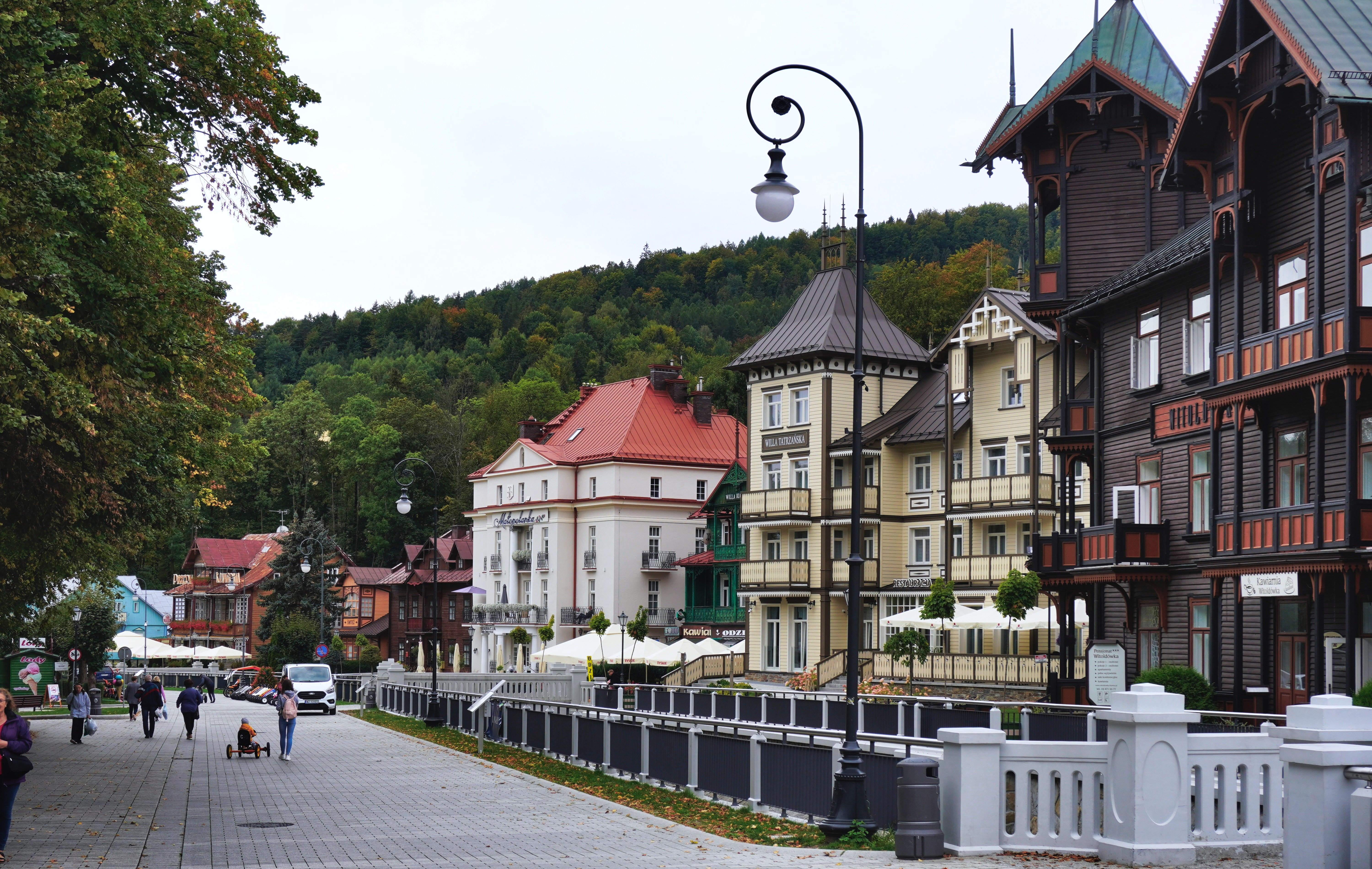
Krynica-Zdrój is Poland's largest and best-known spa town, tucked into the Beskid Sądecki mountains in the far south of the country. It has been drawing visitors to its mineral springs since the early 19th century, and the town retains a gentle, slightly old-fashioned spa-resort character — promenade parks, pump rooms, and grand wooden villas on the hillsides.
The town works in two seasons. In summer, visitors come for the mineral waters, the hiking in the surrounding mountains, and the relaxed mountain air. In winter, the gondola lift up Jaworzyna Krynicka (1,114 metres) gives access to some of the better skiing in southern Poland, and the surrounding mountains are good for cross-country skiing and snowshoeing.
Park Słotwiński, with its 19th-century pump room and restored concert hall, is the centre of the spa town's social life. The Lemko minority, descendants of Ruthenian highlanders who once populated much of this part of the Carpathians, maintain a cultural presence — the Lemko Vatra festival in summer is a good occasion to encounter their music and traditions. The Nikifor Museum is dedicated to Krynica's most famous artist — a Lemko naive painter whose thousands of small watercolours are now recognised as some of the most important naive art in Polish history.
Krynica is sometimes called the "Polish Davos" for the annual Economic Forum held here each September, which draws politicians and business leaders from across Central Europe.