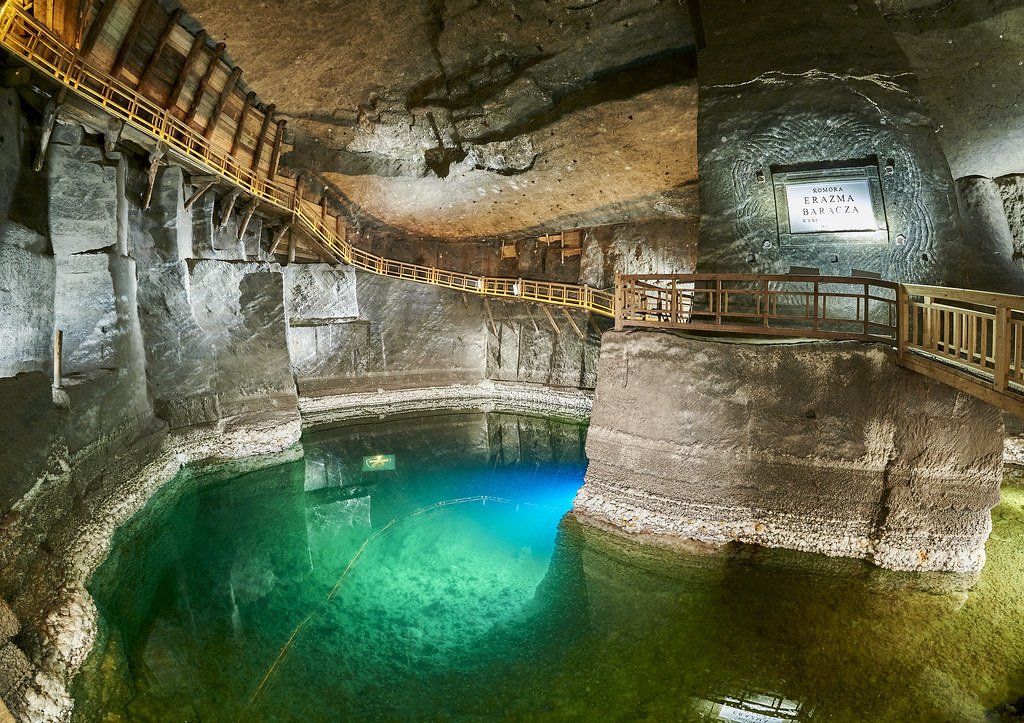
Wieliczka is a small town just 14 kilometres southeast of Kraków, and its fame rests almost entirely on what lies beneath it: a vast, centuries-old salt mine that descends nine levels into the earth and stretches for over 300 kilometres of tunnels. The Wieliczka Salt Mine is a UNESCO World Heritage Site and one of Poland's most visited attractions — and for good reason.
The mine was continuously excavated from the 13th century until 2007, making it one of the world's oldest operating salt mines. Over those seven centuries, miners carved out chapels, statues, bas-reliefs, and even a full ballroom — all from salt. The centrepiece is the Chapel of St. Kinga, a soaring underground cathedral with chandeliers, altarpieces, and floor tiles made entirely from salt crystal.
Above ground, Wieliczka is a quiet, pleasant Polish town with a market square and a few cafes. The Żupny Castle, which administered the salt monopoly for centuries, stands above the town and houses a museum on the history of the mine. Most visitors come on a day trip from Kraków, spend two to three hours underground, and head back — but the mine alone justifies the journey.