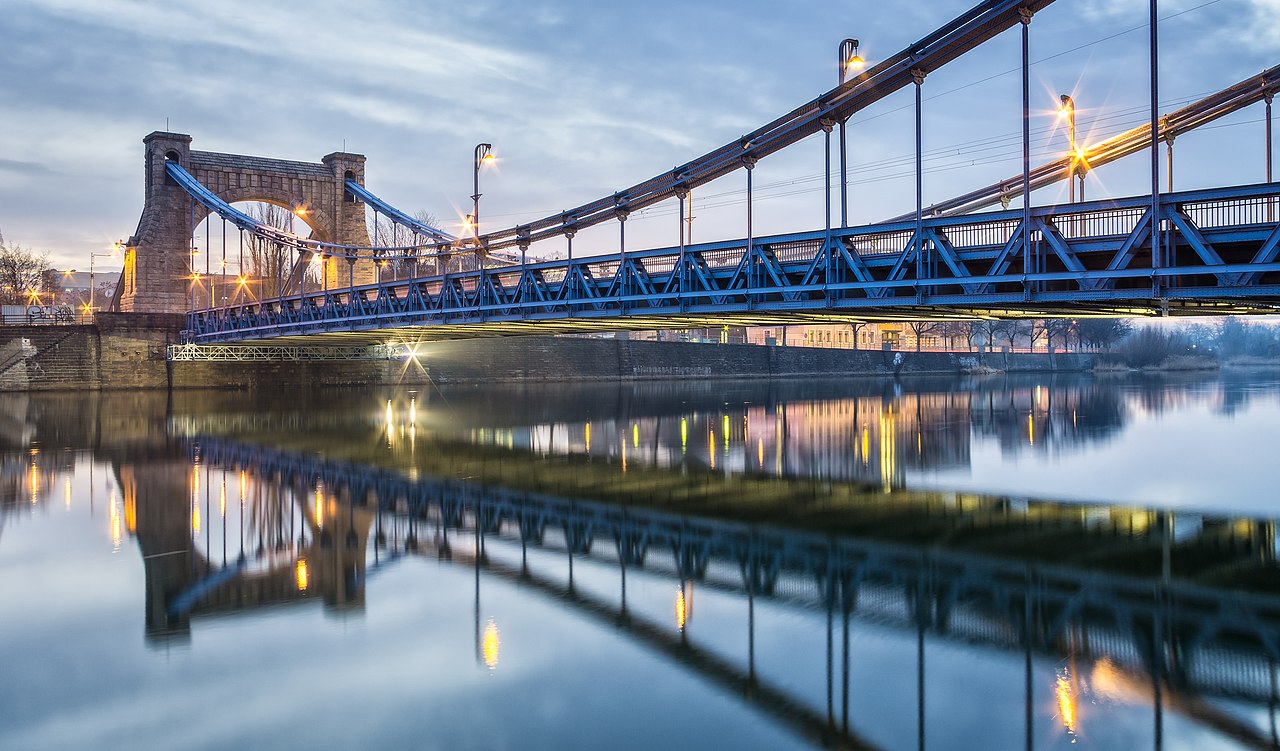
Wroclaw is the cultural and intellectual capital of Lower Silesia, a city of 12 islands and 112 bridges where the Odra River splinters into tributaries and canals that cut through parks, Gothic churches, and one of the largest market squares in Europe. It has the energy of a university town — 13 academic institutions keep the bars full and the cultural calendar packed — but the architecture tells a much older story, one shaped by centuries of Bohemian, Austrian, Prussian, and Polish rule.
The Rynek, Wroclaw's vast main square, is the natural starting point. The Town Hall at its centre is one of the finest Gothic buildings in Central Europe, and the square itself is lined with colourful townhouses hiding cellar bars and restaurants. From here, walk north across the bridges to Ostrow Tumski, the Cathedral Island, where Wroclaw began as a medieval settlement. The sacral architecture here — the Cathedral of St John the Baptist, the Church of the Holy Cross — is among the most beautiful in Poland.
The city takes its green spaces seriously. Szczytnicki Park, dating from the 18th century, contains over 370 species of trees and a carefully maintained Japanese garden. The Botanical Garden and the Zoo, founded in 1865, are both worth a visit. But the best way to enjoy Wroclaw is simply to walk along the river — the light on the water in the late afternoon is something else entirely.
Wroclaw is also a city of festivals. The International Festival Wratislavia Cantans draws classical music audiences from across Europe; the new National Forum of Music is the main venue. Jazz on the Odra and the Festival of Actor Songs keep things lively through the rest of the year. And then there is the Panorama of Racławice, a gigantic 120-metre-wide panoramic painting housed in a purpose-built rotunda, depicting the 1794 battle — a genuinely unique experience.
For something lighter, keep an eye out for the bronze dwarfs scattered across the city — over 800 of them now, descended from the absurdist anti-communist street art of the 1980s. The modernist Centennial Hall east of the centre is a UNESCO World Heritage Site, and the gentrifying district of Nadodrze north of the river is the best window onto contemporary Wroclaw beyond the tourist core.