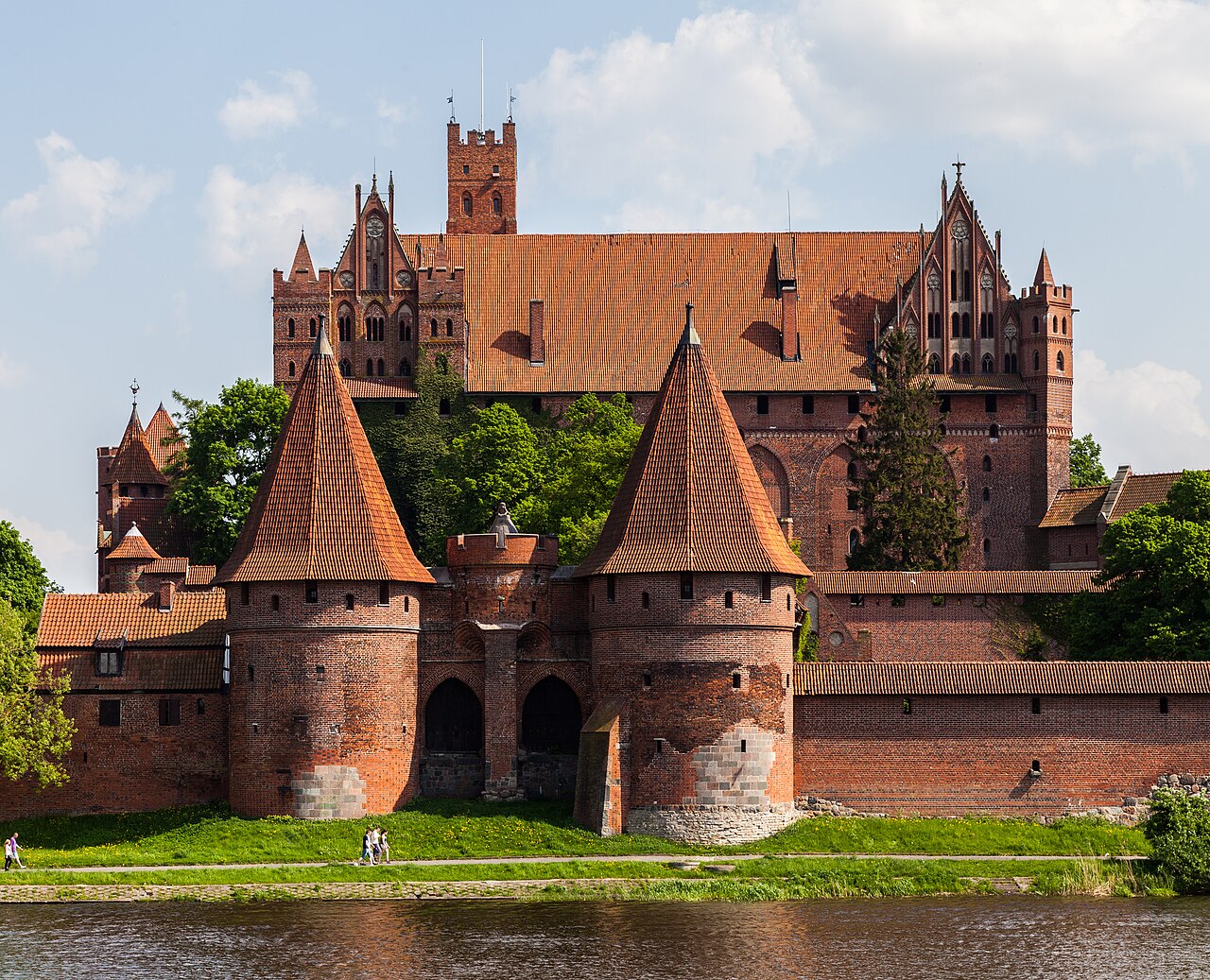
Malbork exists because of its castle, and what a castle it is — the largest brick gothic fortress in the world, a UNESCO World Heritage site, and the former headquarters of the Teutonic Knights. Built in the thirteenth century as a monastic stronghold, it looks far more like a royal palace than anything vowed to poverty, chastity and obedience.
The castle complex covers 21 hectares and includes three distinct sections: the High Castle (the original monastery), the Middle Castle (the Grand Master's residence) and the Low Castle (stables, armoury, foundry). The interiors are richly decorated in medieval reds, greens and blues — colours that in those days signalled royalty, not monkhood. The wealth behind all this came largely from amber, the "gold of the Baltic," and the castle museum's amber collection traces the art of amber carving from the medieval period to the present.
The town itself is small and can be visited as a day trip from Gdansk, about an hour away by train. Most visitors come for the castle alone, and it justifies the trip on its own.