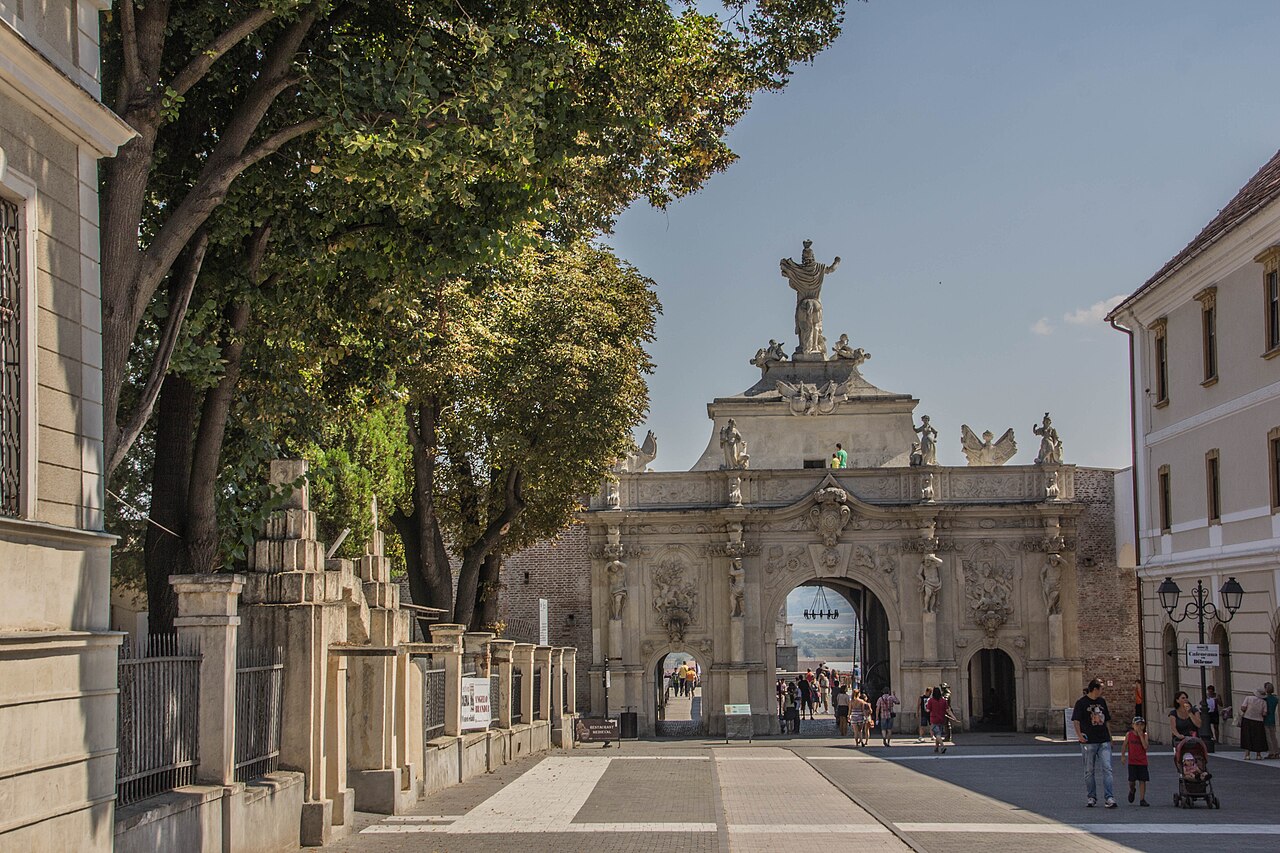
Alba Iulia
©
Alba Iulia

Alba Iulia

Transylvanian city of Romanian unification, centred on the restored star-shaped Alba Carolina Citadel

Alba Iulia is one of Romania's most historically significant cities, the place where the unification of Transylvania with Romania was declared in 1918. The star-shaped Vauban fortress — the Alba Carolina Citadel — dominates the town and is one of the finest examples of Habsburg military architecture in southeastern Europe. Restored and well-maintained, the citadel is a pleasure to walk through, with baroque gates, churches, museums, and a daily changing-of-the-guard ceremony.

Inside the fortress walls you will find St. Michael's Cathedral (13th century, containing the tomb of John Hunyadi) and the Coronation Cathedral (built in 1922 for the coronation of King Ferdinand and Queen Marie), standing almost side by side — a visual summary of Transylvania's layered history. The National Museum of Unification covers the region's story from Dacian times through the Roman, Hungarian, Ottoman, and Habsburg periods. The Obelisk of Horea, Cloșca, and Crișan marks the site where three leaders of the 1784 peasant revolt were executed.

Alba Iulia sits on the main road between Sibiu and Cluj-Napoca, making it an easy stop on a Transylvanian road trip. The town itself is small and manageable — the citadel is the main attraction, and a half-day is enough to see it well.

Guide

Getting There

Alba Iulia is on the main road between Sibiu (75 km southeast) and Cluj-Napoca (105 km north), making it an easy stop on a Transylvanian road trip. The A1 motorway passes nearby.

By train, Alba Iulia is on the line between Simeria and Teiuș, with connections to Cluj-Napoca and Deva. Trains from Bucharest require a change. The station is in the lower town, about 2 km from the citadel; taxis and buses connect them. Several bus companies run direct services from Bucharest, Cluj, and Sibiu.

Guide

Things to Do

Almost everything worth seeing in Alba Iulia is inside or immediately around the star-shaped Alba Carolina Citadel. The fortress is large enough to spend several hours in, with its baroque gates, two cathedrals, a history museum, and a changing-of-the-guard ceremony. Allow half a day minimum for the citadel; a full day if you want to do it properly.

Guide

When to Go

Alba Iulia is worth visiting in any season, but spring (April–May) and early autumn (September–October) are the most comfortable. Summers can be warm, and the citadel is busy with Romanian tourists in July and August. The changing-of-the-guard ceremony runs daily in summer and on weekends in other seasons.

The most significant date in the local calendar is 1 December, Romania's National Day, which marks the 1918 Great National Assembly at which Transylvania voted to unite with Romania. Large ceremonies are held at the citadel, attracting visitors from across the country.