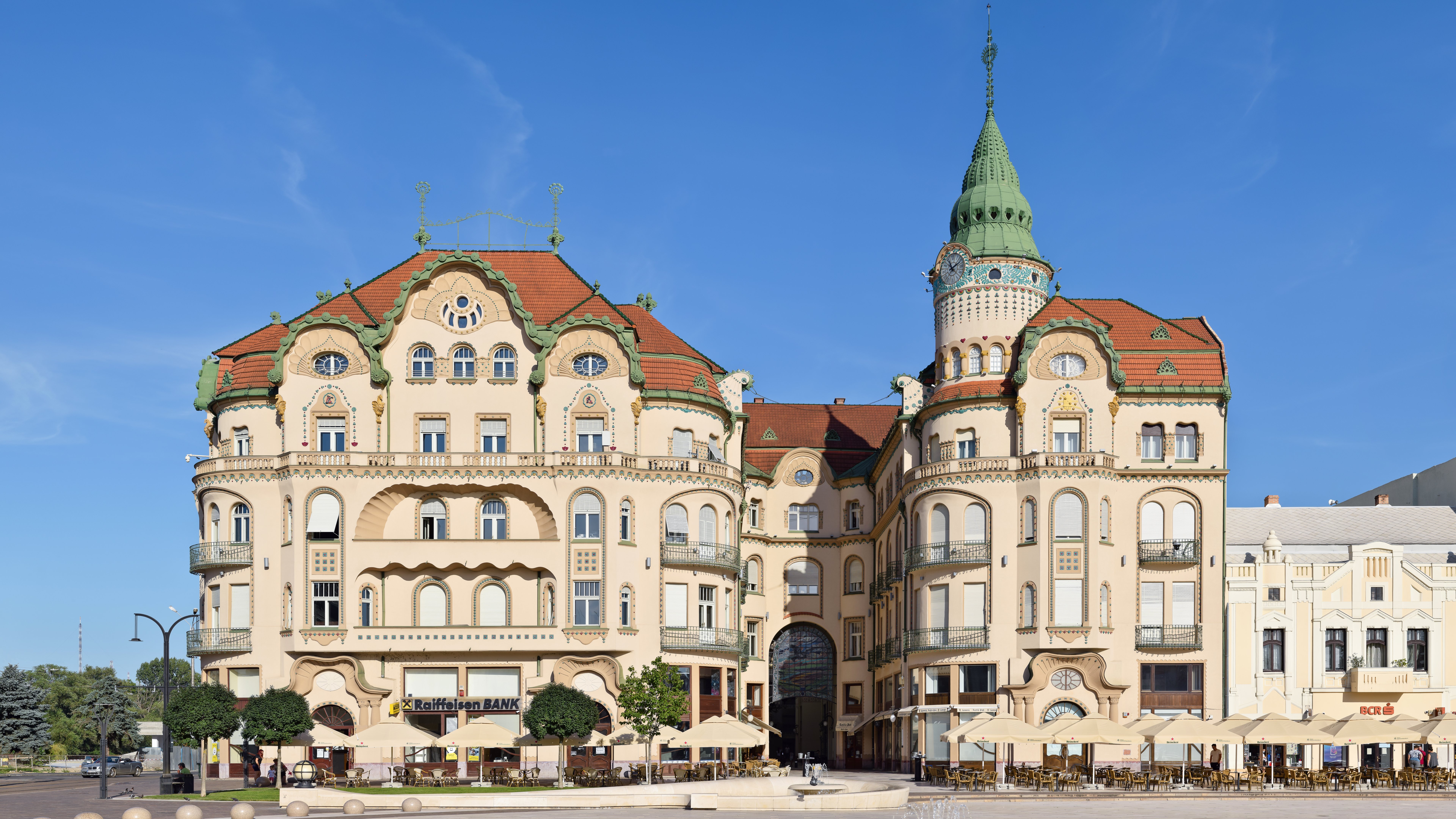
Oradea sits in the far northwest of Romania, close to the Hungarian border, and it shows — in the language on the street, the names above the shops, and the grand Austro-Hungarian architecture that lines its central boulevards. This is a city that spent centuries as part of the Habsburg Empire, and it wears that history confidently. Nearly a third of the population is of Hungarian descent, making it one of Romania's most distinctly bicultural cities.
The old town is a showcase of Baroque and Art Nouveau architecture. The Church with the Moon — named for the spherical mechanism on its tower that tracks the lunar calendar — is the most famous landmark, but the whole district rewards wandering. The Șirul Canonicilor, a long Baroque building designed to house cathedral clergy, lines one side of the main square, and the Baroque Palace, a handsome replica of Vienna's Belvedere, houses the Tarii Crisurilor Museum. The Central Library blends several architectural styles in a single façade, which sounds like a mess but somehow works.
For a detour into relaxation, Băile Felix lies just eight kilometres from the city centre. The thermal spa resort draws Romanians from across the country for its geothermal pools, which stay warm year-round thanks to a network of underground hot springs — some of them hosting a rare species of water lily that grows nowhere else on earth.
Oradea is one of Romania's larger cities and has a functioning university, which gives it a younger, livelier feel than its Habsburg grandeur might suggest. It is also one of the most convenient entry points into Romania from Western Europe, whether you are arriving by train from Budapest or crossing the border by road.