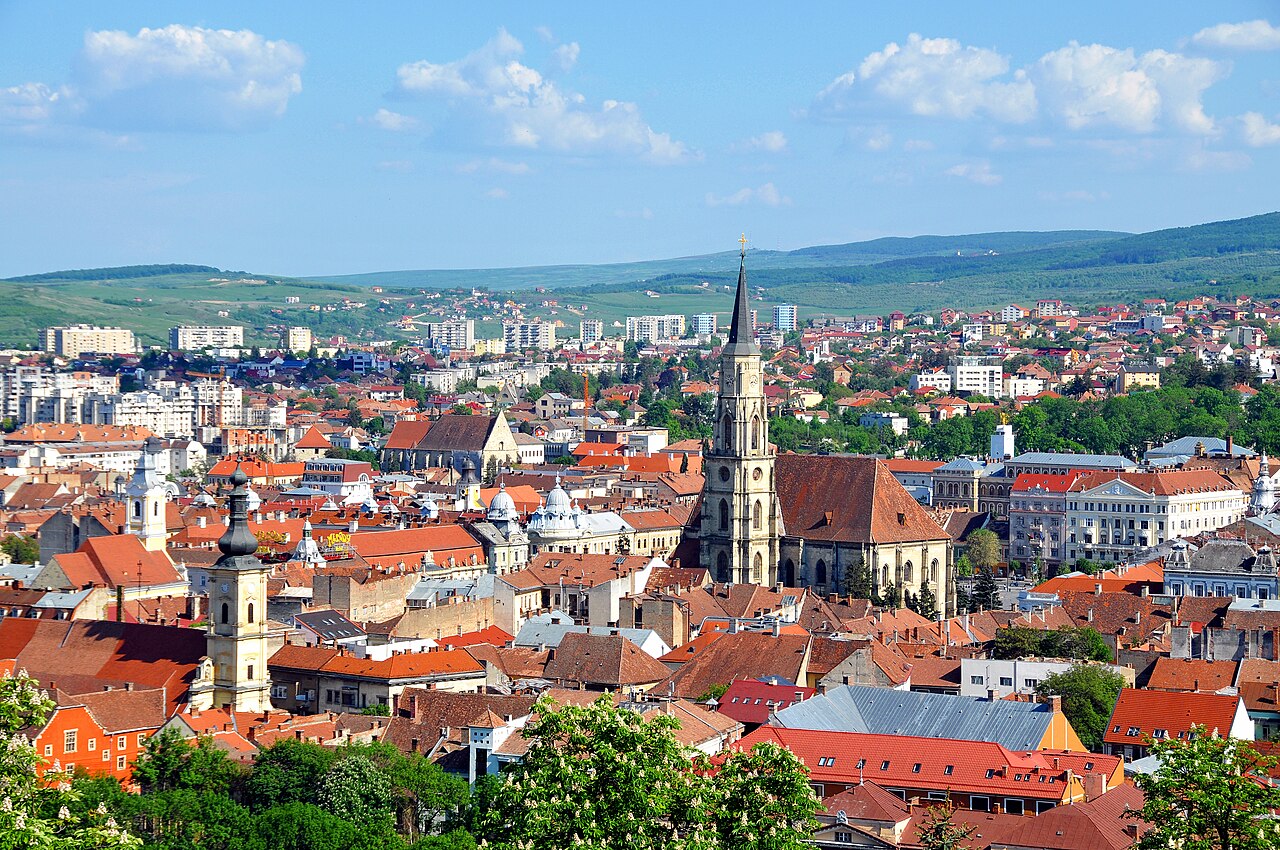
Cluj-Napoca is the unofficial capital of Transylvania and Romania's liveliest university city. With around 70,000 students in a city of 400,000, the energy is palpable — the cafes stay full, the cultural calendar never stops, and the old center hums well past midnight.
The city spreads along the Someș river and up into surrounding hills. Downtown is pure Austro-Hungarian grandeur: baroque facades, Gothic churches, and grand squares that wouldn't look out of place in Vienna or Budapest. The centerpiece is Piața Unirii, dominated by the 14th-century St. Michael's Church and the statue of Matthias Corvinus, the Renaissance king born here. Around it, pedestrian streets wind past bookshops, pastry shops, and university buildings.
Cluj-Napoca is one of the few cities in the world with two National Opera Houses — one Romanian, one Hungarian — a reflection of its multicultural character. The Romanian and Hungarian communities have shaped the city for centuries, and that mix gives it a depth and complexity you won't find in Bucharest. Add to that the European-renowned Botanical Garden, a clutch of excellent museums, and a restaurant scene that has exploded in the last decade, and you have a city that rewards a longer stay.